
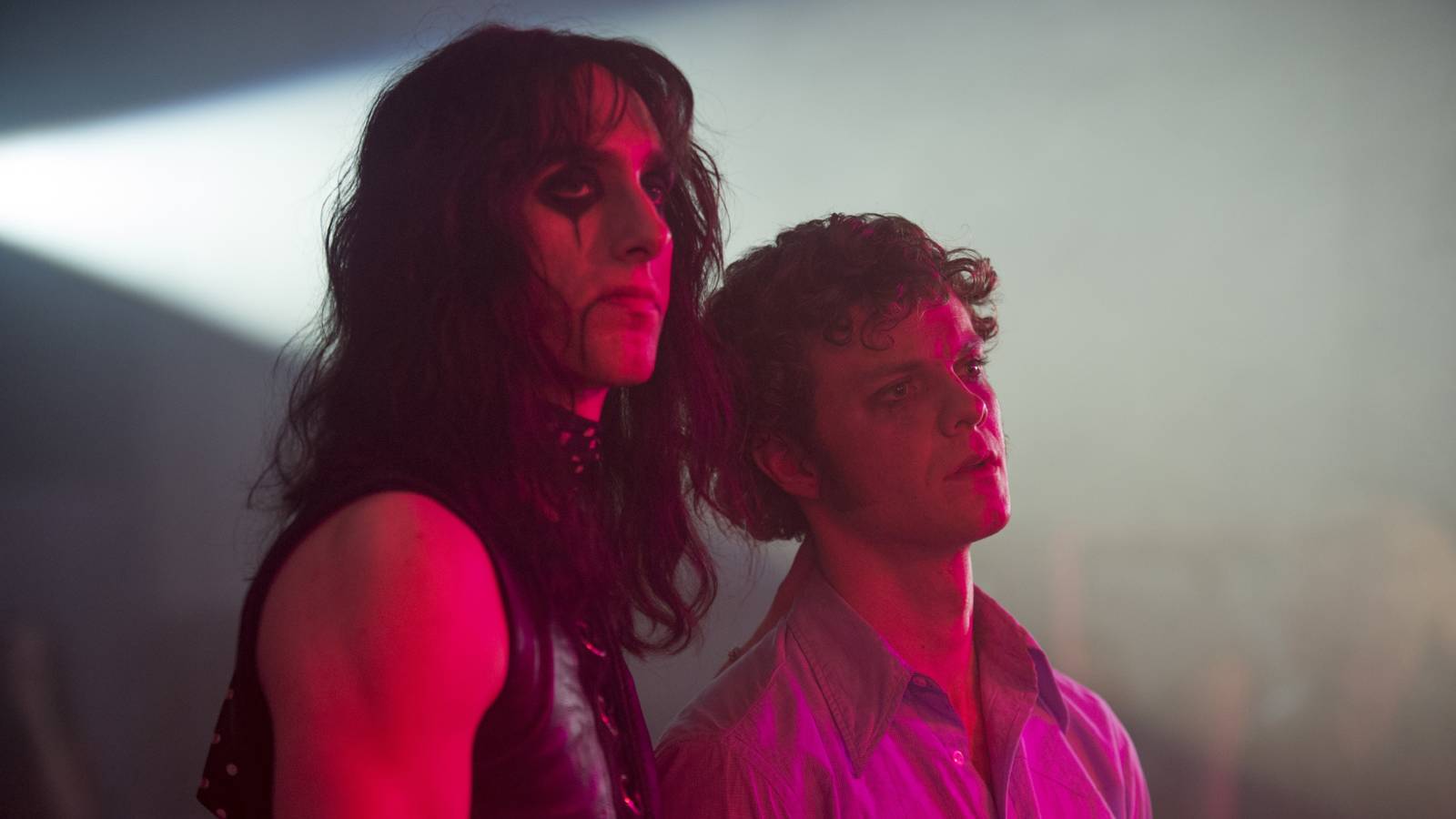
Published Sep 13, 2026, 4:15 PM EDT Mustafa Gatollari has been an internet culture and entertainment writer since 2015, but got his start reporting in local print in Bergen County, NJ at 18 years old. His work has appeared on the Daily Dot, Distractify, Motor1, BroBible, The Independent, The Mary Sue, Subplot, The Big Lead and his personal blog, Ultra News. Mustafa's passion for film and TV dates back to his first visit to the movies at 5 years old, when his mother took him to watch 'The Addams Family.' Mustafa's also been in front of and behind the camera. He co-created and successfully distributed 'Haunted Discoveries' alongside Brandon Alvis, whom he initially met on A&E's 'Ghost Hunters' where the two were selected as lead investigators for the reboot of the popular unscripted series. He and Brandon are currently releasing a slate of new documentaries, beginning with 'Ghosts of the Gold Rush,' which combines decades of their film production and paranormal experience to convey an oft-overlooked period in America's history. And the hauntings purportedly connected to this time that have persisted nearly two centuries later. You can email him at mustafa.gatollari@gmail.com or find him online on X or Instagram. Martin Scorsese hit premium network gold as an executive producer and director on HBO's Boardwalk Empire. The 1920s Prohibition-era gangster series featured a slew of top talent and won a whopping total of 20 Primetime Emmy Awards. The cast, led by the one and only Steve Buscemi, was one of the show's biggest draws, but one performance in particular caught fans' and critics' attention: Bobby Cannavale's Gyp Rosetti. In 2013, Cannavale won the Emmy for Best Supporting Actor in a Drama Series for his role in Boardwalk Empire. His work also impressed Scorsese, who selected him to lead a new HBO period drama series the director had been developing for years. The show, Vinyl, which stars Cannavale as a 1970s record producer and was co-created by Scorsese with The Rolling Stones' Mick Jagger, Boardwalk Empire's Terence Winter, and journalist Rich Cohen, was primed to be the next big thing on television — until it wasn't. A $30 Million Opening Episode Didn't Help Vinyl It's fitting that a series about rock and roll indulgence was seemingly doomed, in part, due to fiscal issues. There's no shortage of rise-and-fall stories in the music world, after all. But unlike rock star tales that start with humble beginnings, find multi-million-dollar success, and crash with financial ruin, Vinyl jumped straight to big-budget excess. Scorsese directed the two-hour series opener himself. When reviewing the opener upon release, ScreenRant praised the show's energy, describing it as "controlled chaos," and there's certainly no shortage of mad-dash, cocaine-fueled energy permeating the series. Still, the premiere cost a whopping $30 million to produce. The move to cancel the series was, as TIME called it, "semi-surprising" because it had already been renewed for a second season after the pilot aired. However, HBO decided to pull the plug and reverse its decision due to less-than-stellar ratings. Nielsen live viewer numbers showed 764,000 folks tuned in to watch the premiere. Those aren't anywhere near the figures folks would expect for a top-tier HBO drama at the time, and other programs on the network fared much better. Game of Thrones was a cultural phenomenon, so stacking Vinyl's figures against it wasn't exactly fair. Still, by comparison, Silicon Valley earned an average of 1.749 million live viewers around the same time Vinyl was on air. Veep was hovering around the 1 million live viewers mark, and even Dwayne Johnson's Ballers fared better at 1.179 million. When comparing Vinyl's cost to the production budgets of these other series, HBO's decision to shelve Vinyl makes sense. Veep cost $26.79 million for its 10-episode fifth season (via Film LA), which was less than the entire cost of Vinyl's premiere episode. Game of Thrones, which raked in a massive 7 to 8 million live viewers per episode, spent around $10 million per episode from season 6 onwards, one-tenth of what Vinyl had spent for an entire season. In short, the series wasn't giving HBO enough viewership bang for its buck. What's more, Vinyl peaked at 764,000 views. The show's third entry, "Whispered Secrets," raked in 533,000 views, not exactly the kind of audience bigwigs in suits would expect for a season that cost $100 million to produce in total (via THR). Money Isn't The Only Reason Vinyl Got Canceled The Movie Stills Database The show may have been renewed if Vinyl was more conscientious about its budget and captivated more viewers. As head of HBO programming, Casey Bloys, said in 2016 (via Deadline): "It didn't land. With limited resources, we didn't think the retooling was worth the producers' time if it would only move the needle a little bit. We will more carefully consider things; it's not something that I'd like to do or relish doing going forward." So, why didn't it land? Some critics, like TIME's Daniel D'Addario, found the series disjointed and overly reliant on rock star cameos and excellent soundtracks rather than creating compelling dramatic tension. This critique is understandable. Throughout the show, Vinyl's lead, Bobby Cannavale, plays up Richie Finestra's rampant drug use. The show's enthusiasm for highlighting the effects of using those substances overshadows the tension in his personal and professional life, like his relationship with his wife and the consequences of leading his record label business. At times, Vinyl plays more like a montage of what someone thinks the 1970s music scene was like. Some scenes feel like dramatists are cosplaying feathered haircuts, sideburns, and polyester suits, with the aesthetic taking precedence over the characters' lives. Without the grit and authenticity, and the personally horrifying implications of what it takes to live one's dream, it doesn't capture the true magic of the decade. That's not to say the performances in the series are bad; Vinyl featured a slew of actors who were praised for their work. A surprising addition to the show, Ray Romano, was a delight in his dramatic turn as Zak Yankovich, and one of the most intriguing characters in the series appears at the very end of Vinyl's first and last season: Hilly Kristal. The founder of the legendary NYC club CBGB makes a massive impact in a short amount of screen time thanks to David Vadim's dynamic performance. His revelation about renaming the bar to the iconic club laid the groundwork for a compelling second season that sadly never came to fruition. A second season would have given Vinyl a chance to explore this world in more character-driven detail. With the talent behind and in front of the camera, this should have been an easy win. Scorsese himself expressed regret over Vinyl's cancellation, sharing that he believed the series could have gone on longer had he had a more hands-on approach in its development (via THR): "It was ultimately tragic for me because we tried for one year. I did the pilot. We tried for one year with HBO, but we couldn't get the creative elements together. It was something that I realized, in order to make it right [...] I think I would have had to direct every episode and be there for the three to four years." Cannavale said Vinyl's one-and-done season left him depressed months after the show was off the air. The actor also said that he felt responsible for the show not doing well, as he was the lead. "I had everybody telling me, 'It wasn't your fault.' Marty was like, 'It's not your fault, it's just business.' But that's hard to accept because it's your face that's on the buses and on the billboards." Vinyl's cancellation wasn't any one person's fault, of course. Vinyl stands today as a $100 million example of the dangers of cinematic-television excess. It's hard not to wonder if, had the show not cost as much as it did, we would've ever gotten to see Hilly Kristal's creation of CBGB and the revolutionary impact it had on America's music scene. If Vinyl had been given a chance to streamline its budget and focus more on its characters and storytelling, it could have potentially become something extraordinary.
Martin Scorsese's $100 Million "Boardwalk Empire" Successor Deserved More Than Just 10 Episodes
Full Article
Original Source
Read the full article at Screenrant →KhanList aggregates and links to publicly available news content. We do not host full articles from third-party sources. Always verify important information with original sources.