
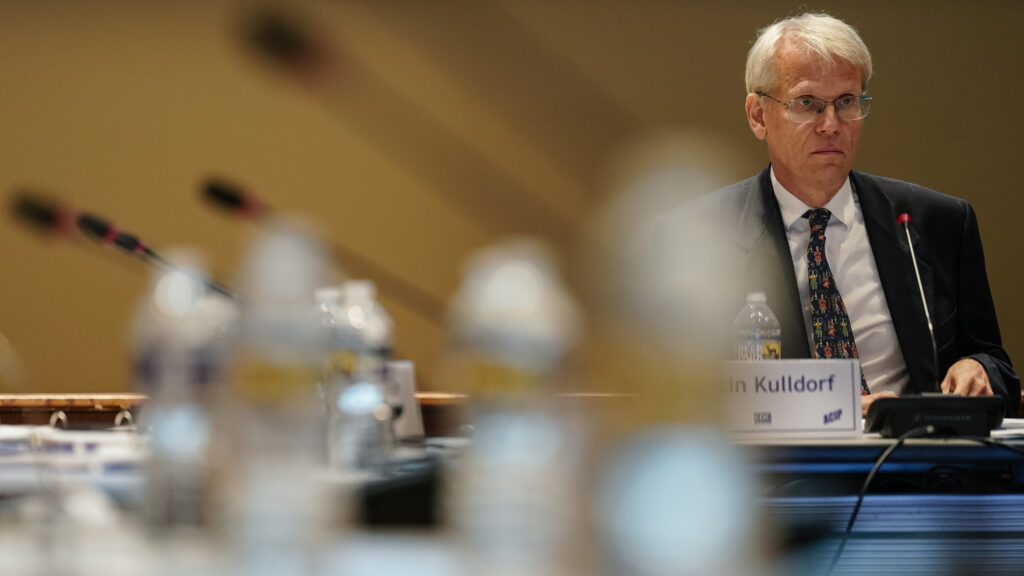
Get your daily dose of health and medicine every weekday with STAT’s free newsletter Morning Rounds. Sign up here. Some really excellent stories today, including Anil Oza’s profile of Michigan Senate candidate Abdul El-Sayed and the next installment in Bob Herman’s “Out of Pocket, Out of Reach” series. Also, Andrew Joseph and Adam Feuerstein go live at 10:00am EDT to break down the latest news coming out of Europe’s big cancer conference. You can tune in here. Senate candidate Abdul El-Sayed: RFK Jr. is the ‘most incompetent HHS secretary ever’ Michigan Senate candidate Abdul El-Sayed is known for his comical social media videos, his advocacy of “Medicare for All,” and his controversial stance on U.S. policy toward Israel. One thing that’s been overlooked? El-Sayed would be the Senate’s first epidemiologist. And he plans to use his decades of experience in public health to “grill” health secretary Robert F. Kennedy Jr., who he called the “most incompetent HHS secretary ever” during an interview with STAT’s Anil Oza. El-Sayed is a man with big dreams for how to overhaul the U.S. health care system so it can better serve vulnerable Americans. He has also become a target for many conservative politicians in recent months, including Kennedy, who told a crowd in Michigan earlier this week that “there’s 500 million Arabs in the world and yet they don’t produce science.” Read more from Anil’s excellent profile, which also dives into El-Sayed’s personal motivations for reducing health disparities and his work to rebuild Detroit’s health system. Great news, peptide fans… … federal health officials just made it easier to compound some unapproved peptides. The Department of Health and Human Services released a policy yesterday that will temporarily allow compounding pharmacies to manufacture some peptide products, increasing access to the experimental wellness therapies embraced by many in the MAHA movement. The move comes as the Food and Drug Administration weighs broader approval of these compounds. In July, an FDA advisory panel voted to recommend that these pharmacies be cleared to manufacture six of these substances, even though agency scientists cautioned against the move due to the lack of clinical safety or efficacy data. Read more from STAT’s Margaret Manto. Martin Kulldorff critiques scientific gatekeepers at NIH lecture Should academic journals decide what science should be published? Martin Kulldorff, the biostatistician known for co-authoring the Great Barrington Declaration, which advocated against Covid lockdowns, raised that question Wednesday in a lecture on rebuilding trust in science. “Why have journals decide what can be published or not?” Kuldorff, who now serves in a top role at HHS, asked. Kulldorff made the remarks as part of a larger critique on how gatekeeping in scientific stifles trust. But he did not address the ways that unvetted scientific research, even when debunked after publishing, can sow distrust as well. Numerous polls show, for example, that Americans’ belief that vaccines cause autism has only increased in recent years, despite the fact that the major research making this claim was retracted back in 2010. During his talk, Kulldorff also insisted that the rise in measles cases being experienced in the United States is the result of missed doctors appointments caused by Covid-19 lockdowns, despite the fact that that claim has been disputed by public health experts. – Nicholas Florko How employer health care costs are shaping midterm elections Multiple polls show that Americans are fixated on the high cost of health care even as prices for gas, groceries, and other necessities soar. Voters are asking for the government to intervene and lower prices, and their anger is casting a pall over the midterm elections. STAT’s Bob Herman is back with the sixth installment of Out of Pocket, Out of Reach, where he has been investigating why health care costs are skyrocketing, even for American workers who get their insurance through their job. As the health care industry sucks up more and more cash, employers are shifting these costs to their workers. Read more from Bob, or brush up on the rest of the series. 75% How do you figure out the prevalence of a disease if you can only study it post mortem? Researchers have struggled for years to suss out an accurate rate for chronic traumatic encephalopathy, a neurodegenerative disease that afflicts National Football League players and other people after repeated head trauma. But a study published yesterday of 2,362 former NFL players who died between 2008 and 2023 found that 74.5% had CTE, which can lead to worrisome cognitive and behavioral changes. What does this estimate mean for the quarterbacks and wide receivers who line up every weekend to compete in America’s most popular sport? The researchers are careful to say that this estimate cannot be extended to current players. They suggest the rate could be lower — but it also could be higher. While the jury’s still out on what these data mean for today’s athletes, I hope Roger Goodell reads Morning Rounds. Here’s the study, if you want to take a look at the data yourself. The research gap facing trans women and breast cancer risk The U.S. Preventive Services Task Force recommends cisgender women get regularly screened for breast cancer starting at 40. But what about trans women? A great story from Rewire News dives into the research gap on this topic, as the most authoritative study on the subject finds only that trans women face less risk than cis women, but more risk than men. That’s 1 in 8 versus 1 in 775. The few existing guidelines for trans women are based on basically zero data, which is tough to come by for this population. Trans people — including the roughly 700,000 trans women in the U.S. — routinely face discrimination and mistreatment in clinics and hospitals. My grandmother died of breast cancer at 67. I’m a 33-year-old trans woman. When should I get my first mammogram? For now, science has no answer to that question. What we’re reading Drug middlemen will soon have to share details on how they are paid, Wall Street Journal Top HHS lawyer reassigned after stock trading rebuke, The Washington Sun DOGE chief’s spouse landed job at HHS weeks after agency layoffs, Bloomberg Are you an organ donor? Here are some rule changes you may want to know, NPR
Martin Kulldorff critiques scientific gatekeepers at NIH lecture
Full Article
Original Source
Read the full article at Statnews →KhanList aggregates and links to publicly available news content. We do not host full articles from third-party sources. Always verify important information with original sources.