
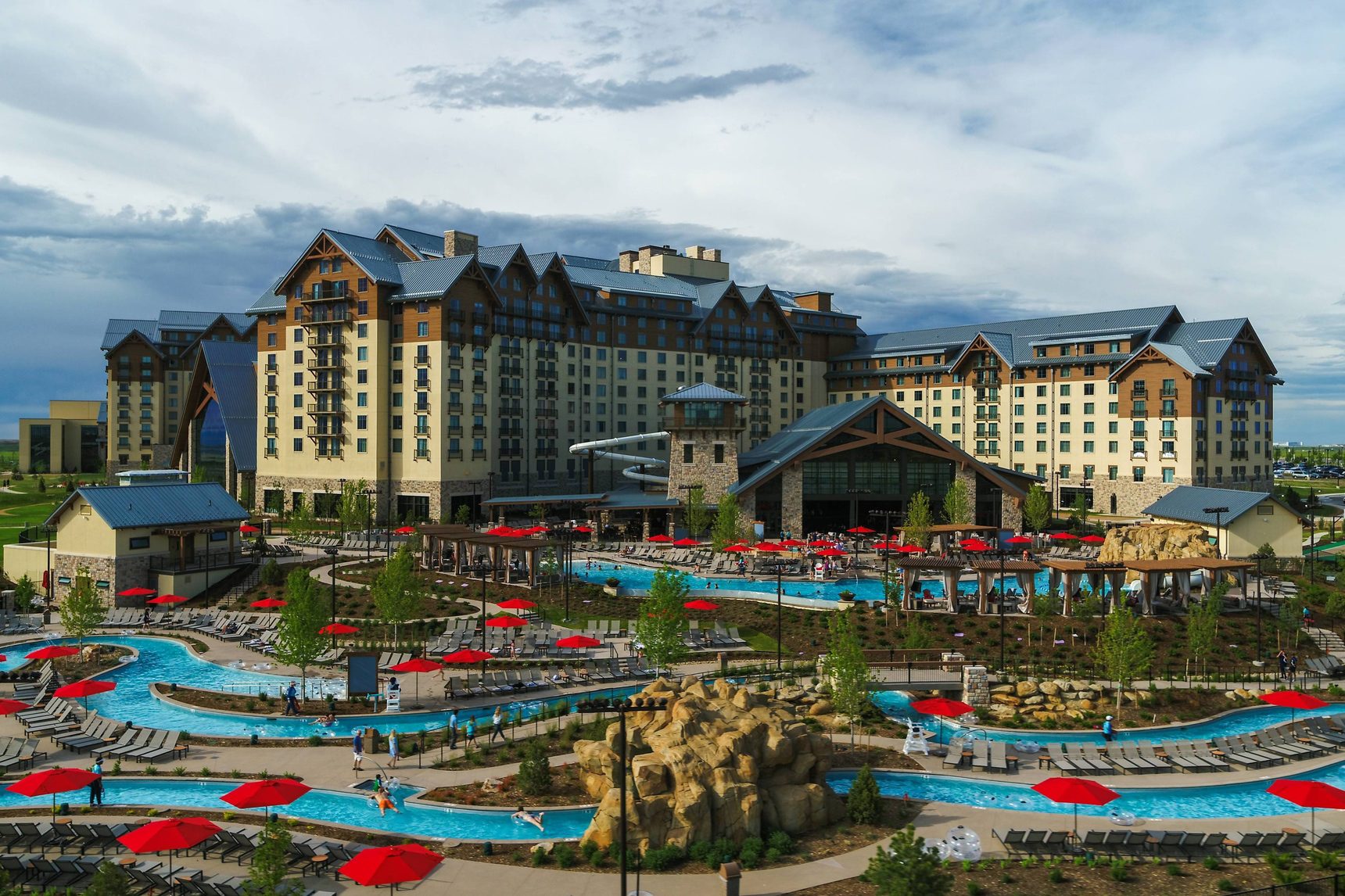
Gaylord Rockies, the Marriott convention resort outside Denver, received $50.6 million in tax rebates last year according to owner Ryman Hospitality Properties’ annual report. That’s roughly $33,700 per room. It received $155.6 million in the past three years. The hotel’s tax subsidies could reach $1.3 billion. Gaylord Rockies is a huge resort in Aurora near Denver International Airport. It combines guest rooms, convention facilities, restaurants and water attractions. I’ve written before about this property’s 2.5% “public fee”. Tax category Reported rebate percentage City sales tax 96.3% City lodging tax 96.25% City use tax 93.3% Gaylord Rockies had $313.2 million in revenue and $66.2 million in operating income in 2025. Occupancy was 75.9%. The $50.6 million in rebates is equivalent to about 76% of that operating income. Colorado’s Regional Tourism Act criteria include attracting substantial out-of-state tourism and supporting projects unlikely to happen in the foreseeable future without the program. The strongest argument for the deal is that an unusually large convention resort can bring meetings Colorado wouldn’t otherwise be able to accommodate. It’s unclear how much of the activity is actually additional, how much business is drawn away from other properties and downtown, and whether that keeps convention-goers away from local Denver businesses. It’s not clear how much of a subsidy was needed to attract the business, and the extent to which that disadvantages other businesses in the area that are unsubsidized. Meanwhile, a hotel that competes for the same meeting business without the same deal has to recover more of its costs from customers. Government is changing the terms of competition between businesses selling similar services. Without the deal we might have seen a different project, too. The politically favored company’s success is visible, while the uses of money and resources displaced by the subsidy are much harder to see. In a review of 30 studies, a typical tax incentive probably changes a firm’s location, expansion or retention decision only 2% to 25% of the time. The hotel has plans for a $300 million expansion including 450 additional rooms and a 47,000-square-foot indoor water park – and more subsidies to pay for it. Adding rooms and a water park to an operating resort doesn’t even have the benefit of the argument for landing the project (that the hotel might go elsewhere). (HT: Michael D. Brown) Topics on this page
Marriott’s Gaylord Rockies Could Get $1.3 Billion In Tax Subsidies—Now It Wants Even More For A Water Park
Full Article
Original Source
Read the full article at Viewfromthewing →KhanList aggregates and links to publicly available news content. We do not host full articles from third-party sources. Always verify important information with original sources.