
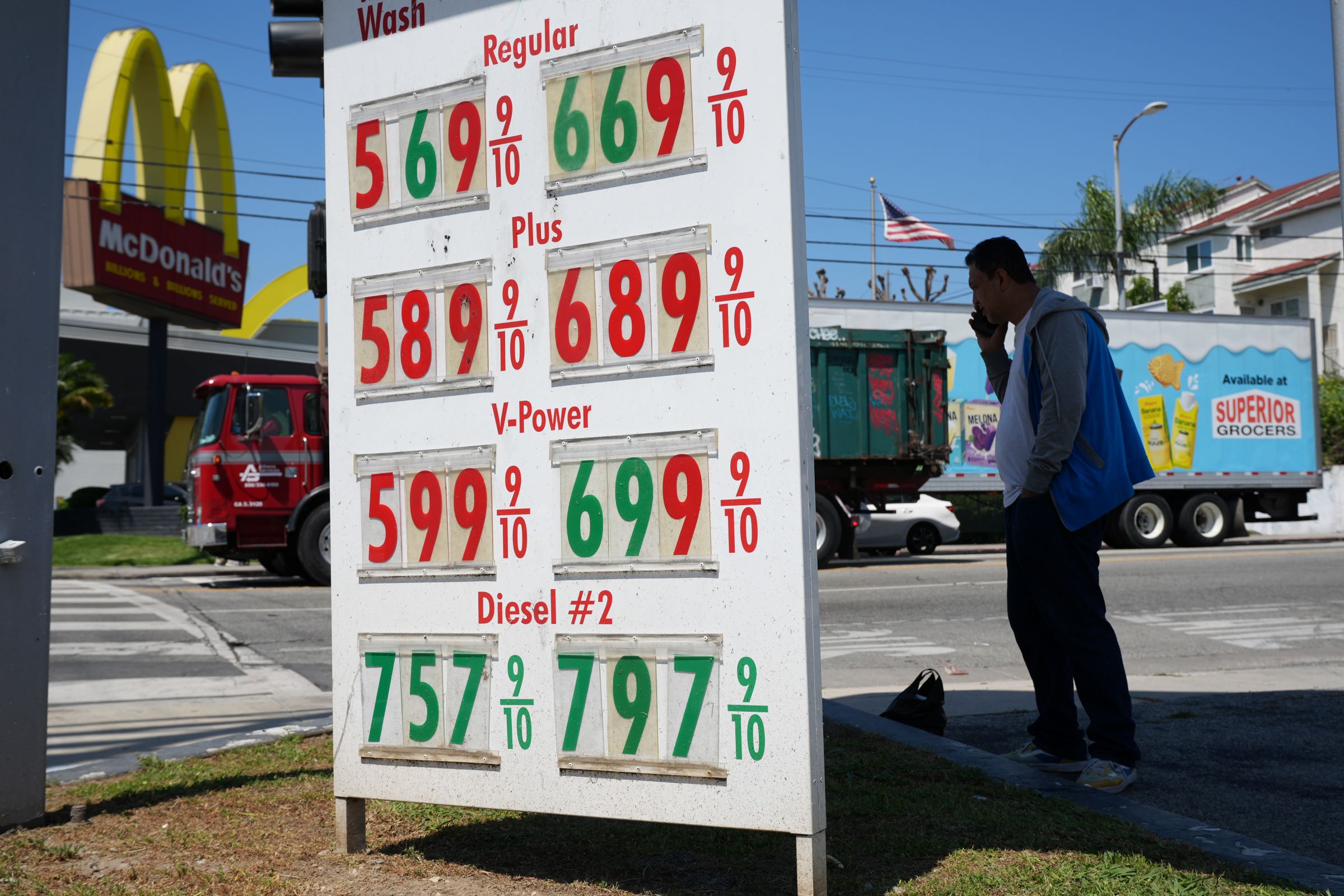
Inflation came in double what economists had predicted, causing Wall Street indices to move in divergent directions.MANHATTAN (CN) — Two out of the three major U.S. indices fell slightly this week as two key reports showed oil prices are driving inflation.Economic data this week showing spiking inflation, compounded with rising oil prices, caused equities to wobble throughout the week. By the closing bell Friday, the Dow Jones Industrial Average picked up 347 points for the week, but the S&P 500 and Nasdaq fell 152 points and 1,226 points, respectively.The latest consumer price index again increased, this time by 0.6% last month following the 0.4% increase od n prices for August. Prices were driven primarily by gasoline, which saw a whopping 9.1% increase and accounted for more than half of all items.Taking out food and energy prices, core CPI matched August’s 0.3% increase, but that was slightly higher than most experts had forecast.Wholesale prices also saw a big increase in September, with the producer price index increasing by 1.3%, more than double the already high 0.6% most economists had forecast. The previous two months’ PPI also were revised higher.Energy prices pushed the PPI higher overall, but even core PPI, which excludes food and energy, eclipsed expectations with a 0.7% month-over-month increase.Analysts predict the Federal Reserve likely will try to cut inflation off at the knees by raising interest rates at its next two meetings. However, some worry the Fed may be trying to curb energy-driven inflation that is out of its hands.“It is abundantly clear where the inflation impulse originates, but two wars need to end before we get any relief,” Jamie Cox, managing partner at Harris Financial Group, said in a statement. “The Federal Reserve made the mistake of calling Covid-era inflation transitory, and now it appears they are set to make the same mistake in reverse on the energy supply shock.”Fortunately, retail sales also beat expectations this week, showing a 0.8% increase last month versus the 0.4% increase most had penciled in. The sales numbers for August also were revised slightly higher than originally reported.However, the opposite problem to the inflation reports plagued the retail sales data. Control retail sales, which exclude such volatile categories as cars and gasoline station sales, increased by only 0.1%, causing many economists to believe real consumption remained flat last month.Concerns about surging inflation and weakening growth are not lost on the small business community, with the monthly optimism index by the National Federation of Independent Business declining nearly a point last month.Business owners continue to say “labor quality or availability” is their biggest problem. However, one out of every five business owners reported inflation as their top concern, with many small business owners commenting that prices for fuel and raw materials remain too high.“Small business owners are proceeding with caution as they interpret how rising costs, interest rates, and the difficulty in finding qualified employees are impacting their business,” NFIB Chief Economist Bill Dunkelberg said in a statement.Categories / Economy, NationalSubscribe to our free newslettersOur weekly newsletter Closing Arguments offers the latest about ongoing trials, major litigation and rulings in courthouses around the U.S. and the world, while the monthly Under the Lights dishes the legal dirt from Hollywood, sports, Big Tech and the arts.Additional Reads
Markets split on disappointing inflation data
Full Article
Original Source
Read the full article at Courthousenews →KhanList aggregates and links to publicly available news content. We do not host full articles from third-party sources. Always verify important information with original sources.