
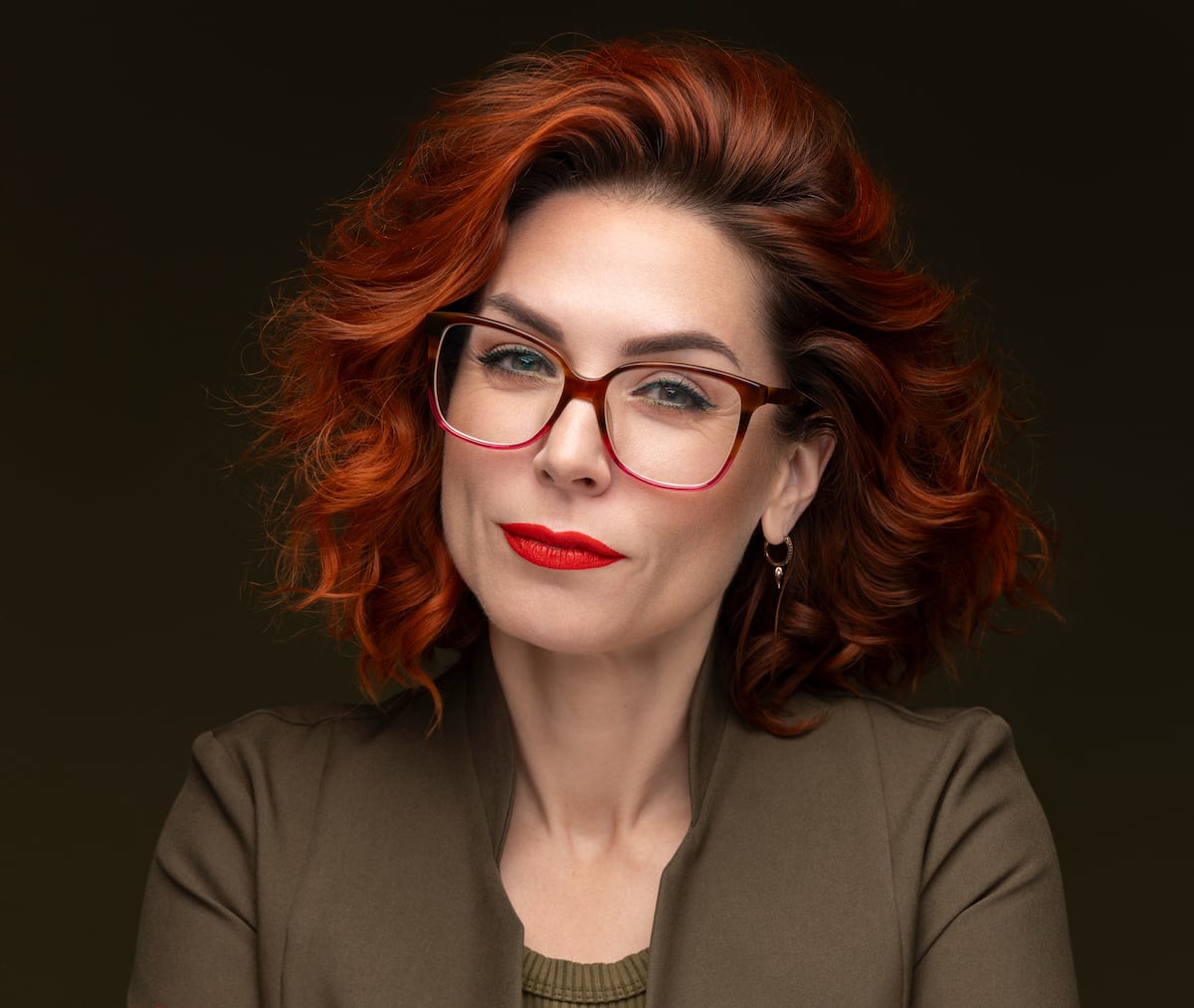
“Every areola is unique, just like your fingerprint or your eye. And there are so many colors,” says tattoo artist Mariska de Jong (Breda, Netherlands, 45), surrounded by flowers, plants and awards during an interview at her clinic in her hometown. As of October 25, she is the world champion in breast micropigmentation for patients who have undergone mastectomy or other surgeries related to breast cancer. Her specialty is etching a nipple and areola onto the skin of a reconstructed breast — a procedure that goes beyond aesthetics and enters the psychological realm. “Tattooing a hyper-realistic nipple and areola on the skin helps the patient recover self-esteem,” she tells EL PAÍS.De Jong was crowned champion in her specialty at the World Universal League of Permanent Makeup (WULOP), held in late October in Antalya, Turkey. It was an intense week, with thousands of artists from 85 countries competing; she arrived backed by the title of Benelux (Belgium, the Netherlands and Luxembourg) champion in her field, which she won last September. It was a solid base, but the quality of the other artists’ work was very high. “I went to enjoy the experience with low expectations, but I think I did the best work of my life. And I’ve been in this field for 15 years,” she explains.Competitors had to work from memory, in 75 minutes, on a smooth piece of latex like the ones she uses in her treatment room. You have to touch them to make sure they have no lumps. In her office, she uses them to record the pre-operative image “when a woman or a man comes in, because men can also have breast cancer,” she notes. If they don’t have a photo taken before the surgery, De Jong shows them a book featuring all kinds of nipples and areolas. “I sketch it out with pigments so they can get an idea of the final result,” she explains.Color tests help determine the tattoo’s depth, definition, and sheen because, she emphasizes, “there is always a point where the light hits, and that’s how you compose it.” Not all skin absorbs ink the same way, so the palette ranges from pink to various shades of brown. Treatment cubicles are white. Her waiting room, by contrast, is painted green and filled with large plants, with flamingos peeking from the wallpaper. It’s a warm environment that comforts on a potentially gray, cold day.Shortly before the interview began, De Jong saw a woman who had undergone the operation and subsequent breast reconstruction and who had almost asked for a new nipple made by a skin graft — until she met her. “She had her doubts because it would always be a tough decision, and she was very happy when she found out I’d won the Benelux championship,” recalls the tattoo artist. “She confided in me that she’d never had the right information to make a good choice,” she says, taking the opportunity to convey two clear messages about the impact of her work. On the one hand, she says, “it helps you feel whole again, just like when scars are concealed.” On the other hand, she believes that “much of medicine focuses on solving problems,” but then it’s up to each person to “learn to live with the results.” “Addressing the psychological and aesthetic aspects restores your confidence,” she affirms.De Jong speaks from personal experience. She has not had cancer, but she did undergo multiple operations to remove and tighten skin after dramatic weight loss following a period as a bodybuilder in her youth. She had many problems with inflammation and infections and, despite decades in the permanent makeup world, admits it was hard to find an expert able to correct all her “marks.” She raises both arms to show long scars the same color as her skin. They are so well blended you have to look closely to see them. “Being able to see your breast again because there’s a 3D tattoo, daring to wear a swimsuit in summer, not feeling ashamed of yourself… That’s the best I can do in my work,” she says.A clinical tattoo artist must have a thorough understanding of the skin and how scar tissue reacts — “which needs to be at least six months to a year old to be treated,” she says. There can be no swelling, and you have to know “when the patient underwent radiation therapy, whether the treatment has been completed, and what medication they’re taking,” she explains, while showing photos on her phone of before-and-after tattoo cases — the nipples are so well done that Instagram has censored some of the posts where she shares those results. Normal skin heals in its usual way, but when there has been trauma, things change. Keloids, for example, which are scars caused by excessive growth of connective tissue, “should only be touched by doctors and researchers.” “If you stimulate them, they can proliferate,” she warns.Since 2022, regulations have been in effect in Europe that prohibit or restrict the concentration of hazardous substances in permanent tattoo inks (Registration, Evaluation, Authorisation, and Restriction of Chemicals, REACH). “Thanks to that regulation, it’s a safe procedure, and my skill lies in achieving a very realistic result,” she acknowledges. The world championship has opened the door to surgeons for De Jong — a door that, until now, had remained ajar at best. “I’ve worked very hard and repeatedly proposed — without success — that we work together,” she confesses. Now, however, she says with a smile that several hospitals have called her to schedule an appointment. “We could do some great work together,” she says. Two new clients have arrived, and before saying goodbye, she declares: “I want to help because I learned to love myself again when they smoothed out my many scars.”Sign up for our weekly newsletter to get more English-language news coverage from EL PAÍS USA Edition
Mariska de Jong, world champion of medical tattoos: ‘A hyper-realistic nipple and areola helps the patient recover self-esteem’
Full Article
Original Source
Read the full article at English →KhanList aggregates and links to publicly available news content. We do not host full articles from third-party sources. Always verify important information with original sources.