
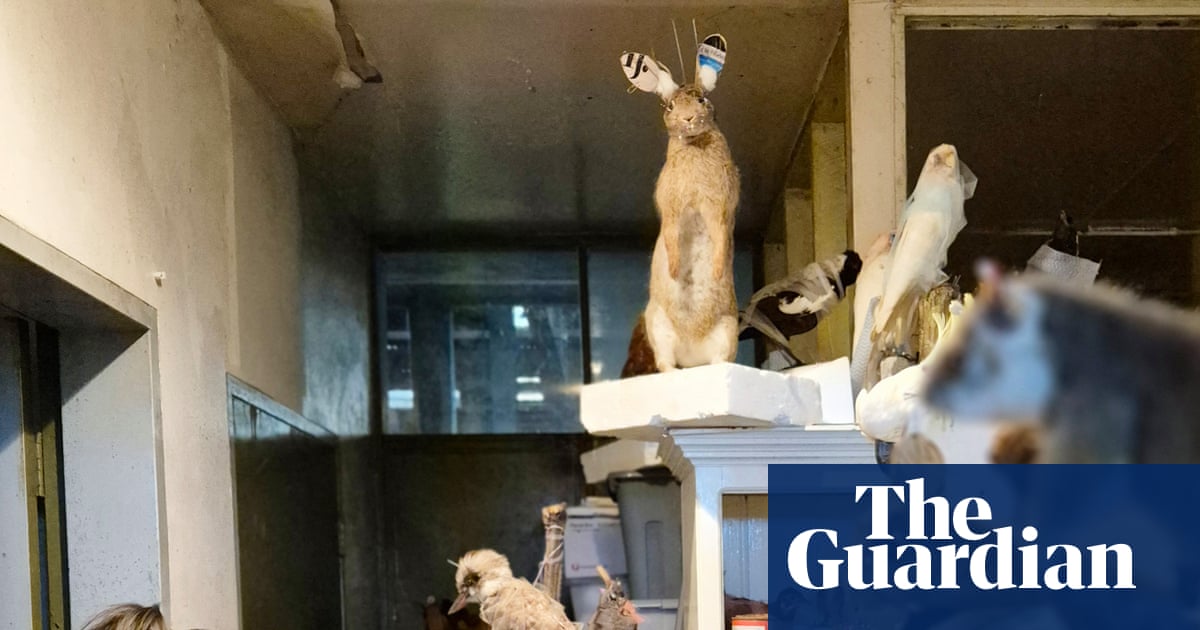
The white-walled room packed with magpies, galahs and sulphur-crested cockatoos, foxes and possums is eerily quiet. As a video pans across shelves filled with these and many other species, there is no flapping or squawking or hissing; the animals are frozen and silent.They are among the more than 700 native animals that were found illegally taxidermied and frozen that were seized from the property of a Victorian antiques store owner last year.On Tuesday, 74-year-old Glenn Richard Rollo was fined $10,000 by a court after he pleaded guilty to 13 charges, including selling and possessing protected and threatened wildlife and failing to provide treatment to a sick animal.An emu at the Kyneton property. Photograph: Conservation Regulator VictoriaThe regulator searched his property as part of a broader crackdown on the illegal wildlife trade, executing search warrants for the man’s store and home in April last year. Restrictions on selling and possessing threatened and protected species apply to both living and dead animals.During their search they found 14 freezers containing animals. Across the property they found hundreds of dead reptiles, native birds and mammals, including 78 emus, 42 brushtail possums and 26 echidnas. They also found the remains of threatened species, including the barking owl, diamond python and Murray River short-necked turtle.In addition to the dead animals, 15 live reptiles were found in enclosures, including North American red-eared slider turtles and corn snakes. Six of the reptiles, the regulator said, were not being kept under the required animal welfare standards.The regulator said the man did not have the licence of authorisation under Victoria’s wildlife laws to obtain or possess the animals.Wildlife in Victoria is protected under the Wildlife Act 1975, which outlaws taking native animals without approval. A commercial wildlife licence or private wildlife licence is required to trade dead animals.Victorians who wish to taxidermy animals are also required obtain a licence under the conservation regulator.During an appearance before Kynton local court on Tuesday, magistrate Patrick Southey reportedly told the man: “It is bewildering that a man of your intelligence and knowledge and love of wildlife would arrogantly flout the law so comprehensively.”An image taken at the Victorian antiques store owner’s property. Photograph: Conservation Regulator VictoriaThe conservation regulator director of regulatory operations, Cal Heppell, said: “The scale of offending in this case highlights why Victoria has strong protections in place for wildlife and animal welfare.“Our laws and permit systems help protect wildlife from unlawful exploitation, ensure animals are appropriately cared for and safeguard Victoria’s environment and biodiversity from potential threats.“These requirements are not optional. Anyone who keeps, trades or possesses wildlife must comply with the law.”Victoria Animal Justice party MP Georgie Purcell said the wildlife laws in Victoria are not strong enough and called on the government to modernise the 50-year-old welfare act. “This is a horrific case that has rattled our community of Kyneton but it should serve as a wake-up call as to just how broken our so-called wildlife protection laws are here in Victoria,” she said. Purcell said that the $10,000 fine for possessing 700 dead native animals and keeping reptiles in poor conditions was “barely a deterrent and doesn’t send a message to the community that wildlife are respected and protected in Victoria”. “The government talks a big game about protecting wildlife but cases like this show just how badly our native animals are being let down. If hundreds of native animals can end up dead in someone’s collection, questions need to be asked why the government has continued to stall when it comes to ensuring these laws meet community expectations.”
Man fined after 700 frozen and taxidermied animals found on Victorian property
Full Article
Original Source
Read the full article at Theguardian →KhanList aggregates and links to publicly available news content. We do not host full articles from third-party sources. Always verify important information with original sources.