
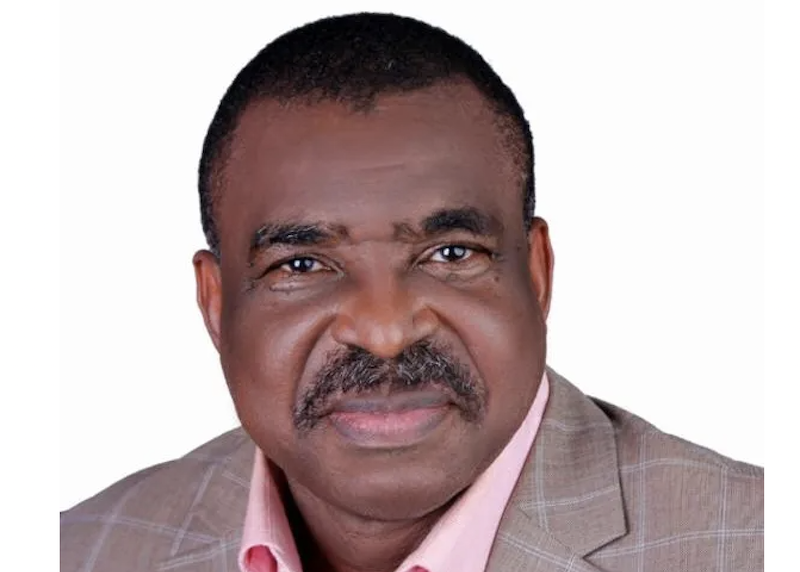
Nigeria’s worsening security crisis has renewed calls for a fundamental overhaul of the country’s centralised policing system. In his new book, ‘The Imperative of State Police in Nigeria’, Magnus Onyibe, a former Delta State commissioner and public policy analyst, argues that policing must be brought closer to the people if the country is to confront terrorism, banditry, kidnapping and other crimes effectively. Onyibe says the current structure has weakened grassroots intelligence, slowed response times and left large areas vulnerable to non-state actors. He proposes a decentralised, two-tier policing model supported by stronger community participation, modern technology, adequate funding and firm safeguards against political abuse by governors. In this interview, Onyibe explains the inspiration behind his book, examines the historical roots of Nigeria’s policing crisis and outlines how state police could strengthen—not undermine—national security, constitutional democracy and public accountability. Sunday Ehigiator presents the excerpt What inspired you to write ‘The Imperative of State Police in Nigeria’, and why now?Before the return to democracy in 1999, the military ruled without regard for human rights, as it was an autocratic government. As such, the regime tolerated no dissent; the masses were silenced by jackboots and gun barrels. Take, for instance, the infamous Maitatsine riots in the 1980s, originating from the Lake Chad area in Borno State. It was brutally crushed by military force without mercy, and the brutality could not be challenged. Under democratic rule, the president could face impeachment for authorising what might have been deemed a crime against humanity. Being conscious of the fact that dissent would increase when the military quit the political leadership stage with the return of democratic rule, I reckoned that brutal force, popularly known as kinetic action, would no longer be applied, compelling the return of the police that are more adept at managing unrest and protests than the military. So I started advocating for state police in my mass media column titled ‘Leading from the Streets’. Some of the articles I wrote and published since 1999 to date that I used as source material for the book. Why is state police an imperative, rather than just another option for tackling insecurity in Nigeria?As already stated earlier, Nigeria is currently in dire state as non-state actors are wreaking havoc on the populace by taking up arms against society. Boko Haram, whose name translates from Hausa to English as ‘opponents of Western education’, is originally against Western education, but there are currently political Boko Haram and the ideological vision. So over the years, non-state actors in Nigeria have become hydra-headed, with ISWAP, Lakurawa and sundry insurgents evolving over the years to exacerbate the level of insecurity in Nigeria.All this happened because after the 1966 military coup, the armed forces usurped the role of the police force, which is adept at and constitutionally empowered to maintain law and order in society. As Barack Obama, a former president of the US, once stated, ‘Because you have a hammer does not mean you have to hit on every nail’. Because the military was in power, and it preferred the option of using force to achieve its objectives, which, by the way, is actually its training and orientation, it was easy for it to tackle all challenges, including religious and human rights agitation, with sheer military force. Unfortunately, it has been found and even proven to be a counterproductive methodology. Hence, it has become necessary for it to return the role to the police force that should be the leading actor in that space. What did Nigeria lose when regional policing was abolished, and what lessons does that history offer today?We lost local intelligence-gathering capacity, which used to come from the grassroots. The colonialists used the regional police or native policing system the most. Hence, there was relative peace in the hinterlands. Back in the day, native police were the first responders. They were able to nip crimes in the bud, like the sheriffs in the US. Today, with a centralised policing system, response time has become too slow. Therefore, a return to a decentralised policing system has become imperative. Incidentally, I’m a big advocate for involving the community, its leaders, and traditional rulers in policing. How much of Nigeria’s security crisis is linked to weaknesses in the centralised policing system?All of the above criminal activities exist because the police are distant from society. The presence of police alone is a major deterrent. For instance, in some locations in the US, you may notice a police patrol van parked in a high-crime area with the lights flashing. If you look closely, you will find that it is just a decoy with no police officer in the vehicle. But the patrol car and lights scare away criminal elements that fear the presence of law enforcement agents. The truth is that any ungoverned swathe of land or space will be occupied by non-state actors, basically because nature abhors a vacuum. One of the biggest challenges that the security forces and agencies are currently grappling with is the lack of credible intelligence, which should be coming from the grassroots sources. As the saying goes, distance is a barrier. As you might have noticed, almost all the security forces’ successes in countering the outlaws, especially in the bushes, are through the help of hunters and vigilantes. The reason is simply that they know the terrain better.As the Minister of Defence, Gen. Chris Musa (retd), recently noted in a media statement, interagency cooperation via sharing of intelligence and assets has also helped in their recent successful operations in the theatres of war. The speed of successfully recovering the children and teachers in Orire, Oyo State, was attributed to reliance on credible intelligence provided by hunters and Amotekun, who, due to their proximity, were able to share information with their local or community leaders who worked with security forces. The 2,000 stations nationwide are not enough to cover a country of 220 to 240 million people. As for the military, they need forward operating bases so that they can respond faster when they are called upon by communities in distress. The US, for instance, has at least 850 forward operating bases worldwide, with most of them in Europe, the Middle East and Asia. They are able to fight the multiple wars they have been engaged in, including Afghanistan, Iraq, and currently Iran. A decentralised national security system will definitely take security closer to the masses. Is Nigeria’s security crisis institutional rather than a failure of individual officers, and how can state police address it without weakening the Nigeria Police Force?If you give Nigerian security agencies the right tools and training, they always excel. Your assessment is evident in the fact that our men/women in uniform on international assignments often return home with laurels for valour or leadership. So, we need to train them well, equip them with modern gadgets and other crime-fighting equipment, and keep them motivated with a good welfare package. One is not unaware of the funding constraints handicapping the government. But a situation where a police station is funded with a measly N500 a day based on a budgetary allocation of N15,000 a month is scandalous. This situation explains why police often make people who go to their stations to report crime buy stationery to write their statements and even purchase fuel for vehicles to convey them to crime scenes. The corrupt ones amongst them also mount illegal checkpoints to extort unfortunate members of the public. Conversely, a well-resourced private security firm such as Tantita Security Services is doing well protecting our country’s oil/gas assets in the Niger Delta because they have the correct tools and a well-motivated workforce. How can your framework prevent governors from abusing state police for political purposes?The threat is real, but you can’t throw away the baby with the bath water. Because someone got choked and probably died while eating does not mean we all should stop eating. Road accidents happen quite often, and so do air mishaps occur, but people still travel by road and air. What gives folks the confidence to keep travelling by air and road is that lessons are learnt and measures to prevent future occurrences are put in place. So the guardrails are being put in place by the presidential working group on state police, of which the chief of staff to the president, Rt. Hon. Femi Gbajabiamila is the chairman. What would an ideal state police system look like in terms of recruitment, command, funding, training and accountability?The conventional wise crack, ‘He who wears the shoes knows where it pinches’, matters in this instance. The community has to be involved in all the aspects you listed. Very importantly, there has to be accountability and oversight too by the community leaders, who in most cases are monarchs or chiefs. I’ve been informed by the secretary to the Presidential Working Group, Dubem Moghalu, that they are in partnership with stakeholders preparing a workable formula/blueprint based on information extracted from the community leaders and members of Nigerian society nationwide. With a constitutional proviso that any constitutional reform must receive the concurrence of a two-thirds majority of state houses of assembly, inputs from local community levels must shape the new police force, which is being proposed to be two-tier: federal and state police, as obtainable in the US. It could even be multi-layered to county police, etc. How should state police be funded, especially in poorer states, and what role should the Federal Government play?Funding will always be an issue. Even in the almighty USA, funding has always been an issue to the extent that politicians make it a campaign talking point. Hence, talks about defunding the police or not have become a defining political matter that can make or mar a politician’s chances at the polls in the US, Germany and India, etc. As for police reform in Nigeria, there is a proposal which will likely sail through that the federal government standardise policing. There will be a minimum threshold for states to meet in order to be allowed to operate. Also, the FG will augment or support any state unable to fund its police force. But in my view, all the states are likely to be able to be self-funding owing to the huge funds accruing to them arising from savings from petrol subsidy removal by President Tinubu. Also, there are opportunities to get funding via a public-private partnership (PPP model that has been mastered by both Lagos and Enugu states. The Police Trust Fund is another window for funding the police. I believe the mandatory three per cent charge from the budget has been increased by the federal lawmakers to five per cent or so in the course of the ongoing reform exercise. How can AI, data analytics, surveillance and command centres transform state policing in Nigeria?Although the cost of acquiring and deploying high technology is quite prohibitive, in my view, there is no expense that is too much to spend in securing lives and property. In these days of high tech such as artificial intelligence, governments can’t afford to allow non-state actors to get ahead of them in the deployment of technology for nefarious activities, as they currently sometimes outgun our security agents because they possess sophisticated and superior weapons. Enugu State is the leader in deploying technology for security purposes. Lagos State follows it closely,fundswith and both have set up partnership arrangements with the private sector to raise funds to provide people in their respective states with watertight security services. Enugu State has even gone as far as setting up a forensic laboratory to track repeat criminals and track them through their fingerprints and other evidence. However, not all states have to own labs. One can serve each region. States like Oyo and Niger have also recently procured drones to combat insecurity. How can traditional rulers and community institutions support modern policing without undermining constitutional authority and professional standards?I’m a strong and perhaps the only advocate for the involvement of our traditional rulers and community leaders in policing. In my view, their role as the ones settling quarrels and conflicts between the people in their communities puts them in pole position to be a repository of local intelligence, which can help the police nip crimes in the bud. Criminals are not spirits or ghosts but humans who are anti-social, lazy and want to obtain what does not belong to them by force and likely hold extreme views about religion or politics, as the case may be.They, in most cases, live amongst us except for the hardened extremists who reside in the forests. Even those have family members because they didn’t drop from the sky. As such, the community leaders or traditional leaders know them and can help law enforcement trace them. In the past, before the 1966 coup, after which the police were centralised, traditional rulers had native police before they were integrated into the federal police. They deployed the police before they escalated. Today, traditional rulers who report outlaws are killed easily in reprisal actions because they have no defence against their attackers, which is unlike the days of native police, which were used by the colonialists to maintain law and order. Do you believe the current momentum under President Tinubu is Nigeria’s best opportunity in decades to reform its policing system?What President Tinubu is about to do was attempted by former President Olusegun Obasanjo in 1999, when he saw the green sprouts of the current full-blown state of insecurity threatening to wreck our country, but which our gallant soldiers are combating. But he was threatened with impeachment by the governors who saw state police as an unnecessary burden that the FG wanted to shift to them. Their point was that, at a time when they were seeking a bigger slice of federal revenue, the FG was indirectly trying to increase their financial burden by unbundling state police, which would require them to invest a big chunk of their lean funds into funding state police, and they didn’t like that.As we may be aware, policing is on the exclusive legislative list, which means it is exclusively in the purview of the federal government, which pays the police, since the Constitution in Section 214 states clearly that there shall be one police force controlled by the FG. Ideally, the FG should have proposed state police along with allocating more revenue to states by tinkering with the current revenue formula. But perhaps because they didn’t invest in critical and out-of-the-box thinking, they did not do that, and the governors who were conscious and concerned about their tight revenue position, in resistance to further pressure on their already stretched revenue, stopped the move, and the concept got stymied. What measurable improvements should Nigerians expect from state police within the first three to five years?With police presence in the communities, especially in ungoverned spaces where there is no government presence, and more police stations, the people will feel safe, and the marauders will be deterred from attacking wantonly. The response time by law enforcement will also be shorter. That is, in addition to the fact that information and intelligence to nip crimes in the bud are readily available. When the community is involved in policing, it is usually safer. Finally, who is the book written for, and what should Nigerians take away from it about security reform?The book is written for Nigerians in general, as the book details how decentralised policing can strengthen security without undermining national unity or constitutional democracy. The book proposes a comprehensive framework covering recruitment, professional standards, command, funding, accountability, technology, intelligence sharing and federal-state coordination, while highlighting the roles of traditional rulers, communities and political leadership.
Magnus Onyibe: Nigeria’s Centralised Police System Has Failed, State Police Now Imperative
Full Article
Original Source
Read the full article at Thisdaylive →KhanList aggregates and links to publicly available news content. We do not host full articles from third-party sources. Always verify important information with original sources.