
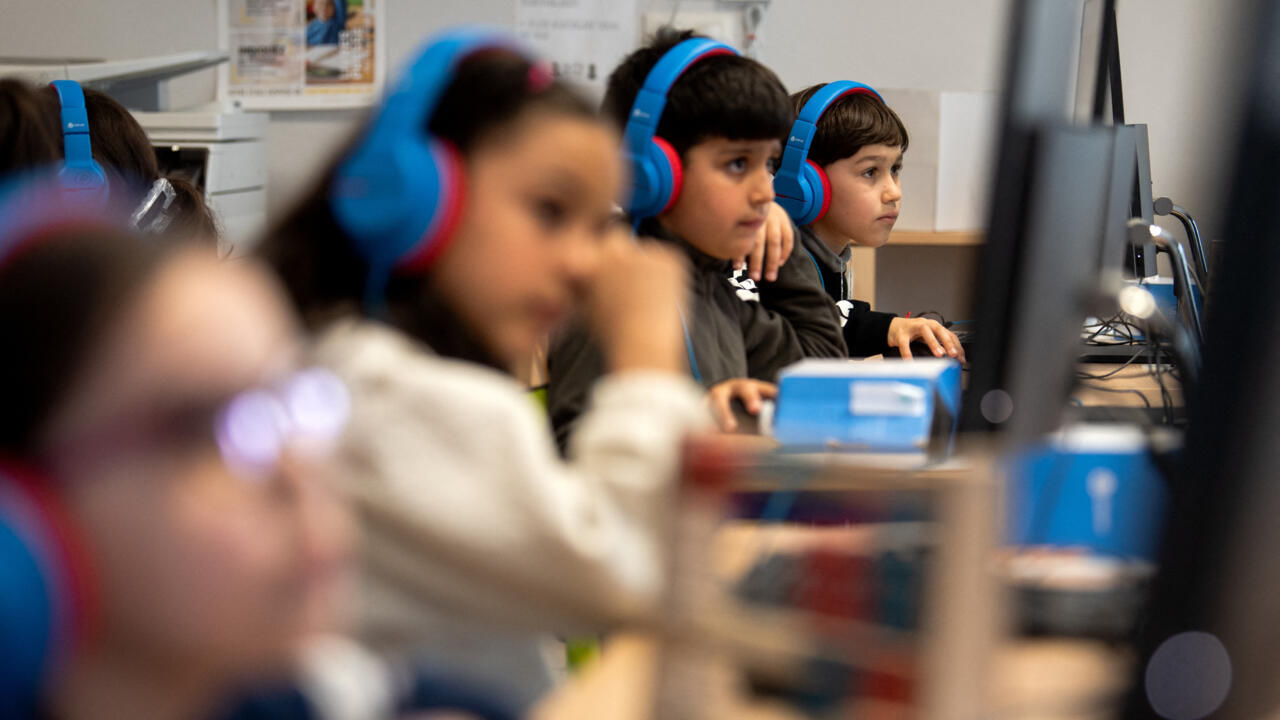
The annual Paris Peace Forum has placed artificial intelligence among the key topics on its agenda. Ahead of the forum, French President Emmanuel Macron launched an international charter to regulate the development and security of AI, focusing in particular on protecting children’s mental health. A year and a half after the Paris Summit for Action on Artificial Intelligence, the French capital is once again at the heart of international discussions on the emerging technology. President Emmanuel Macron, who has been vocal about the need for regulation, warned that “just because it’s AI doesn’t mean it should be the Wild West.” Macron, who is also pushing to ban under-15s from certain social media platforms, said: “If there is a risk for children with certain uses of AI, then it must be banned.” He made the comments in an interview with the French daily Les Echos on the eve of the adoption of a charter on the subject at the Paris Peace Forum. On Tuesday, a committee of experts made up of psychiatrists, lawyers, economists and scientists presented Macron with a report on artificial intelligence entitled “Generative AI and Vulnerabilities”. Coordinated by the AI and Digital Council (CIANum), the committee has held 55 hearings since February and drawn up 18 recommendations. Amine Benyamina, a professor of psychiatry and addiction specialist at Paris-Saclay University, warns that France must not “miss the turning point” of generative AI, but should be careful “not to hit the wall”. ‘Cognitive debt’ Benyamina, who co-chairs the scientific committee, says one of the biggest risks of using generative artificial intelligence is “cognitive debt”. This means “not fully utilising our cognitive capacities, such as thinking, reflection and decision-making,” he told France Inter radio on Tuesday. “We will find ourselves in a state of dependency and cognitive laziness,” he said, particularly when it comes to searching for information, which would ultimately put an end to our “free will”. Another vulnerability the committee identified is the development of “an emotional dependence, amplified by what we call flattery,” Benyamina explains. These vulnerabilities can also weigh on our model of society, he says. At a collective level, the issue is primarily one of thought and opinion. “We are on the eve of elections, and we realise that, ultimately, what comes out of AI is [considered] more credible, less subject to debate.” How deepfakes and cloned voices are distorting Europe's elections Benyamina cites the example of the Scottish parliamentary elections in May 2026. According to the researcher, “35 percent of the information that was distributed by AI to people who were supposed to vote was wrong.” The researchers stressed the particular need to protect minors from the harmful effects of artificial intelligence. They found that in France, 26 percent of 12- to 17-year-olds use generative AI daily, and nearly 70 percent of 15- to 24-year-olds use it regularly. Among its 18 recommendations, the committee called on leaders to develop an ambitious national AI education policy and to introduce independent evaluations of generative AI systems both before and after they go on the market. A separate survey, released in May this year, revealed that nearly nine out of ten young people use conversational AI tools, and almost half of them discuss personal matters with them. Conducted by the VYV mutual insurance group and the French data protection authority (CNIL) in four European countries, the survey found that 48 percent of young people use conversational artificial intelligence to discuss personal or intimate topics, and 33 percent see it as a “therapist” in certain situations. That figure rises to 46 percent among young respondents suffering from anxiety. Lack of understanding However, the survey indicated that the young people interviewed have only a “partial understanding” of the data issues surrounding AI. According to the study, 69 percent of young people believe that AI can provide reliable advice, and 56 percent believe it can keep their conversations confidential. Only 32 percent of respondents say they know what happens to the data they share with these tools. Furthermore, 34 percent of young people who have used artificial intelligence for personal matters say they have felt uncomfortable about advice they received. AI chatbots and TikTok reshape how young people get their daily news On Monday, Macron brought together around 50 heads of state and government, representatives of international organisations, companies, researchers and laboratories by videoconference to discuss the risks AI poses to collective security and to draw up a common charter. The goal is to create “a framework that takes into account the dangers, which fall into three categories: our children, democratic security and major national security issues”, Macron’s office said. Participants agreed on three priorities: improving independent public evaluations of the risks posed by the most advanced AI models, strengthening the sharing of alerts about serious incidents, and increasing accountability for AI developers. The British, Canadian, Norwegian, Dutch and Japanese prime ministers took part in the videoconference, as did the CEOs of OpenAI, Anthropic, Mistral and Microsoft. Companies will accept “the principle of a pre-audit and pre-certification, with a prior review of the models before putting them in children’s hands”, Macron said. “We are going to advance European regulation and push for the Americans, the Canadians and others to do as we do. We are in the process of creating the beginnings of frontier AI regulation,” he said. “The diagnosis is shared. We must act together,” Macron concluded on the social media platform X.
Macron rallies world leaders behind charter to protect children from AI risks
Full Article
Original Source
Read the full article at Rfi →KhanList aggregates and links to publicly available news content. We do not host full articles from third-party sources. Always verify important information with original sources.