
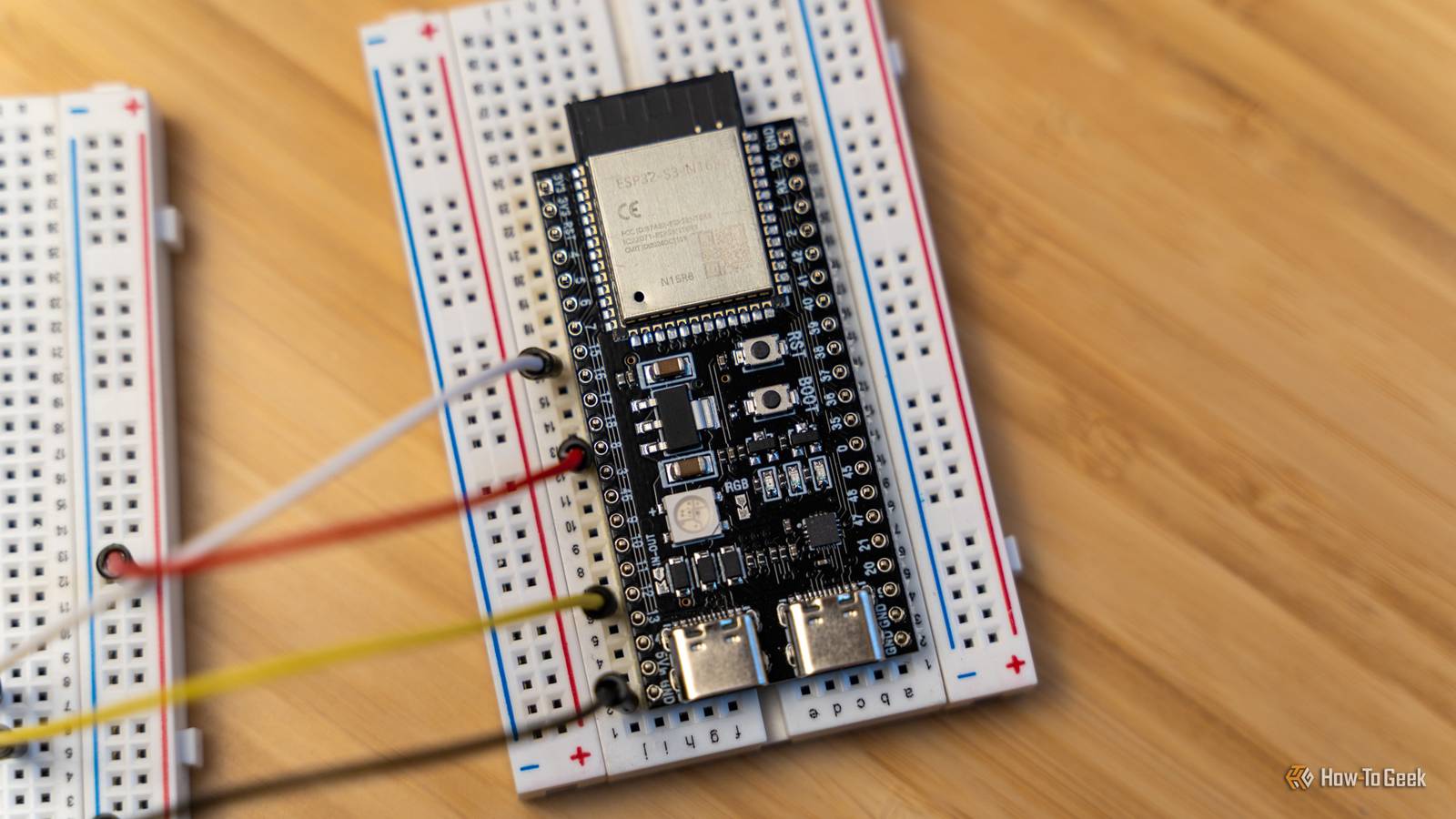
Published Aug 25, 2026, 12:00 PM EDT Patrick Campanale has been in the tech space for well over a decade, specializing in PC/gaming news and reviews, as well as maker-focused products to build small businesses. With a start in technology back in 2010 surrounding the Palm/webOS ecosystem, Patrick spent his formative years developing mobile applications as well as blogging for various publications, eventually leading to starting his own website in 2014. After running a technology blog for a few years, he stepped out of that role and into the world of high-end custom PC manufacturing and building, with a focus on YouTube video production and overclocking. Then, six years ago, Patrick joined the 9to5Toys team as an editor/writer/reviewer with over 14,000 articles being published there there, ranging from deals and roundups to in-depth reviews on the latest technology, video games, 3D printers, and more. In his free time, Patrick loves to create projects from wood using various robots and methods, including leveraging the technologies of CNCs and lasers. If Patrick isn't working on a computer or playing video games, he's likely in his 2-car garage workshop creating something unique. In addition to all this, Patrick is also a youth pastor at his local church where he feels God has called him to serve, and he loves every minute of it. The ESP32 can seem overwhelming at first because there are so many projects to try with it. However, you can start out super simple, like the three projects below. These three ESP32 projects are perfect for beginners and can easily be completed in a weekend. A simple automatic nightlight that can be built in an afternoon This is the perfect ESP32 project to cut your teeth on Nightlights are actually super simple systems. Really, you could build them with the simplest of circuits and microcontrollers. However, an ESP32 makes building a nightlight way more fun than you think it could be. You’ll need to start with the ESP32 and a photoresistor. The basic premise is to program the ESP32 to turn whatever light you have on whenever the lights go out. That’s what the photoresistor does. However, since the ESP32 can be connected into your smart home with Home Assistant and ESPHome, you can take it a step further. Instead of having the ESP32 turn on a light that’s physically connected to it, just plug it in anywhere in the room where it can sense the main light. Simply program Home Assistant to turn on a lamp whenever the photoresistor senses that the lights have gone out. Sure, you could program Home Assistant to just turn the light on at a specific time, but the photoresistor route is more fun and honestly more useful. A Wi-Fi temperature and humidity sensor It can even integrate with Home Assistant! Credit: Bertel King / How-To Geek ESP32s and Home Assistant go hand in hand, especially when it comes to sensors. All it takes to build a Home Assistant-compatible Wi-Fi temperature and humidity sensor is the ESP32-C6 and the BME280 temperature and humidity sensor. From there, just flash ESPHome on the ESP32 and integrate the readings into Home Assistant. You can display the information on a Home Assistant dashboard, use it to control heating and cooling throughout your home, or have it turn on the bathroom fan when the humidity gets high from the shower running. However, you could also hook up a small OLED display to the ESP32 so it could show the temperature and humidity of the room right in front of you. The cool thing is you can actually do both at the same time—have it report to Home Assistant and display on an OLED screen sitting on your desk. Many smart thermostats are compatible with Home Assistant, so building a handful of Wi-Fi temperature and humidity sensors could really take your home's smart heating and cooling to the next level. Home Assistant is capable of monitoring multiple rooms and averaging them out for a balanced house, as well as focusing only on certain rooms at different times of the day. My wife and I use our smart thermostat this way—during the day, it balances the entire house. However, at night, it only looks at the primary bedroom as that's the only room that matters. The rest of the house could be hot (or cold) and I don't care, so long as my bedroom stays the right temperature. Garage parking assistant Never wonder if the garage door will clear the back of your car again Credit: Patrick Campanale / How-To Geek While my garage is actually my DIY workshop, I know many people who park in their garages. Weird, right? Well, if you're one of those weirdos who uses their garage for its intended purposes, then a garage parking assistant is just for you. Years ago, my grandma kept a tennis ball on a rope in the garage that touched the windshield. When it tapped on the windshield, she was far enough in. This is actually a really simple yet elegant way to know you've pulled far enough into the garage. But, that's not enough for the DIYer. An ESP32, VL53L1X ToF sensor, and a set of LEDs are all you need for a fun project that will be way more techy than a tennis ball on a string. The build is honestly simple. You connect the VL53L1X ToF (time of flight) sensor to the I2C connections on the ESP32. Then, hook up red, yellow, and green LEDs to the ESP32. Program the ESP32 with how far you want each set of LEDs to light up at. For instance, you could have it default to off, and turn green once it detects your bumper. Then, you can have it turn yellow once you're a few feet from the wall. Finally, it can turn red when you're within 12 inches of the wall. The VL53L1X ToF sensor is better than an ultrasonic sensor because it's accurate to around 20mm, which is far more precise than an ultrasonic sensor can reliably be. Seeed Studio XIAO ESP32-C6 The Seeed Studio XIAO ESP32C6 is the perfect microcontroller for your next smart home project. The built-in Zigbee and Thread radios compliments Matter support. Plus, with Wi-Fi 6, it'll easily connect to modern wireless networks. 3-pack ESP32-S3 N16R8 This 3-pack of ESP32-S3 N16R8 microcontrollers are perfect for your DIY projects. Being the N16R8 models, there's enough memory and storage to run projects using platforms like MicroPython instead of having to rely on just straight C coding. Also, the breadboard pins are included in the package, though you will have to solder them on. Think of the ESP32 as a more versatile Raspberry Pi While the Raspberry Pi might literally do more than the ESP32, the ESP32 is way more versatile, in my opinion. Since it's not a single-board computer, and is, instead, a microcontroller, it's easier to program it for simple tasks. The Raspberry Pi is really overkill for all three projects I have listed above, but they're perfect for the ESP32-C6. The ESP32 can enter a super low power mode, making it ideal to run on batteries for things like the temperature and humidity sensor, or the nightlight sensor. This is simply something that the Pi can't do. So, if you've been on the fence about trying out microcontroller projects, give the ESP32 a try. You won't be disappointed.
Looking for easy ESP32 projects? These 3 are the best place to start
Full Article
Original Source
Read the full article at Howtogeek →KhanList aggregates and links to publicly available news content. We do not host full articles from third-party sources. Always verify important information with original sources.