
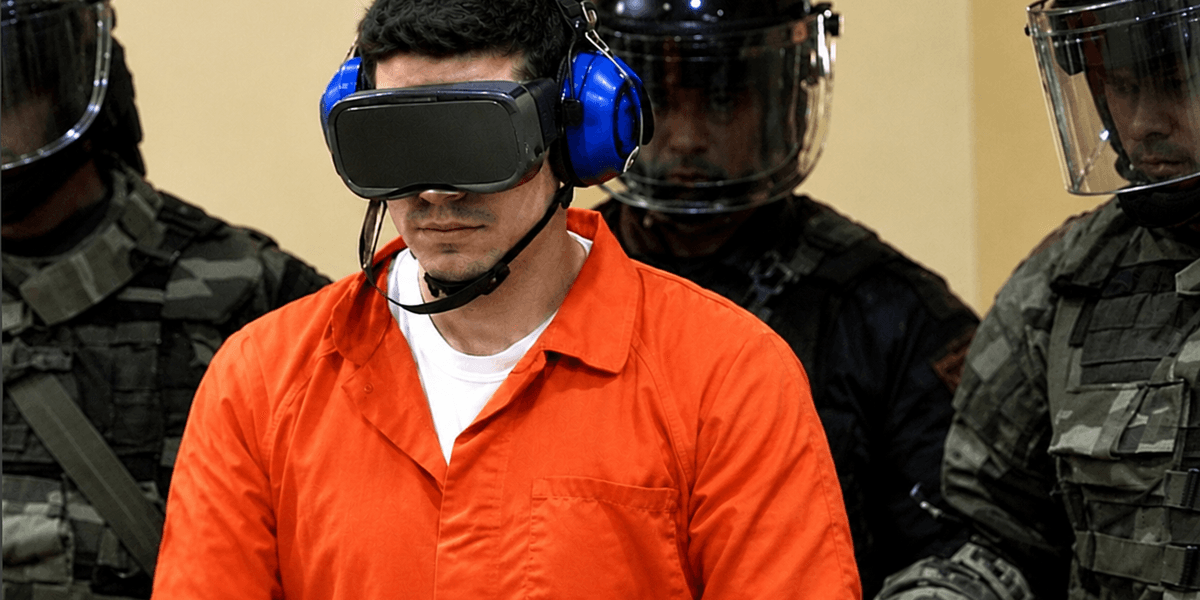
On November 16, four days after Jose Padilla was released from prison after serving 24 years, CNN, citing “seven US officials,” warned that Iran was planning to detonate “a so-called dirty bomb” in Washington, D.C. Do you remember the last time we heard overheated warnings about a “dirty bomb” attack? I do.In June 2002, I was contacted by Donna Newman and Andrew Patel, the attorneys representing Jose Padilla. This U.S. citizen, who converted to Islam in prison, joined al-Qaeda in 2001 and was arrested in Chicago. At the time of his capture, Attorney General John Ashcroft announced that “we have captured a known terrorist who was exploring a plan to build and explode a radiological dispersion device, or ‘dirty bomb,’ in the United States.” On June 9, 2002, President Bush ordered Secretary of Defense Donald Rumsfeld “to detain Mr. Padilla as an enemy combatant.” Padilla was transferred to a military brig in South Carolina, and for the next 43 months he was interrogated, tortured, and held without charges. Rumsfeld v. Padilla would serve as a preview of America’s “new paradigm” that governs our conduct to this day. Weeks after September 11, 2001, senior Justice Department lawyers convinced President Bush that the “War on Terror” was a new kind of war requiring a different framework rendering the Geneva Convention’s strict limitations on the treatment of enemy prisoners obsolete.Unlike previous American presidents who claimed to support international law when the outcome was favorable to the United States, President Bush explicitly rejected that long-standing, codified laws of war like the Geneva Conventions applied to the enemy at hand.This distinction was soon elevated to a matter of principle as America began its sordid affair with what Vice President Cheney described as “the dark side.” Initially the Bush administration took the position that al-Qaeda and the Taliban were “illegal enemy combatants” unprotected by Common Article 3 of the Geneva Convention or War Crimes Act. It wasn’t until 2006 in Hamdan vs. Rumsfeld, that the Supreme Court said no, Common Article 3 did extend to non-state actors. Bush responded by issuing an Executive Order in 2007 insisting that CIA detentions and interrogations would continue, but would comply with the Geneva Conventions.It was under this cloud that the Padilla case would arise in a pattern that became typical after 9/11. His arrest in 2002 was hailed as a major act of terrorism thwarted; he was held — without formal charges — for years, but the reality of his “threat” was much murkier than the initial headlines. Soon he was even forgotten.“For so many of these cases, there seems to be much less substance to them than we first assume or have first been told,” RAND terrorism expert Bruce Hoffman explained to a reporter in 2005. “There's an inherent deterrent effect in cracking down on any illicit activity. But the challenge is not exaggerating what they were up to — not portraying them as superterrorists when they're really the low end of the food chain.”While Padilla had proposed a “dirty bomb” plan to al-Qaeda leaders Abu Zubaydah and Khalid Sheikh Mohammed in 2002, both rejected it and questioned his mental competence. One CIA official wrote, “even KSM [Khalid Sheikh Mohammed] says Padilla had a screw loose.” A U.S. Senate Intelligence Committee report on CIA detention and interrogation would later conclude that the accusation Padilla was the “dirty bomb” mastermind came from torture-induced statements made by Abu Zubaydah and Binyam Mohamed. Even more absurd, the CIA admitted in 2003 that Padilla’s “dirty bomb” plan came from author and political activist Barbara Ehrenreich’s satirical 1979 essay, “How to Build an H-Bomb.”“Fill a standard-size bucket one-quarter full of liquid uranium hexafluoride. Attach a six-foot rope to the bucket handle,” she wrote. “Now swing the rope (and attached bucket) around your head as fast as possible.” The CIA and the Lawrence Livermore National Laboratory would later describe Ehrenreich’s essay as “filled with countless technical inaccuracies which would likely result in the death of anyone attempting to follow the instructions, and would definitely not result in a nuclear explosive device.”After America’s many intelligence agencies concluded that Padilla was little more than a radicalized thug who the U.S. criminal justice system could have disposed of, the Bush administration decided to torture him instead. During the three-and-a-half years he was locked in a windowless, 9-foot-by-7-foot cell without a mattress, pillow, clock, calendar, or lawyer, he was interrogated and tortured. His lawyers also claimed he was given hallucinogenic drugs. By the time forensic psychiatrist Dr. Angela Hegarty examined Padilla to determine his fitness to stand trial, he had PTSD, and possibly Stockholm Syndrome. When she pressed the prisoner about his treatment, he refused to reveal “classified information” and defended “the commander in chief.” Hegarty was struck by his absolute state of terror, terror alternating with numbness, largely. It was as though the interrogators were in the room with us.” After the legal challenges of Rumsfeld v. Padilla, the government moved to try Padilla in a federal court in Florida in 2005. There, the prosecution presented 22 witnesses and FBI wiretap recordings, but there was no mention of a “dirty bomb.” In the end, he was found guilty of conspiracy to murder, kidnap and maim people overseas, and material support of terrorism. He was ultimately sentenced to 21 years in prison.He was released without fanfare on Nov. 12.The term “enemy combatant” was a strategic legal mechanism that allowed the Bush administration to replace international humanitarian law with messianic unilateralism. “Good” and “evil” became the metrics for a new American foreign policy. After 9/11, neo-imperialists called for a unipolar world, with America striking out preemptively against threats both real and imagined. In his 2002 book, Savage Wars for Peace, Council on Foreign Relations fellow Max Boot argued: “In deploying American power, decision makers should be less apologetic, less hesitant, less humble….America should not be afraid to fight 'the savage wars of peace' if necessary to enlarge the 'empire of liberty.’” President Bush’s Canadian-born speechwriter David Frum, and Iraq War architect Richard Perle, went even further and claimed that the stakes for the United States in the War on Terror were “victory or holocaust.” We should also remember that the Global War on Terror’s cheerleaders and enablers were not just neoconservatives and rightwingers. Establishment media and liberal hawks like Judith Miller, Thomas Friedman, George Packer, Michael Ignatieff, David Remnick, Jeffrey Goldberg, Andrew Sullivan, and Peter Beinart helped to sell and justify the new U.S. policy too. “The press played ball. After 9/11, they rolled over and played dead,” said the late, White House press correspondent, Helen Thomas. “To ask a question was to be unpatriotic, un-American and so forth.”In the 1950s, the CIA’s Frank Wisner called the agency’s media collaborators and front organizations his “Mighty Wurlitzer” because they were “capable of playing any propaganda tune he desired.” With distrust of the mainstream media at an all-time high, the once “Mighty Wurlitzer” is now a “Warped Upright” whose rusted strings and stuck keys provide an out-of-tune reminder of our former glory and how far we have fallen.As for CNN’s breathless accounts of an Iranian “dirty bomb” based on “anonymous government officials,” George W. Bush put it best: “There’s an old saying in Tennessee — I know it’s in Texas, probably in Tennessee — that says, fool me once, shame on — shame on you. Fool me — you can’t get fooled again.”
Long forgotten OG 'dirty bomber' Jose Padilla is now free
Full Article
Original Source
Read the full article at Responsiblestatecraft →KhanList aggregates and links to publicly available news content. We do not host full articles from third-party sources. Always verify important information with original sources.