
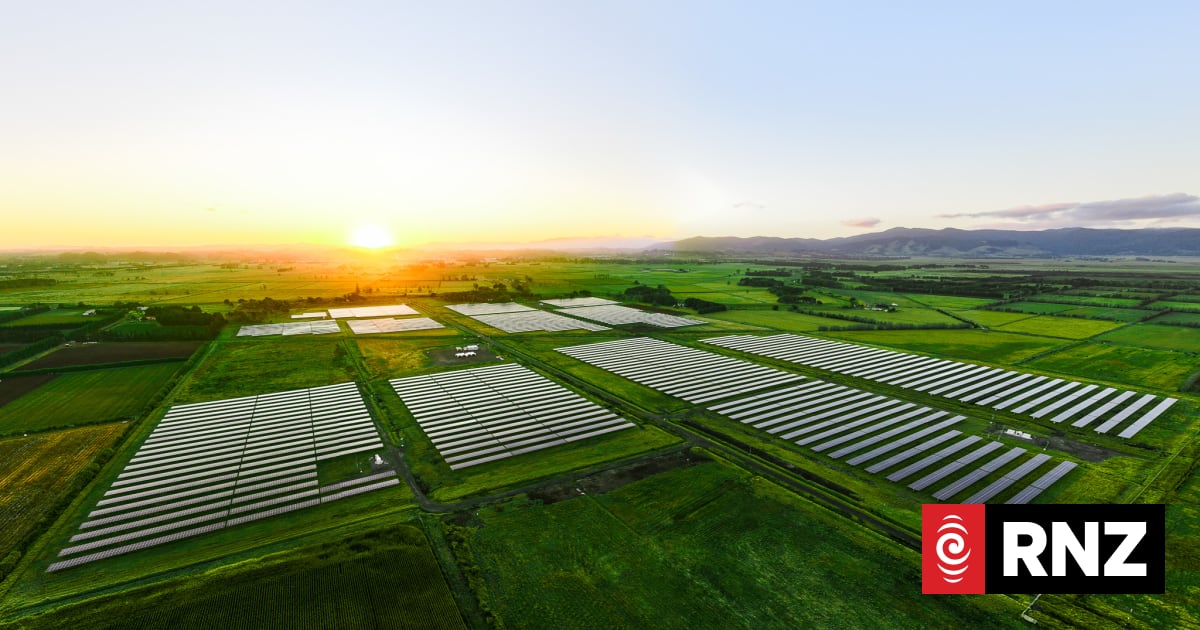
Solar energy firm Lodestone is set to become New Zealand's first major initial public offering (IPO) since 2021 - but should you invest in it?The company plans to sell shares at $2.25 each, which would put its value at between $440 million and $465m.New Zealand investors have not always fared well in IPOs. High-profile My Food Bag listed with shares priced at $1.85, but they are now changing hands at about 30c.Will Lodestone be a better proposition?Greg Smith, investment specialist at Generate, said whether to invest was not a simple "yes" or "no" answer for the average investor, and more a question of risk, valuation and portfolio fit."This isn't a large IPO by market standards, but it is one of the first meaningful new listings the NZX has seen in several years. That's encouraging in itself. New Zealand's sharemarket has been short of fresh listings for a long time, so a successful offer would be a positive signal for other private companies considering a public listing," he said."It also gives investors exposure to something the local market hasn't really offered before. Utility-scale solar generation has not been directly investable through the NZX, and the sector sits within several powerful long-term trends, including renewable energy investment, electrification, and growing electricity demand from technologies such as artificial intelligence and data centres."He said it was also positive that capital was being raised to fund business growth rather than allowing existing shareholders to cash out, as had been the case with other IPOs."The challenge is that buying into an IPO is very different from buying shares in an established electricity generator. Investors are effectively backing management to deliver a development pipeline that is still being built. That means execution risk, exposure to wholesale electricity prices, funding markets and the success of the company's retail growth ambitions."For many household investors, the key question isn't whether solar energy has a bright future. Most people would likely agree it does. The real question is whether the offer price adequately compensates investors for the risks involved in turning that opportunity into profits."A good company can still be a poor investment if the price is too high, and a promising theme doesn't automatically translate into attractive shareholder returns."He said he could not comment on whether Generate would participate in the offer but he was pleased to see it come to market."Ultimately, if you're a household investor, the question isn't whether solar power is a good idea. It's whether you're paying a fair price today for growth that still needs to be delivered tomorrow."Gertjan Verdickt, a former finance lecturer at the University of Auckland, he said he did not know the company well enough to know whether it would be a good investment.But he said he was concerned it was a relatively small IPO."This will translate into fewer shares outstanding, so illiquidity will be a [concern]. Generally, this type of small cap stocks tend to outperform, but this is at the expense of liquidity and higher risk = such companies tend to be overlooked, are less diversified when it comes to business activities ... So I would be careful if I were the average Kiwi."Lodestone said every existing shareholder would stay invested through the IPO and an escrow period after listing."That means new shareholders will be coming into the business alongside the people that backed it through its first stage of growth."It is expected to join the NZX towards the end of next month.Sign up for Money with Susan Edmunds, a weekly newsletter covering all the things that affect how we make and spend money
Lodestone is listing: Should you buy shares?
Full Article
Original Source
Read the full article at Rnz →KhanList aggregates and links to publicly available news content. We do not host full articles from third-party sources. Always verify important information with original sources.