
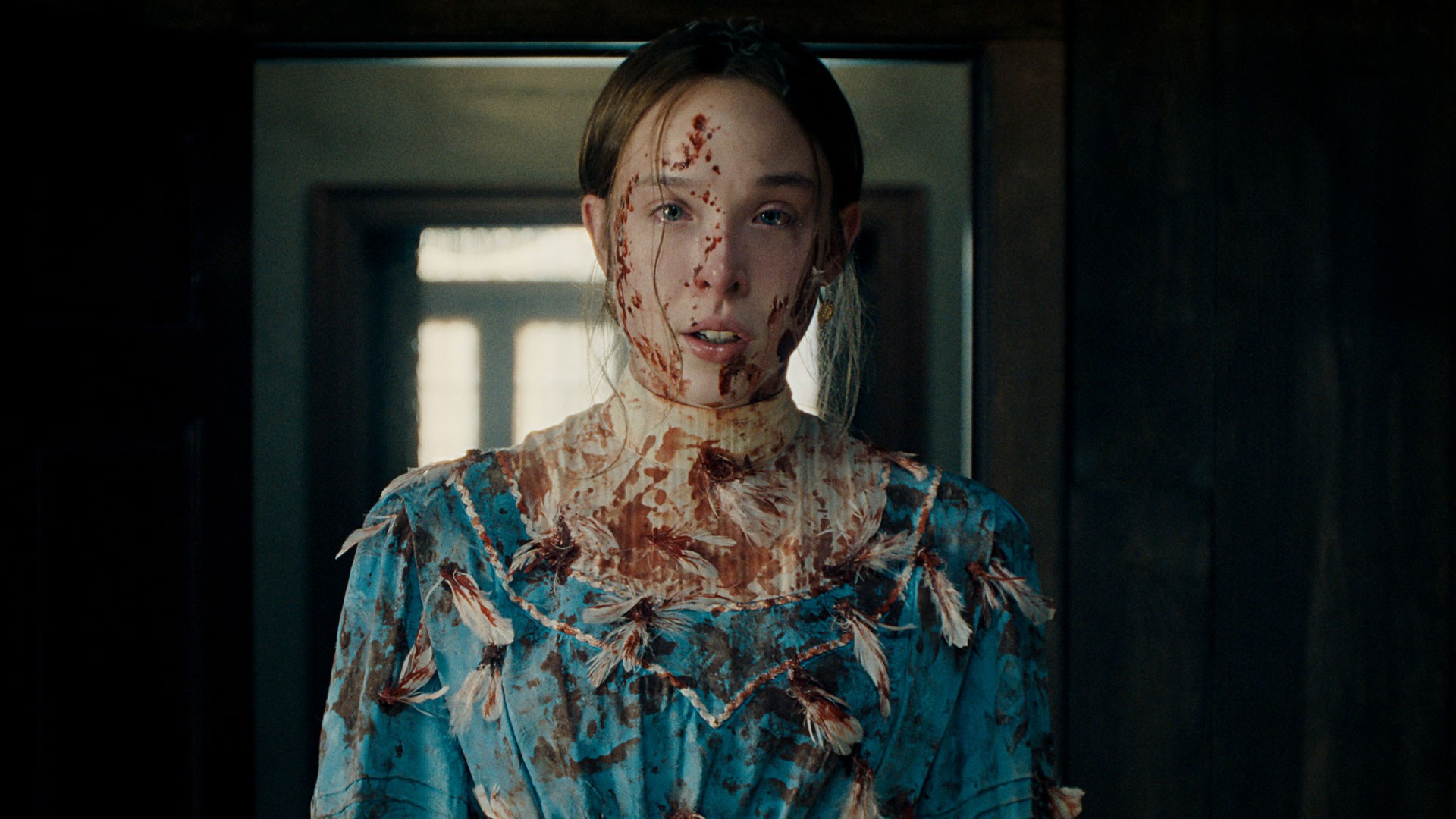
THE new Lizzie Borden Monster series on Netflix opens with the alleged killer wielding an axe as she brutally murders her father and stepmother. But the real-life case was nowhere near as clear-cut, with Lizzie acquitted by an all-male jury after Andrew and Abby Borden were found butchered inside their Massachusetts home in 1892. Lizzie Borden is played by Ella Beatty in the new Monster series on Netflix Credit: Alamy The actress is seen covered in blood after murdering her father and stepmother with an axe Credit: PA Abby, 64, was killed first in an upstairs guest bedroom, suffering 19 blows to the face and back of the head, before Andrew, 69, was struck 11 times in the face while lying on a sofa downstairs later that morning. Lizzie was accused of carrying out both killings, but more than 130 years later nobody has ever been convicted, with a burned dress, an alleged attempt to buy poison and a string of other suspects all becoming part of the mystery. Sign up for The Sun newsletter Thank you! Despite the savage nature of the killings, there was one glaring problem with the case – not a drop of blood was found on Lizzie. “She was examined very carefully by the police, and her clothing was examined and there was no blood on her,” leading Lizzie expert Dr. Stefani Koorey told The U.S. Sun. “She hadn’t just washed her face. She wasn’t, you know, wet from the water. She didn’t have any evidence of having committed the crime.” Koorey, who has spent decades researching the murders, also highlighted the physical effort that would have been required to carry out both attacks. “If you’ve ever picked up a hatchet and swung it above your head 19 times, it is a very strenuous activity,” she said. “And then to sit and wait and do it again 11 more times. And these were people that she would have known and loved at one time.” Most read in The Sun There was also a wild theory that Lizzie could have committed the murders naked, but there were no signs she had just taken a shower or washed herself afterward. Monster: The Lizzie Borden Story, the fourth installment of Ryan Murphy and Ian Brennan’s Netflix anthology, is now putting the infamous case back in the spotlight. The Borden home on Second Street in Fall River, Mass., where the murders of Lizzie Borden’s parents occurred, is now a bed and breakfast Credit: Getty The real Lizzie Borden was acquitted after a jury came back with a verdict in just an hour Credit: Alamy The eight-part series, directed by Max Winkler, stars Ella Beatty as Lizzie alongside Vicky Krieps as maid Bridget Sullivan, Billie Lourd as Lizzie’s sister Emma, and Jessica Barden as stage actress Nance O’Neil. Another bizarre strand of the case began the day before the murders when a drugstore clerk claimed Lizzie tried to buy prussic acid, a deadly poison. Eli Bence said she asked for ten cents’ worth and claimed she wanted to use it on a sealskin cape, but he refused to sell it to her without a doctor’s prescription. Lizzie denied trying to buy the poison and there was no evidence she ever obtained it, while tests carried out after the deaths found no poison and Bence’s potentially damaging testimony was ultimately excluded from her trial. Yet it was another seemingly suspicious act that Koorey says resulted in Lizzie ever facing a murder trial at all. Three days after the killings, Lizzie’s friend Alice Russell saw her preparing to burn a light-blue cotton dress in the kitchen stove. Russell later testified that she saw Lizzie with the dress and heard her say, “I am going to burn this old thing up; it is covered with paint.” Russell told the court she later warned her friend, “I wouldn’t let anybody see me do that, Lizzie.” The following day, Russell said she confronted her again, telling her, “I am afraid, Lizzie, the worst thing you could have done was to burn that dress. I have been asked about your dresses.” According to Russell’s sworn testimony, Lizzie replied, “Oh, what made you let me do it? Why didn’t you tell me?” Russell’s conscience got the better of her and she eventually told investigators about the incident. Jessica Barden, Vicky Krieps, Ella Beatty and Billie Lourd at Netflix’s ‘Monster The Lizzie Borden Story’ premiere in New York Credit: Shutterstock Editorial Ella as Lizzie Borden in a bath of blood in the new series which is streaming on Netflix Credit: Alamy “If it wasn’t for the dress burning, Lizzie Borden would never have been indicted in the first place,” Koorey said. “She never would have stood trial at all.” But there was evidence supporting Lizzie’s claim that the dress really had been ruined by paint. “It definitely was a paint-stained dress, as we know, because there were witnesses who said that that dress existed, that it was paint stained,” Koorey said. She said witnesses recalled Lizzie getting house paint on the garment before the murders, while a dressmaker also testified about the existence of the paint-stained dress. “So is it the murder dress that she was wearing but was also paint stained? Who’s to say?” Koorey said. “But … it caused her to be tried for murder. That dress.” Police looked into workers connected to Andrew’s farm in Swansea as well as Lizzie and Emma’s maternal uncle John Morse, who had unexpectedly arrived at the Borden home the day before the murders and stayed overnight. “He had an alibi, a great alibi, a kind of crazy, perfect alibi,” Koorey said. Police even investigated reports of a man allegedly spotted with a bloody axe in the area. “There were people who said, ‘Oh, I saw a guy with a bloody axe in Somerset on a farm,’ and they went and investigated,” Koorey said. “And it turned out he was, like, killing some chickens.” Koorey said investigators eventually eliminated the other leads and were “left with Lizzie,” but added, “If you read the trial transcript, you understand that there was no evidence to convict her.” The murder weapon was also never found. Lizzie was acquitted in June 1893, with Koorey saying the jurors spent approximately ten minutes deciding on their verdict before deliberately waiting longer to return to court because “they didn’t want to appear that they had already figured it out.” “But she was acquitted pretty quickly. And they really believed her not to be guilty,” Koorey said, adding that the jurors later gave Lizzie a portrait of themselves that she kept. Two months after her acquittal, Lizzie and Emma left the murder house and moved into a large Victorian mansion in Fall River’s wealthy Hill neighborhood, which Lizzie named Maplecroft. But Lizzie was reportedly shunned by some members of local society and taunted by children as fascination with the murders followed her for the rest of her life. The sisters later became estranged, with Emma leaving Maplecroft in 1905. Lizzie remained there until her death in 1927 at the age of 66 and was buried in the Borden family plot alongside Andrew and Abby. Emma died just nine days later, leaving behind a case that had divided the sisters’ hometown and a mystery that has never been solved. To watch the full interview with Dr. Stefani Koorey, visit The U.S. Sun’s YouTube channel. Comment now
Lizzie Borden murder theories from poison plot to burned dress & why she got off as Netflix Monster revives mystery
Full Article
Original Source
Read the full article at Thesun →KhanList aggregates and links to publicly available news content. We do not host full articles from third-party sources. Always verify important information with original sources.