
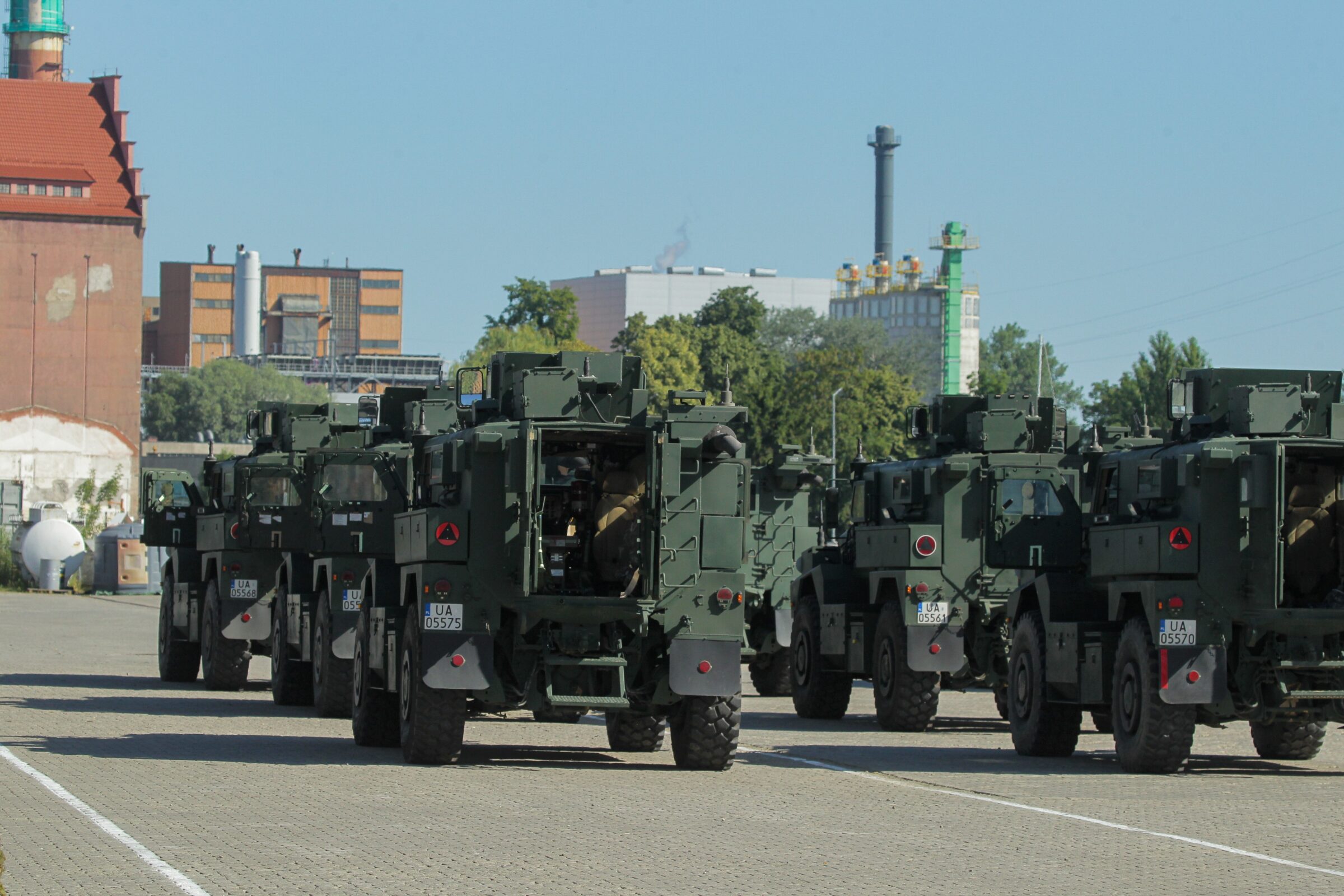
Production: By Europod, in co-production with Sphera Network. EUobserver is proud to have an editorial partnership with Europod to co-publish the podcast series “Briefed” hosted by Léa Marchal. The podcast is available on all major platforms. Find the full transcript below: A large-scale military exercise is about to begin in Poland, starting next week. It will last more than ten days and bring together 11 countries. So what is this exercise really for? The exercise is an initiative of the “coalition of the willing”, a group of around thirty countries. This is not NATO and this is important. It’s a group of countries that have volunteered to act, outside of any binding framework. Only eleven of them are taking part in the exercise because of time constraints. France is providing the bulk of the contingent, alongside the United Kingdom, Belgium and Poland, among others. So what will these 2,800 troops actually be doing for more than ten days? Its goal is to test, and to show, what Europeans are actually able to do as part of security guarantees for Ukraine. Let’s maybe remember what we mean by “security guarantees”. These are the commitments some European countries are ready to make once the war is over, or at least after a genuine ceasefire, to make sure Ukraine is not invaded again. Ukraine insists on this for a simple reason: the Minsk agreements of 2015, meant to bring peace to the Donbas, were never respected by Russia. Back to the exercise. Troops will be testing command structures, logistics and, above all, coordination between air, naval and land forces. The ground exercise takes place in Poland, the aircraft are expected to fly in from Romania, and Turkey should lead a simulated maritime exercise. According to Tom Bateman, the commander of this exercise, the aim is to show that this contingent can be deployed quickly. And of course, it’s also a signal to Kyiv: the volunteer countries are serious when they promise security guarantees. But there is another message, aimed at Washington. The American contribution to these guarantees is, for now, completely uncertain, just like the US support for Ukraine’s war effort more broadly. So Europeans are playing on two fronts. First, setting an example, and perhaps encouraging the Americans to join in, or at least to provide a safety net. And second, simply getting ready to manage without them. A full-scale exercise helps with that. Now, is it already settled that Ukraine can count on European troops on its soil once the war is over? Yes and no. At the EU level, there are commitments in that regard, but the term “security guarantees” is broad and could cover different things: It could be men, but it could also be material support only. All of this is not clear. France and the United Kingdom, however, have gone further. In a declaration of intent signed in January, they committed to sending forces to Ukraine if a peace deal is reached. Emmanuel Macron has even spoken of “several thousand soldiers”. But France is far from having unanimous support, whether within the EU or within NATO. And for good reason: European troops potentially facing Russian soldiers would risk opening a new conflict. That’s why the ideas on the table always refer to preventive forces, deployed far from the front line. Finally, as far as the peace negotiations are concerned, a trilateral meeting between Russia, Ukraine and the United States is planned next week in Abu Dhabi. Ahead of that, an American delegation is in Brussels this week to prepare the ground with the Europeans, who are not part of the talks in Abu Dhabi. Meanwhile, Ukrainian President Volodymyr Zelensky was in Berlin yesterday.In his own words, it was about diplomatic coordination, strengthening Ukraine’s air defence and supporting its energy sector. Let’s see whether this show of force in Poland is enough to make European guarantees credible, in Kyiv, in Moscow and in Washington.
Listen: What is Europe’s military exercise in Poland really for?
Full Article
Original Source
Read the full article at Euobserver →KhanList aggregates and links to publicly available news content. We do not host full articles from third-party sources. Always verify important information with original sources.