
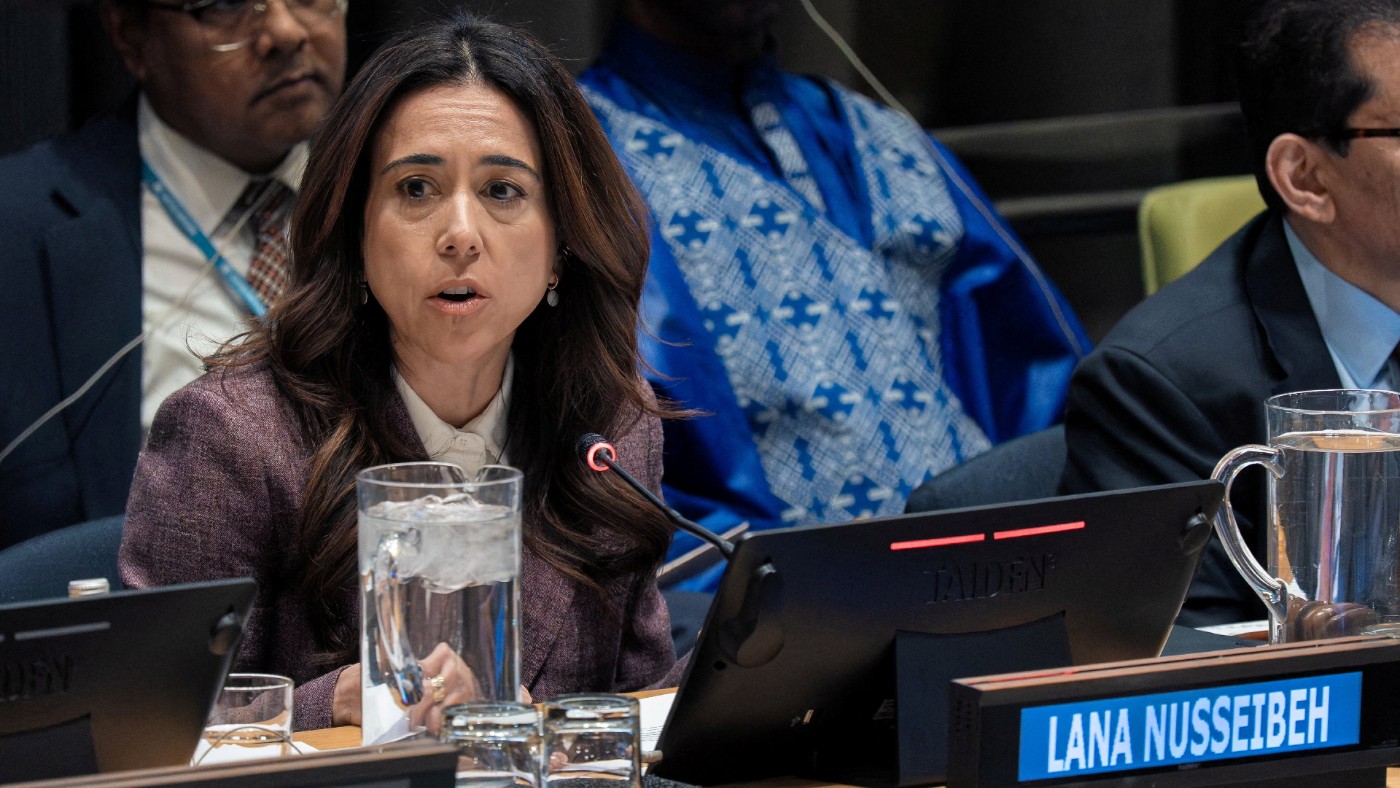
A confidential report by United Nations investigators “establishes conclusively” that the United Arab Emirates hired Colombian mercenaries to fight for Sudan’s paramilitary Rapid Support Forces (RSF). The report, submitted to the UN Security Council last week and obtained by Middle East Eye, details how Global Security Services Group (GSSG), a UAE-based company with close ties to the government, moved the Colombians into Sudan through Libya, Somalia and Chad, where Emirati proxies control large swathes of territory. The UN investigators also demonstrate that “the UAE-linked Puntland Maritime Police Force (PMPF) base in Bosaso, Somalia, has been used as a site of transit and/or training for Colombian mercenaries prior to their deployment to Sudan”. MEE and other outlets have previously reported on the use of Colombian mercenaries and the ports of Bosaso and Berbera by the UAE and RSF, which has been found by the UN and the United States to have committed genocide in Darfur, western Sudan. Arms and other supplies have been flown in and transported overland to the RSF through territory controlled by the Haftar family and its militias in Libya, through Ethiopia, Chad and two breakaway regions in Somalia with close ties to the UAE: Puntland and Somaliland, which is recognised by Israel. New MEE newsletter: Jerusalem Dispatch Sign up to get the latest insights and analysis on Israel-Palestine, alongside Turkey Unpacked and other MEE newsletters The UAE and the other entities involved in this network have denied any wrongdoing. The Emirati foreign ministry did not respond to MEE’s request for comment for this article. But this fourth quarterly update of the UN Panel of Experts on Sudan, which is marked strictly confidential and will not be made public, will be harder for Abu Dhabi to shake off. In a letter included in the leaked report, the UAE said it "rejects any allegations of wrongdoing in relation to the Sudan conflict", and that it "takes allegations about mercenaries very seriously". 'They [Colombian mercenaries] were trained and deployed through a network of facilities and transit routes involving the UAE, Somalia, eastern Libya and Chad' - UN Panel of Experts report Those Colombian mercenaries also, according to the report, “played a significant role in RSF military operations in Darfur, particularly in the siege and capture of el-Fasher”. “The mercenaries provided combat and technical support, including drone operation, artillery and infantry support,” the report says. “They were trained and deployed through a network of facilities and transit routes involving the UAE, Somalia, eastern Libya and Chad.” Last October, the RSF took the city of el-Fasher, the capital of North Darfur, after a siege that lasted more than 500 days. Victims and eyewitnesses told MEE that during this operation, RSF fighters raped, executed and extorted thousands of civilians. They also set up makeshift clinics where they took blood from detained victims. The mercenaries were trained, according to UN investigators, in Abu Dhabi, Ghayathi and al-Wathba (all in the UAE), and at the PMPF base in Bosaso, which is in the semi-autonomous region of Puntland, Somalia. “The UAE military financed, trained, and supervised the PMPF,” the report says. Lana Nusseibeh, the UAE's UN candidate This conclusive evidence of Emirati involvement in Sudan’s war, which has raged since April 2023, comes as Lana Nusseibeh, one of the Gulf country’s top diplomats, campaigns to become the next secretary-general of the UN. Sudan’s ambassador to the UK, Babiker al-Siddig al-Amin, told MEE that Nusseibeh’s candidacy should not be used to “whitewash” the UAE’s support for the RSF in Sudan. “Those who have the blood of the Sudanese people on their hands should not be leading international institutions,” the ambassador said. “The UN should be very careful, because if Nusseibeh succeeds, it would be a significant blow to its credibility. The UN’s role should not be taken so lightly.” 'Those who have the blood of the Sudanese people on their hands should not be leading international institutions' - Babikir al-Siddig al-Amin, Sudanese ambassador to the UK Born in Abu Dhabi into a well-known Palestinian family, Nusseibeh attended a private boarding school in England before attending the University of Cambridge and then Soas University of London. She became the UAE's first female permanent representative to the UN in 2013 and served until 2024. During that time, she served as vice president of the General Assembly, president of the UN Women executive board and twice president of the Security Council. Nusseibeh played a key part in the UAE’s official normalisation of relations with Israel in 2020, and Colin Shindler, a former teacher of hers at Soas, said in 2020 that she had written some “wonderfully insightful and incisive essays on Zionism and Israeli history”. Nusseibeh has for years denied reports detailing Abu Dhabi’s involvement in the war. Asked in recent interviews whether she could be impartial on Sudan as UN secretary-general, she said she could, without directly addressing Emirati support for the RSF. “I have been clear that the atrocities committed by the RSF must be subject to accountability, and that I would support the work of UN fact-finding mechanisms,” Nusseibeh told Politico this week. Security Council ties to the UAE The UN is due to install a successor to incumbent Antonio Guterres by the end of the year. The five nations on the Security Council that wield vetoes - the P5, made up of the US, UK, France, Russia and China - all maintain significant economic and diplomatic relations with the UAE. Until October, the race to succeed Guterres was dominated by centrist or left-leaning Latin American candidates. But US President Donald Trump, who has called the UN prone to “a far-left agenda of globalist bureaucrats”, rejected them all. 'They're a selfish bunch': How Abu Dhabi shaped modern Manchester Read More » Nusseibeh is behind other candidates in the straw polling for the job, with Costa Rica's Rebeca Grynspan currently in the lead. But the UAE is a close strategic ally of - and major investor in - the US, France and the UK. Abu Dhabi’s ruler, Mohammed bin Zayed Al Nahyan, whom President Donald Trump calls a “warrior”, has committed $1.4 trillion in investment to the US, including in artificial intelligence. The UAE has pledged billions of euros to France, while hosting a French military base and a branch of the Louvre in Abu Dhabi. It has also poured billions of pounds into the UK, where its vice president, Mansour bin Zayed Al Nahyan, owns Manchester City Football Club, as well as a significant chunk of Manchester itself. The city’s former mayor, Andy Burnham, is now the UK’s prime minister. China is the UAE’s biggest trading partner and Russia has been able to circumvent western sanctions imposed on it in the wake of the Ukraine war by going through Dubai and Abu Dhabi. Pressure on the UK to back the UAE Diplomatic sources have told MEE that the US, Russia, France and the UK are all leaning towards supporting Nusseibeh’s candidacy, with China not in favour of her. Multiple sources in the UK’s Labour Party and in New York and Washington-based humanitarian organisations told MEE that David Miliband, head of the International Rescue Committee (IRC), has told his brother Ed, Britain’s foreign secretary, that the UK should support his friend Nusseibeh’s candidacy. The UAE deals in the darkest of politics - its representative should be nowhere near the UN Read More » The IRC denied the allegations, saying that neither the organisation nor David Miliband had taken a position on UN secretary-general candidates. A British Foreign, Commonwealth and Development Office spokesperson told MEE last week: “The UK’s priority is to find the candidate best equipped to lead the UN in tackling our shared global challenges. “Our focus is on the merit of the candidates to secure the most qualified candidate for the next UN secretary-general. We will not be publicly commenting on individual candidates.” The British government has previously been accused by Nathaniel Raymond, executive director of Yale’s Humanitarian Research Lab, which monitors the war in Sudan and briefs several governments, of not calling out the UAE’s support for the RSF. In April 2024, the UAE cancelled meetings with British ministers because they were angry that the UK was not jumping to Abu Dhabi’s defence at a UN Security Council meeting on Sudan’s war. One British government source told MEE that a UK minister flying to the UAE at the time had to have their plane turned around mid-flight. The source also said Britain had not intended to leave the UAE undefended at the meeting. UN annual report blocked The UN investigators’ quarterly report, which will remain confidential, follows another report drafted this year. That report also asserted that the UAE had supplied mercenaries to the RSF and that those fighters had taken part in the assault on el-Fasher. After investigators presented their evidence to the UN Security Council in July, the UAE’s UN ambassador demanded that they “immediately remedy the serious defects” in the report. Bahrain, a close UAE ally and a non-permanent member of the council, has blocked the report for months. In September, Anthropic established with “high confidence” that the UAE was behind an influence operation targeting UN experts and critics of its role in Sudan. GSSG, the company that deployed the Colombian mercenaries, was founded by a senior official in the Emirati presidency, The New York Times reported on Thursday. On its website, the company is described as “a preferred security provider” for the UAE's Ministry of Foreign Affairs and the Ministry of Presidential Affairs.
Leaked UN report 'establishes conclusively' that UAE hired Colombian mercenaries for Sudan's RSF
Full Article
Original Source
Read the full article at Middleeasteye →KhanList aggregates and links to publicly available news content. We do not host full articles from third-party sources. Always verify important information with original sources.