
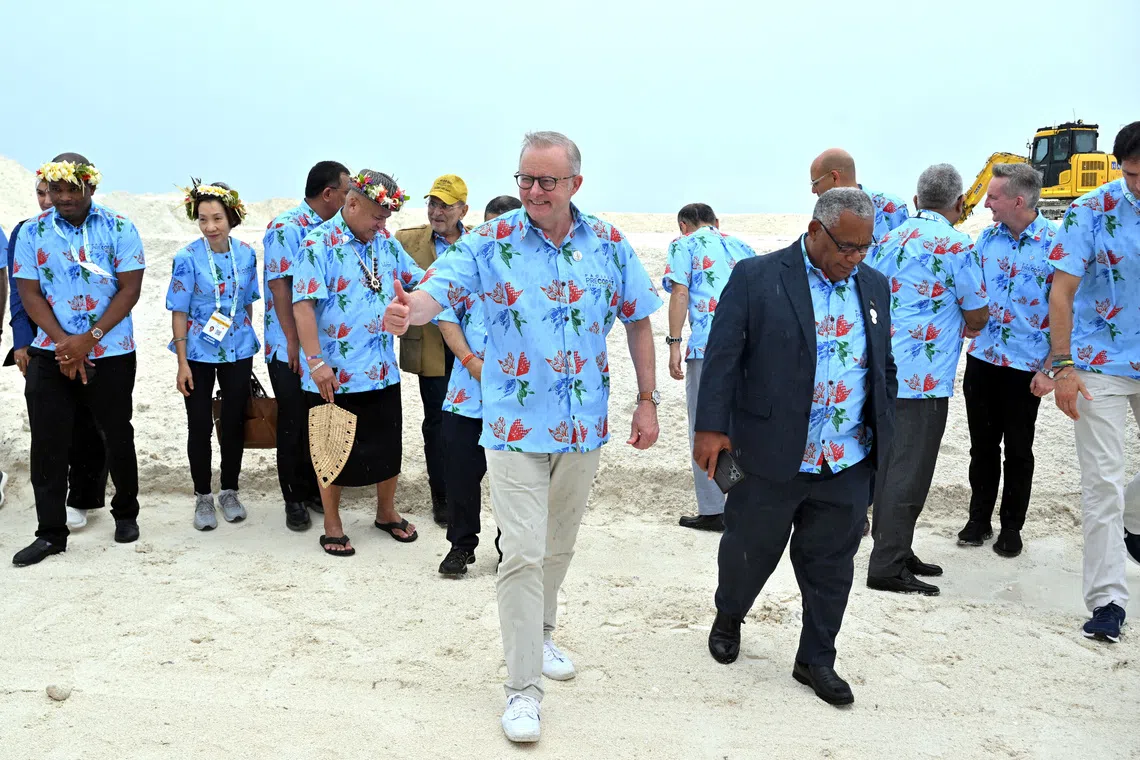
FUNAFUTI, Tuvalu - Over a dozen leaders visited the tiny Pacific atoll nation of Tuvalu on Oct 6 for a first-hand look at a once-vibrant ecosystem wiped out owing to climate change.The getaway took place on the sidelines of the Pacific “pre-COP” gathering hosted by Fiji and aimed at drawing the world’s attention to life on the front line of global warming.The meetings are a precursor to the larger UN-sponsored global climate summit, known as COP31, to be held in Turkey in November.The South Pacific is among the regions of the world most vulnerable to global warming – from rising seas jeopardising homes to increasing temperatures causing coral bleaching.Tuvalu is deeply affected, already laying plans to relocate its population of 10,600 if the country is consumed by the ocean.But only a handful of leaders – mostly from the Pacific – showed up to visit the atoll.Among them was Australian Prime Minister Anthony Albanese, whose country is head of climate negotiations in 2026 but has faced accusations of hypocrisy given its role as a major coal exporter.The highest point in Tuvalu’s capital Funafuti is just 2m above sea level. PHOTO: AFPHundreds of people donning traditional dress, flower tiaras and umbrellas to shield themselves from the heavy rain gathered to greet the leaders, who were accompanied by a small media delegation including AFP news agency.The group then toured the Tuvalu Coastal Adaptation Project, a landmark land reclamation effort that aims to mitigate the impact of rising sea levels.They also took part in a traditional dialogue session with locals.Australia has taken a leading role in the pre-COP gathering and defended it as a critical diplomatic event in the face of criticism back home about the cost to taxpayers.But Albanese drew criticism from a Tuvalu government adviser, who accused him on Oct 6 of disrespect by not wearing a traditional headpiece during an event and for overstepping during the running of the visit.“Just because we signed the treaty doesn’t mean they can take over our country and our sovereignty,” the aide told AFP on condition of anonymity.“That’s how it feels.”Impact of climate changeTuvalu is one of the world’s least visited countries, and the highest point in the capital Funafuti is just 2m above sea level.Rising waters have already largely swamped two of Tuvalu’s nine coral atolls, and scientists fear the entire archipelago could be unliveable by the end of the century.A marine heatwave in 2024 wiped out an estimated 99.9% of the coral that built the remote Tuvalu islands.“You can swim for hours and hours along the reef in the lagoon, just skeleton after skeleton. It’s all dead,” said marine biologist Austin Bowden-Kerby, who visited in 2025 and documented the devastation.“The very system that created the islands has died. It wasn’t pollution. It wasn’t overfishing. Just a direct result from climate change.”Local scientist Rajneel Singh told AFP climate change was already impacting the food sources that have long sustained Tuvalu’s population.“Elders used to fish for red snappers and other things,” he said.“It’s no longer frequent in the catch. And the sizes of the fish has been reduced as well.” AFP
Leaders visit Pacific atoll Tuvalu at front line of climate change
Full Article
Original Source
Read the full article at Straitstimes →KhanList aggregates and links to publicly available news content. We do not host full articles from third-party sources. Always verify important information with original sources.