
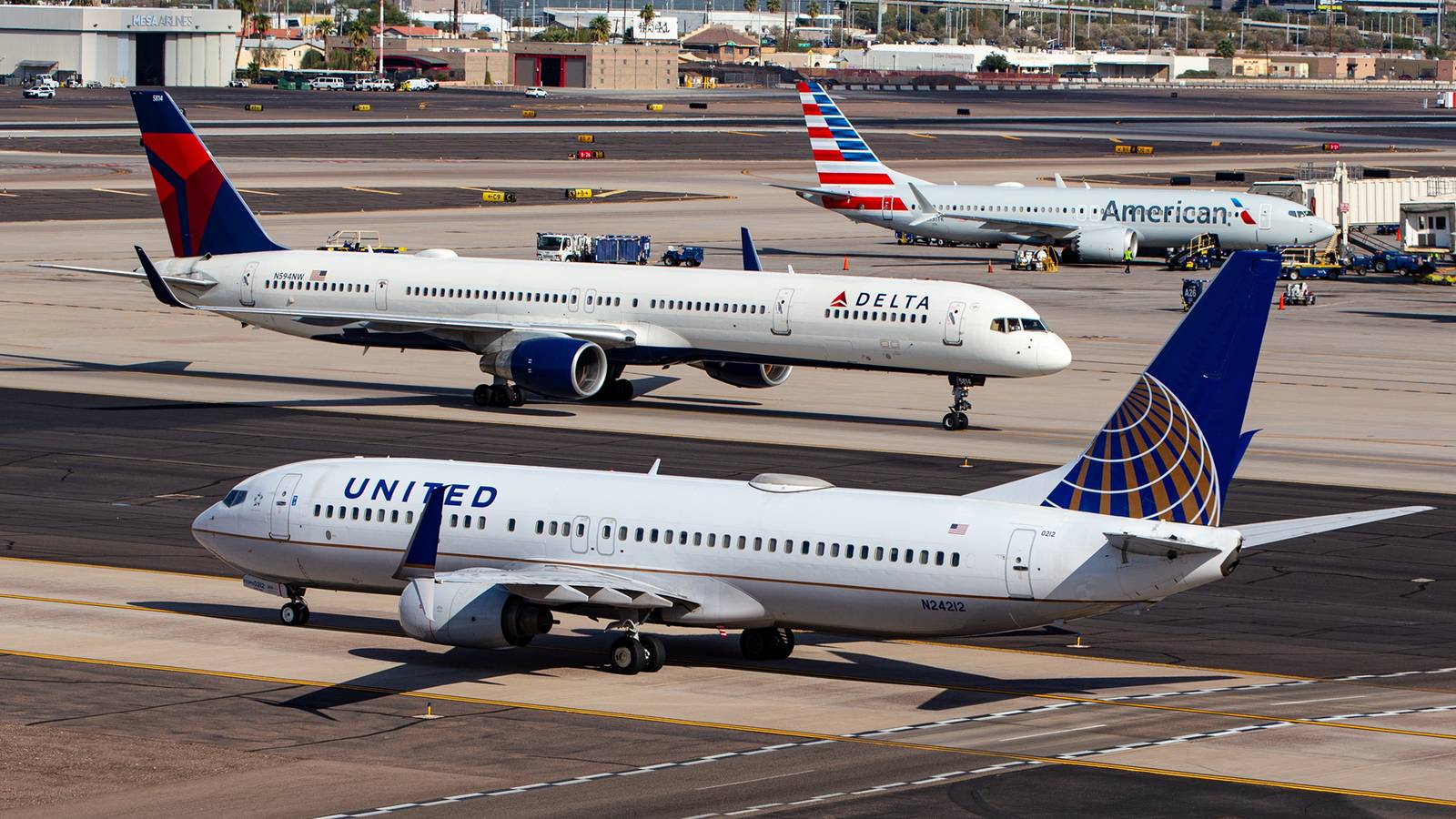
Published Nov 7, 2026, 9:35 AM EST Luke has over a decade of experience as a travel writer and aviation analyst. As a passionate traveler based across the Middle East and Asia, Luke offers strong insights into the industry. Based in South East Asia. Seven major US airlines — including the 'Big Four' American Airlines, Delta Air Lines, Southwest Airlines and United Airlines — have been accused of sharing confidential pricing data to avoid undercutting each other. Two proposed class action lawsuits claim the arrangement has helped keep domestic ticket prices artificially high, in violation of federal antitrust laws. At the center of the allegations is an industry database that lets airlines track rivals' fares and quickly match price cuts, potentially removing the incentive for airlines to offer cheaper tickets in the first place. The lawsuits come amid growing scrutiny of airline pricing practices, with carriers facing questions over how exactly they determine their fares. Seven US Airlines Named In Fare Collusion Lawsuits Credit: HMBSoFL Photography | Shutterstock The larger of the two lawsuits was filed on November 4 in the US District Court for the Western District of Washington in Seattle. Along with American, Delta, Southwest and United, it named Alaska Airlines, Hawaiian Airlines and JetBlue as defendants, alongside the industry-owned organization Airline Tariff Publishing Company (ATPCO) and its subsidiary, 3Victors. The suit describes ATPCO as "a highly sophisticated information exchange" that allows airlines to track one another’s pricing and "artificially inflate the cost of air travel." The alleged information sharing takes place through two products developed by 3Victors — Iris, which collects airline shopping and pricing data; and PriceEye, which allows airlines to compare prices and track competitors. According to Courthouse News, airlines share their own 'shopping data' — including what routes and dates people searched for, and the fares offered — to Iris in exchange for access to PriceEye, which shows information on competitors' pricing. This effectively allows airlines to see when competitors are offering cheaper fares and respond quickly, preventing rivals from gaining an advantage by undercutting them. Seattle-based law firm Hagens Berman said that the airlines using 3Victors' pricing tools account for around 80% of US domestic passengers. Speaking to The Seattle Times, the firm's managing partner, Steve Berman, explained that the tools let airlines see "in real time what everyone is charging for any route in the US." Berman said: "They're basically eliminating independent competition." ATPCO Previously Faced Similar Antitrust Allegations Credit: Ceri Breeze | Shutterstock In 1992, the US Department of Justice (DOJ) sued ATPCO and eight major airlines, alleging that the platform was used to coordinate price increases and limit discounts. The DOJ estimated that this cost travelers up to $1.9 billion between 1988 and 1992. While they paid no fines, all eight airlines and ATPCO ultimately agreed to restrictions on sharing future information. This required airlines to make filed fares available for immediate purchase, while preventing them from using advance fare announcements to signal planned price increases to competitors. Those restrictions have since expired, and the plaintiffs now allege that ATPCO's pricing tools have created a new way for airlines to monitor one another and avoid competing on price. According to the lawsuit, the new arrangement can be traced to a working group established by ATPCO in 2016 to study dynamic pricing. ATPCO subsequently launched a program in 2023 that allowed airlines to analyze shared shopping data. The only airline to publicly comment so far is American Airlines, which told The Seattle Times that it develops and prices its products independently. Simple Flying has contacted all other airlines involved and will update our story accordingly. US Airfares Climb As Airlines Face Pricing Scrutiny Credit: Markus Mainka | Shutterstock The Bureau of Labor Statistics' data shows that ticket prices have gone up by more than 22% year-on-year, although airlines have largely attributed this to rising fuel costs. US carriers spent nearly $43 billion on fuel in the first eight months of 2026, which was $13.2 billion more than in the same period of 2025. Airlines are also increasingly using AI to optimize their pricing strategies, with newer systems able to analyze demand and adjust fares in real time. As Simple Flying analyzed recently, this could make it harder for passengers to find cheaper tickets as airlines can respond more quickly to price cuts, closing gaps before rivals have much chance to attract customers. Airlines have also been accused of using 'surveillance pricing'— a practice involving the use of customer data to potentially personalize fares — including a federal lawsuit against JetBlue lodged in April. Additionally, in October, the Federal Trade Commission (FTC) ordered Delta, United and JetBlue to explain how they use customers’ personal data to set fares, giving them 45 days to lay out their pricing methods.
Lawsuits Accuse 7 US Airlines Of Colluding To Raise Fares By Sharing Pricing Data
Full Article
Original Source
Read the full article at Simpleflying →KhanList aggregates and links to publicly available news content. We do not host full articles from third-party sources. Always verify important information with original sources.