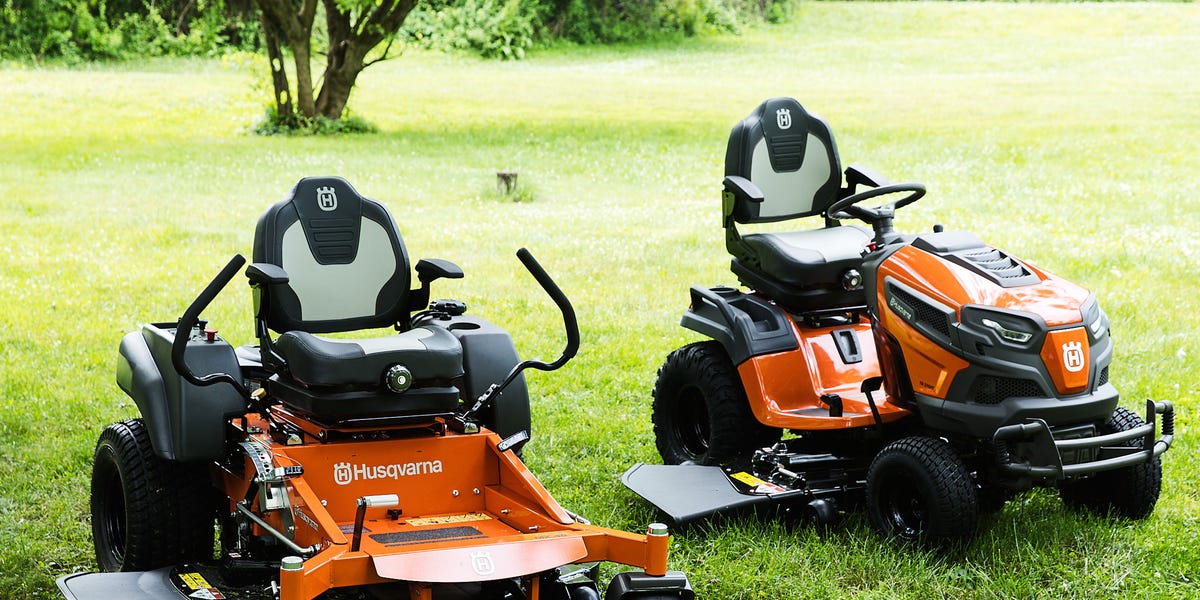
4 min readIf you just bought a new house with a big yard, or your old riding mower is about ready for replacement, you’re probably faced with the question: Zero-turn or lawn tractor? There are arguments to be made for each—some are pretty simple, and others can get a little more complicated.Both types of machines will cut grass, so either will work fine in many cases. But their differences are important and, at the most basic level, choosing one or the other could save you money or save you time. With decades of mowing under my belt using both zero-turn mowers and lawn tractors, I’m happy to share what I’ve learned to help you pick the right one. Spoiler alert: in most cases, a zero-turn mower will be my first choice.What’s the Difference?trevor raabLawn tractors are like miniature farm tractors.Lawn tractors are sort of scaled-down farm tractors. They typically have the engine in the front, drive wheels in the back, and a steering wheel to point the front to where you want to go. Power from the engine will usually drive a mechanical transaxle with gears, or, on more expensive models, a hydrostatic drive unit that uses pressurized fluid to transfer power. The mower deck is mounted under the machine, between the front and rear wheels.Lawn Tractors We RecommendJohn Deere S100 42-in Gas Lawn TractorEGO POWER+ T6 42-in Electric Riding Lawn Mowertrevor raabZero-turn mowers have the engine in the rear and little to no body work.Zero-turn mowers typically have a rear-mounted engine, rear drive wheels, and independent front caster wheels. The engine powers two hydrostatic drive units via a belt, sending hydraulic fluid to two separate drive motors, one for each wheel. Steering is achieved by independently adjusting the speed and rotation of the rear wheels using two control bars (i.e., lap bars), one for each wheel. Driving one wheel more than the other forces the front caster wheels to allow the machine to pivot or turn.Zero-Turn Mowers We RecommendBest Gas for 0.5-1.5 AcresToro TimeCutter 42-Inch Gas Zero-Turn Lawn MowerHusqvarna Xcite Z375 54-Inch Zero-Turn Lawn MowerWhy Do Zero-Turn Mowers Cost More?If you have spent any time shopping for riding mowers, you’ve probably noticed that zero-turn mowers are more expensive than lawn tractors. There are two primary reasons for this. The first is that the frames of each machine differ significantly. Most lawn tractor frames are stamped or pressed from a single piece of steel, with a very limited number of welded parts; a zero-turn mower frame is welded from multiple pieces of steel tubing and plate.The second reason that zero-turn mowers are more expensive is that they utilize two complete drive systems—as mentioned previously—one for each wheel. These differences can boost the price of zero-turn mowers by up to $1,000 or more when comparing machines with similar-sized engines and mower decks.Which Machine Is Better for You?There isn’t a clear-cut answer that works for everyone. If budget is one of your biggest considerations, then you’ll probably lean toward a lawn tractor. But there are other considerations, including ease of use, how much you value your time, versatility, and your preferred mowing pattern.Ease of usetrevor raabLawn tractors have a wheel for steering.trevor raabZero-turn mowers often have lap bars to control steering.Simply put, lawn tractors are easier to use. If you’ve ever driven anything with a steering wheel, you’ll quickly be comfortable piloting a lawn tractor. Zero-turn mowers take more patience and finesse to operate—if you’ve never used one, it’ll take longer to get comfortable using the lap bars to control the speed and keep it moving straight.How valuable is your time?This is where zero-turn mowers have a big advantage. The individual drive wheel controls, combined with the caster wheels that rotate 360 degrees, make them extremely nimble. They can turn sharply, enabling you to follow edges closely, or turn around for the next pass without jockeying to line the mower up with the previous one.Add that to their higher ground speed, and it’s possible to easily cut mowing time by 25 to 50 percent depending on the specific size and features of your yard. And considering you’ll finish mowing faster with a zero-turn, you’ll also put fewer hours on the engine each year.Lawn tractors are more versatileZero-turn mowers are purpose-built for mowing lawns, and that’s where they excel. Yes, you can get a hitch for them to tow a cart, but maneuvering, especially in reverse, can be a tricky operation—because they can turn so quickly, it’s easy to jackknife the trailer.Similarly, you can get snowplows for zero-turn mowers, but they can be difficult to use as you don’t have a mechanical connection to steer the front wheels. So, if one of the rear wheels loses traction, your ability to control the direction of travel can become unpredictable. Also, hydrostatic drives aren’t really designed to handle additional heavy loads, so while it can be done, you’ll want to consult your owner’s manual regarding the limitations.Lawn tractors are designed to handle a wider variety of tasks. Towing a cart with yard waste, a dethatcher, an aerator, a log splitter, or pushing a snowplow are all things they’re intended to do. Of course, lawn tractors have limitations too. If you plan on doing a lot of more strenuous tasks with ground-engaging implements, like a furrow plow, tiller, or even a small front-end loader, you should consider a more robust garden tractor.What pattern do you mow?How you mow your lawn is also something to consider. Do you mow the perimeter and spiral inward, until you’re done? Or do you methodically mow back and forth, row after row, leaving orderly stripes in the lawn? Lawn tractors are better suited to the perimeter-in method because it requires fewer tight turns.Mowing stripes, on the other hand, requires tight turns at the end of every row, exactly what the zero-turn was designed for. Turning around a lawn tractor when striping requires multipoint turns and is time-consuming.The VerdictIf speed, precision, and navigating around obstacles are big concerns for you, get a zero-turn mower. If you have budget limitations or desire a machine that will enable you to do a variety of jobs around your property, a lawn tractor will probably be your best option.Brad Ford has spent most of his life using tools to fix, build, or make things. Growing up he worked on a farm, where he learned to weld, repair, and paint equipment. From the farm he went to work at a classic car dealer, repairing and servicing Rolls Royces, Bentleys, and Jaguars. Today, when he's not testing tools or writing for Popular Mechanics, he's busy keeping up with the projects at his old farmhouse in eastern Pennsylvania.David is a Reviews Editor for Hearst’s Enthusiast Group, contributing to Popular Mechanics, Runner’s World, Bicycling, Best Products, and Biography. He has over 25 years of experience writing about and reviewing consumer electronics, kitchen appliances, DIY products, outdoor gear, and more. He also spent years covering the ever-changing world of online retail. To relax, he loves experimenting with new recipes, tweaking his smart home setup, and spending time outdoors on his bike or camping.
Lawn Tractor vs. Zero-Turn Mower: All Riding Mowers Aren’t Created Equal, So Which Is Better for You?
Full Article
Original Source
Read the full article at Popularmechanics →KhanList aggregates and links to publicly available news content. We do not host full articles from third-party sources. Always verify important information with original sources.