
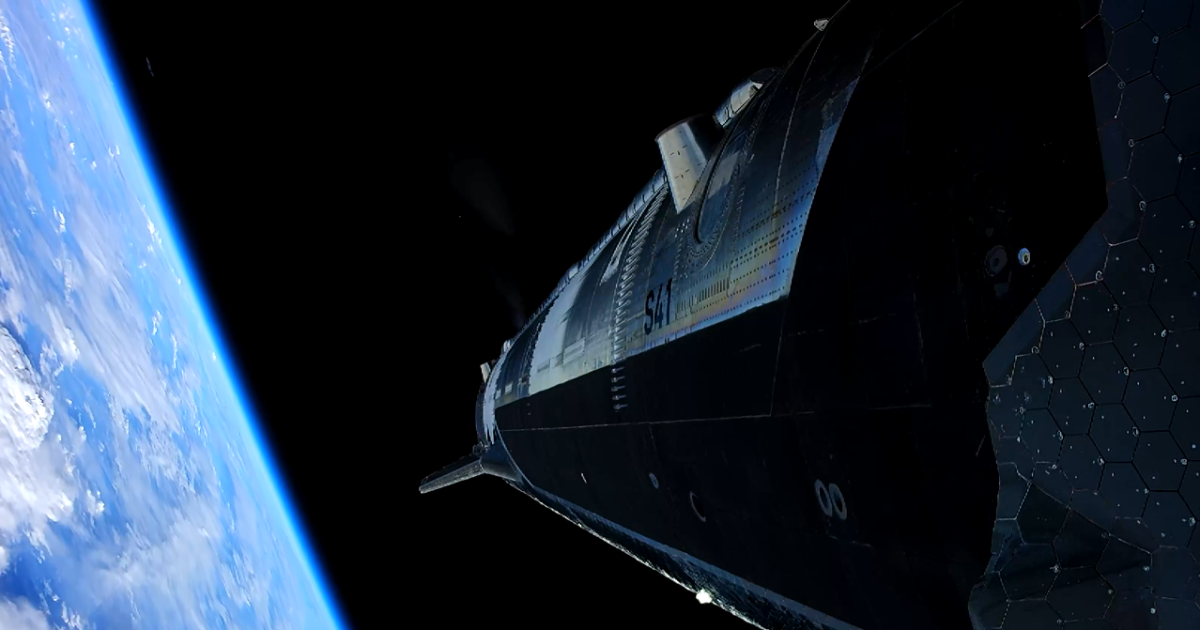
SpaceX has raised the bar for spaceflight again as its Starship, history's largest rocket, reaches Earth orbit. Despite the failure of an upper stage engine, an abort was avoided, allowing the spacecraft to reach orbit and deploy 26 Starlink satellites.On September 28, 2026, at 7:48 CDT, the Super Heavy Booster carrying the Starship upper stage lifted off from Starbase, Texas, after a 30-minute hold due to propellant loading and system checks. This followed a dramatic beat-the-clock moment when the FAA only gave approval for the Mission 14 flight two days before the scheduled launch.The ascent phase of the launch was marked by the failure of one of the 33 Raptor engines that power the first stage. However, the Super Heavy was designed for redundancy, as the remaining engines compensated for the loss. Starship’s 14th flight is set to launch on Monday, Sept 28. The 75-minute launch window opens at 7:15 a.m. CT. Live coverage of the mission starts ~35 minutes before launch → https://t.co/uQKQvgaTmJ— SpaceX (@SpaceX) September 27, 2026 A more serious mishap occurred after Starship's upper stage separated from the Super Heavy. During the second-stage burn, one of the three vacuum-optimized Raptor engines entered early shutdown. This raised concerns back at Mission Control that the remaining engines would not be able to perform the orbital insertion maneuver or the controlled deorbit burns needed to return the spacecraft to Earth.Monitored by SpaceX engineers, Starship reached full orbit at an altitude of 170 miles (275 km). However, to avoid the risk of the craft being stranded in orbit or making an uncontrolled reentry over a heavily populated area, the decision was made to shorten the mission to only two hours instead of the up to 10 hours originally planned, after which a controlled landing was made in the Pacific Ocean off the coast of Hawaii.In addition to its first orbital flight, Mission 14 marked the first commercial Starship flight. While in orbit, the craft deployed 26 Starlink V3 internet satellites. Given that Starship can carry payloads of up to 100 tonnes, this represents only a fraction of its capacity. Mission 14 also carried Starship's first commercial flightSpaceX Because of the nature of the mission, both the Super Heavy and Starship were regarded as expendable and were destroyed on landing. One future milestone for SpaceX will be to not only carry out an orbital flight, but to return both the Super Heavy and the Starship to the launch site and capture them on the tower that launched them.One point that makes this mission of special importance is the sheer scale of the vehicle. The Starship rocket is the largest ever built, towering 397 ft (121 m) on the launch pad with a total launch mass of 5,000 tonnes, requiring 16.7 million pounds of thrust to get it off the ground. To put it into proportion, imagine not only launching the smaller, yet still skyscraper-sized Apollo-era Saturn V and then expecting to not only get the entire rocket back, but reuse it again after a fast turnaround.In other words, commercial spaceflight in the 21st century is entirely a whole new league.Source: SpaceX
Largest rocket ever built successfully enters orbit
Full Article
Original Source
Read the full article at Newatlas →KhanList aggregates and links to publicly available news content. We do not host full articles from third-party sources. Always verify important information with original sources.