
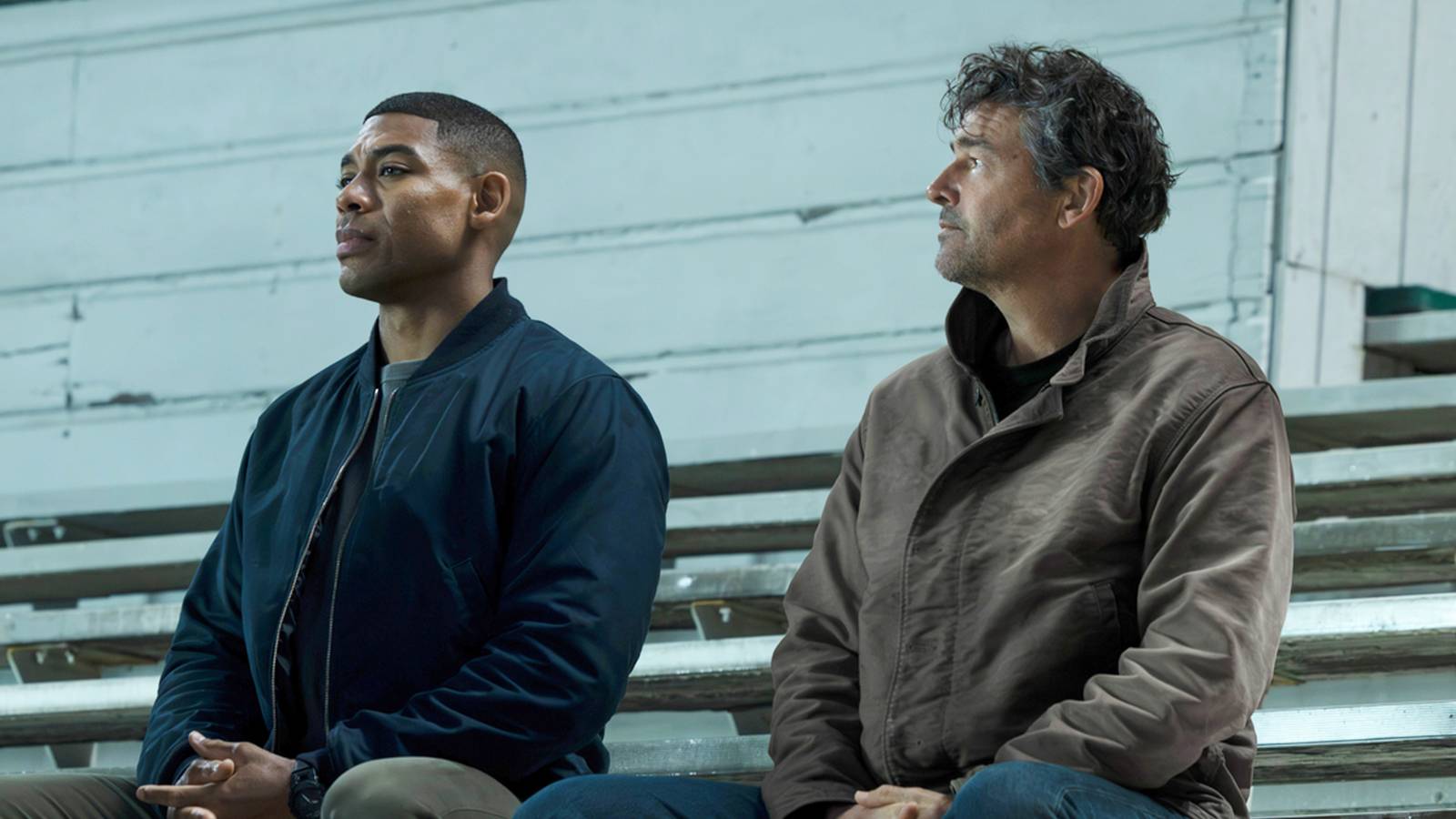
Published Aug 30, 2026, 10:01 PM EDT Carly Lane is an Atlanta-based writer and critic who has been with Collider in some form or fashion since 2021. She considers herself a television nerd, diehard romance/sci-fi/fantasy reader, and nascent horror lover. Her fondness of books is only eclipsed by the towering TBR that her shelves can't possibly contain. She is the author of A REGENCY GUIDE TO MODERN LIFE: 1800s ADVICE ON 21ST CENTURY LOVE, FRIENDS, FUN AND MORE, published through DK Books (an imprint of Penguin Random House) and currently available wherever books are sold. Sign in to your Collider account Editor's note: The below interview contains light spoilers for Lanterns Episode 3. HBO's Lanterns is well underway after a premiere that seems to be holding major consequences for the greater DCU under James Gunn. Yet, in the wake of two episodes that have both emphasized the stakes in Rushville, Nebraska, circa 2016, and a separate shocking incident ten years later, this week's "OutKast" jumps away from both ongoing mysteries in favor of delving into the backstory of one John Stewart (Aaron Pierre). It's a character-focused hour that not only explains his family's complicated ties to the Green Lanterns but also their connection to the mysterious Guardians of the Universe — and it definitely confirms why John might be carrying more than a little personal resentment toward Hal Jordan (Kyle Chandler) even while being teed up to replace him. Ahead of the Lanterns premiere, Collider had the opportunity to speak with several members of the cast and creative team, including Chandler and Pierre. Below, the series' leading stars discuss the complications of filming the show's two major timelines, Episode 3's spotlight on John's history, the Sinestro (Ulrich Thomsen) scene that got unexpectedly personal for Chandler, and more. COLLIDER: Kyle, in the very first episode, the story introduces more than one version of Hal Jordan, and so from your perspective, what did you enjoy about getting to explore the character at two different stages of life and defining experiences? KYLE CHANDLER: Well, first of all, I got a paycheck. Second of all, craft service was really good. AARON PIERRE: It was. It was excellent. Shout out to Chance. CHANDLER: Third of all, I get to work with this dude. Nah, let’s move that one. The producers and the writers are great people. Fourth of all, this guy. It was just another dynamic to it. You've already got a non-linear show, we’re block shooting it, I’m playing two characters with a decade between the two of them, and what have you. There was just a lot to do through the whole thing, and my guy is such a full character that you get to take a look at him when he was a little bit more squared away, back in the day. Also, I get to make fun of everyone, even myself. So, it was fun. It was a great experience to play all of this. And I'll say tonight we're going to the premiere, and we get to see people actually sit in a theater and watch it with us and see what they do. I'm really excited. We're really excited for that. I can't imagine seeing it on the big screen. I'm sure it's going to be phenomenal. CHANDLER: Right? With people in the seats. Aaron, Episode 3, in particular, is a really character-focused installment of the show for John, and I was wondering how the show really digging into both John's past and his relationships with his family helped you develop a better understanding of who this guy is. PIERRE: Enormously, enormously. I've spoken about this a number of times today. I think for me, witnessing that episode come together was one of the most rewarding experiences and joyful experiences. I've said it a number of times today, but the young artists who portray young John and his siblings, I really hope that they get appropriately championed, and I really hope they get acknowledged for their exemplary work, because they hit those emotional beats. They hit those demanding dialogue scenes with such an ease and such a truth, and such a presence. I'm really proud of them, and I hope people recognize the quality of their work. It informed massively how I engage with John in 2016, 2026, and beyond. As an actor, it's always a gift. The more information, the better. Of course, there reaches a point where you have to set it free, and you have to just be present, but in the research and development process, the more information, the better — the more to excavate, the more to explore. And then, just by osmosis and a lot of hard work, it just finds its way into every large to minuscule interaction you have, to the point where you can improvise and know exactly what your character would or wouldn't do, and that's the point that we both got to that we really enjoyed. That's when it was the most fun. Kyle Chandler Explains Why That Sinestro Scene in 'Lanterns' Became "Very Personal" "There were emotional feelings going through my character that me, as an actor doing that scene, wouldn't have expected when we started doing it..." Image via HBO Watching these first seven episodes, I was really impressed by how much history the show is able to really pack in for both of your characters. Kyle, Hal’s relationship with Sinestro is one of the show's most complicated dynamics, and you have some really great scenes with Ulrich [Thomsen]. I was interested in hearing your perspective on how that dynamic, as well as Hal's relationship with his own father, really informs his arguably very unorthodox mentorship and how he then, in turn, engages with John. CHANDLER: Well, I don't want to sound too goofy, and I probably will. As you're doing these scenes, a lot of times a scene can be about this, but in here you're thinking that, and it helps you get to a different place — and no one has to know this. The audience doesn't need to know what one's thinking. But I'll just say right now that the missing father and Sinestro and the two came together when we were doing that scene, after many iterations of it. To be quite honest, there were emotional feelings going through my character that me, as an actor doing that scene, wouldn't have expected when we started doing it, and it just became a very personal scene. Because when you look at the dialogue going into that scene, I think both of us… Well, I won't speak for him, but I was thinking, “What am I going to do with this dialogue? How am I going to personalize this?” And it happened naturally, and it happened through acting. I won't call myself a good actor, but it happened that day. It was really fulfilling. It wasn't a fun scene, it was a fulfilling scene afterwards. So, if I'm right about what you're talking about, someone else mentioned that, if for any reason, from my part, what was going on, that's what was happening. It was personal. It's a personal moment. 'Lanterns' Aaron Pierre Reveals That John Stewart Is a "Volcano" Set To Erupt "John is, in equal measure, as you said, precise and direct, but also internally volatile..." Image via HBO Aaron, we get a lot of different sides, different facets of John that are revealed through the story. Not only is he a former sniper, but we also see his side as an architect. He's got this eye for detail. Both things really stuck out to me as being wrapped around precision. What did that really help shape for you in terms of the investigative skills that he's going to bring to the table in his partnership with Hal, especially while they're looking into that mystery in Rushville? PIERRE: That's an excellent question, by the way. Thank you for that. For me, what it informed the most was how I was going to explore and devise and design this dichotomy that exists within him. John is, in equal measure, as you said, precise and direct, but also internally volatile, and a volcano on the verge of erupting and devastating everything around it. So, that's what it informed. Actually, the more precise I discovered John was and the more accurate he was, the more volatile I also discovered he was. You don't have light without darkness, and that was a thing for me. I wanted to work with that. The moments when the precision came out — when was that appropriate, and when did that feel like it was most sincere and genuine? And the moments where that other side of him presented itself, when did that feel most authentic and genuine, as well? I think there's a lot more, even outside of the context of the eight hours that we have the opportunity to spend with John, to discover in even more depth what that is, because we do go from 2016 to 2026. What does it look like when there is maybe a time jump, and we get to really live with him day to day in that truth? But it was just a joy. Just a joy. Kyle speaks about it a lot, just as an actor, to get these words and this language, these characters on the page, you really can't take it for granted. You really mustn’t, so we didn’t, and we had a blast. CHANDLER: Good on you, too. You know how I say you’re disciplined all the time? When I say that, I mean, you do have disciplined things in your life, but to be disciplined, to stay as still as you are in this, for an actor, it's not easy, at least for certain actors. I mean, you have to discipline yourself to stay within that realm of stillness to have the energy you're talking about, and you don't see many actors who can do that as well as you did. I can only echo those sentiments. CHANDLER: He gave me $5 for that! PIERRE: I'm going to buy him popcorn at the premiere. New episodes of Lanterns premiere Sundays on HBO.
'Lanterns' Kyle Chandler and Aaron Pierre Break Down Episode 3 and the DC Show's Major Timelines
Full Article
Original Source
Read the full article at Collider →KhanList aggregates and links to publicly available news content. We do not host full articles from third-party sources. Always verify important information with original sources.