
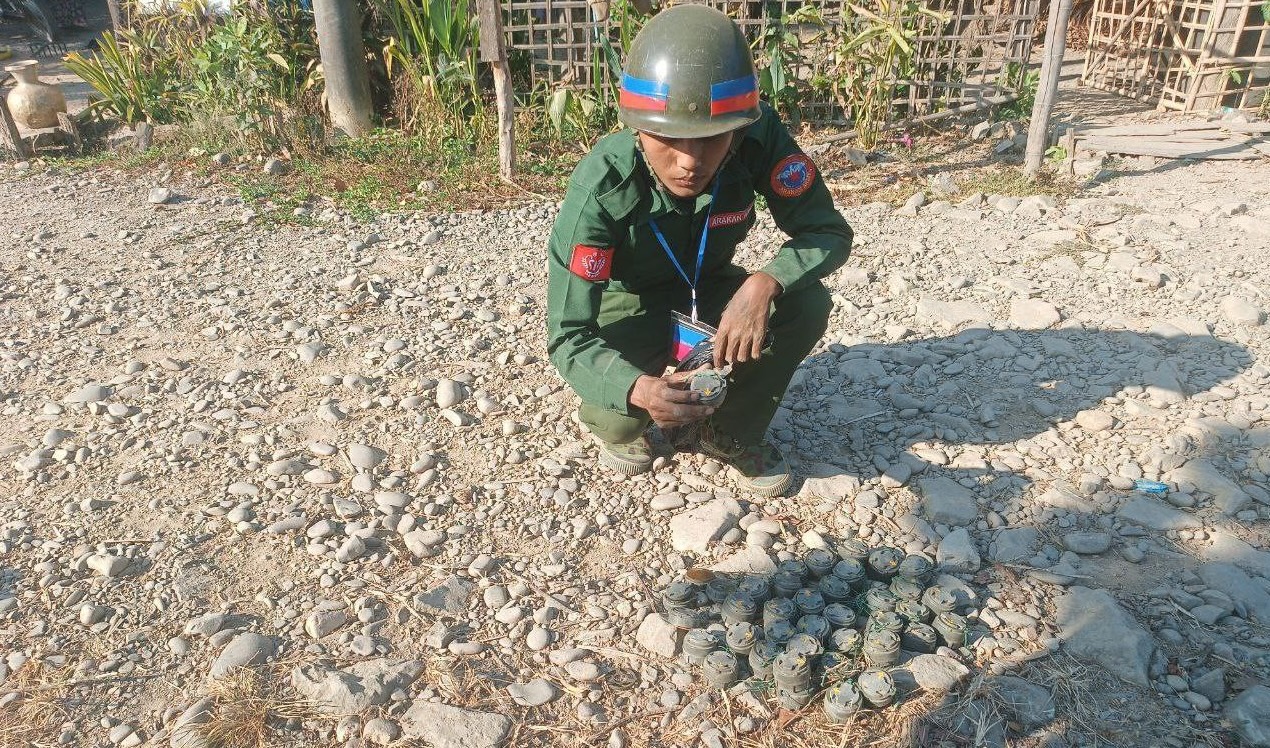
The Mine Ban Treaty is facing its greatest test following the withdrawals of five European countries, while the number of casualties continues to rise, a monitor said Tuesday. Estonia, Finland, Latvia, Lithuania, and Poland pulled out in 2025 and 2026, citing security concerns relating to their neighbour Russia, now into the fifth year of its war in Ukraine. These were the first withdrawals from the landmark treaty agreed in 1997, dealing a blow to the norms enshrined in the Ottawa Convention. Poland and Finland are preparing to bring antipersonnel mines back into their arsenals, the annual Landmine Monitor report said. “The withdrawals, new use and new production are dangerous steps backward for the ban, but they do not define the treaty,” said Tamar Gabelnick, director of the International Campaign to Ban Landmines (ICBL). “Lebanon joined in the midst of conflict, recognising that protecting civilians means upholding international law, not abandoning it.” “We urge all states to reject the production and use of antipersonnel mines, by any actor, under any circumstances.” Some 162 countries are now bound by the ban treaty. Besides Lebanon joining this year, the Marshall Islands and Tonga joined in 2025. The 28th annual report was produced by the Landmine and Cluster Munition Monitor, the research and monitoring arm of the ICBL and the Cluster Munition Coalition NGOs. Use by Russia and Ukraine Antipersonnel landmines were used in the reporting period by Ukraine, Iran, Myanmar, North Korea, Russia, and possibly the United States, the monitor said. State party Ukraine says it has suspended the operation of the treaty during the Russian invasion. The report documents new use and production of landmines by Ukraine, including 3D-printed and drone-dropped mines. “Ukraine remains fully bound by all the treaty’s provisions,” the report said. The 35 states outside the treaty include China, Cuba, India, Israel, Myanmar, North Korea, Russia, Syria and the United States. “Russia has used antipersonnel landmines extensively in Ukraine since its full-scale invasion,” the report said. “The scale of landmine and ERW [explosive remnants of war] contamination in Ukraine represents the most widespread use of landmines in decades.” Civilians, children badly affected Landmines and ERW killed or injured more people in 2025 than in any year since 2020, the report said. At least 6,929 casualties were recorded in 2025—the third annual rise in a row. Of these, 1,955 were killed and 4,930 injured, with the survival status unknown for the remaining 44. In 2025, mine and ERW casualties were identified in 54 countries. Where the victims’ status was known, civilians accounted for 84 percent of all casualties. And where the victims’ age was known, children made up 50 percent. Myanmar recorded the highest number of annual casualties (1,891) for the third consecutive year, with the country recording “massive” new mine use. In Syria, casualties rose by 50 percent to 1,602 in 2025 amid large-scale returns of displaced people following the overthrow of president Bashar al-Assad. Myanmar and Syria were followed by Afghanistan (497), Palestine (319), Nigeria (298), Ukraine (275) and Mali (222). ‘Massive contamination’ At least 65 territories were suspected or confirmed to be contaminated with mines as of November 2026, with Bangladesh newly included. Afghanistan, Azerbaijan, Cambodia, Iraq, Morocco, North Korea, South Korea and Ukraine were assessed to have “massive” contamination—meaning more than 100 square kilometres. Since the Mine Ban Treaty came into force in 1999, 32 states have completed clearance, with Oman doing so in 2025 and Croatia in 2026. Global mine action funding reached $1.1 billion in 2025, about five percent higher than in 2024. Since 1999, the monitor has recorded 49,859 people killed and 118,525 injured by landmines and ERW. A decade of reporting at a cost In 2025, we marked the 10th anniversary of Myanmar Now. In Myanmar’s history, journalists are often the first targets during political repression. We founded this outlet during a brief window of stability, starting with a small team in a modest office in downtown Yangon. Our goal was simple: to report on injustices that had been silenced for decades. In many countries, justice is sought through courts and police. In Myanmar, these institutions have historically been instruments of oppression. From the start, we committed to reporting without discrimination—regardless of ethnicity, religion, or citizenship. We believe our work should be accurate, deeply sourced, and strong enough to serve as a historical record. We also believe journalism should be a force for positive change, and that our primary readers should be the people of Myanmar. That belief came at a cost. Members of our team and others associated with Myanmar Now have endured long legal battles, physical assaults, arrests, and torture. Despite these hardships, Myanmar Now continues to report the news—thanks to the resilience of our team, the courage of our sources, and the trust of our readers. Please subscribe to support a free press in Myanmar.
Landmine ban treaty facing ‘greatest test’: monitor
Full Article
Original Source
Read the full article at Myanmar-now →KhanList aggregates and links to publicly available news content. We do not host full articles from third-party sources. Always verify important information with original sources.