
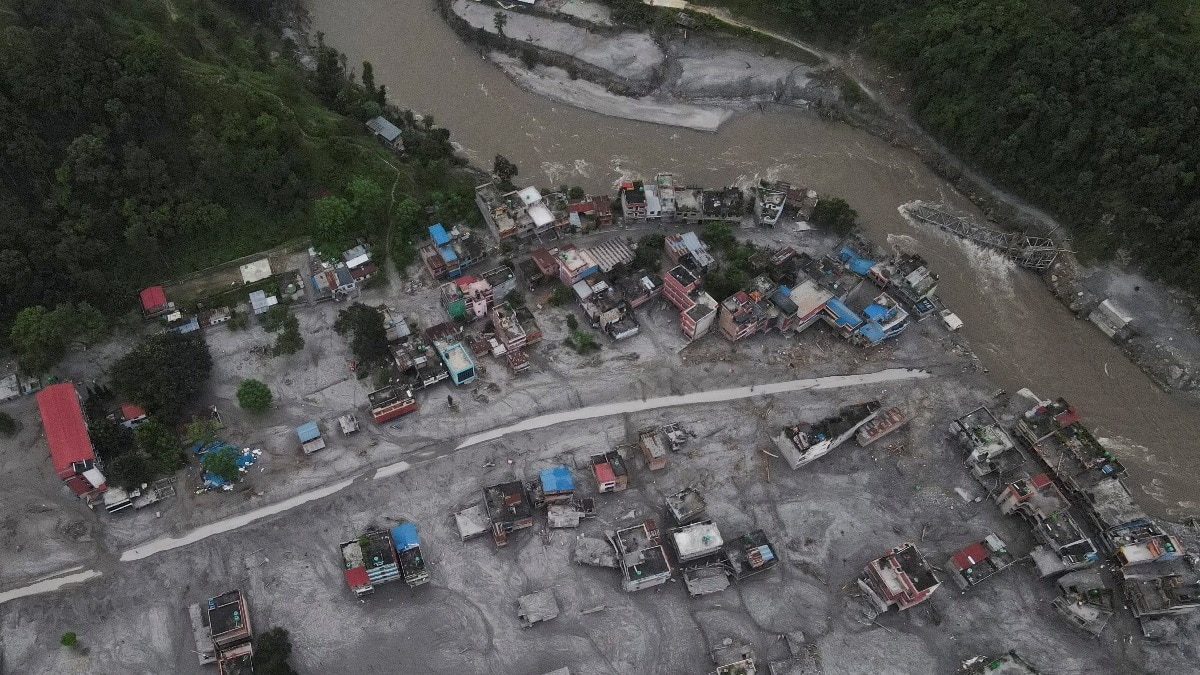
China has once again cautioned Nepal that the lake formed in the upper reaches of the Lhende river system could breach its banks at any time, citing a change in the water's colour as a possible indication of rising risk. Beijing has, however, said that even if the lake bursts, the maximum flow into the river would only reach a maximum of 500 cubic metres per second.In its message shared with Nepal's Ministry of Foreign Affairs, Chinese authorities said the colour of the lake, which began forming following the deadly flash flood that swept parts of Nepal and Tibet earlier this week, had been steadily darkening. It said this could indicate that the lake may burst any time."The colour of the lake that began forming the day before yesterday is continuously becoming darker. This means that it could burst," the message said. It added that because the volume of water was not very large, the flow in rivers in downstream areas could increase slightly, but a significant rise was unlikely.The Chinese authorities advised communities living in downstream areas to remain cautious. The dammed lake was formed as the result of a glacial collapse that is said to have caused the catastrophic flash flood in Nepal and Tibet. A natural dam formed by the resulting debris led to the creation of the lake, which is now at risk of bursting. It has formed near the confluence of the Chochen river on the Chinese side and the Purepu river on the Nepali side.According to China’s Ministry of Water Resources, the water level in the lake is gradually rising. By Friday, approximately 2.5 million cubic metres of water had accumulated in the lake. China has also carried out flood modelling to assess the potential damage if the lake bursts. According to Beijing, in such a scenario, the maximum flow of water into the river system could reach 500 cubic meters per second.The Chinese message said, "If part of the dam breaks, the maximum water flow could be 500 cubic meters per second. It will remain confined within the river's banks."Earlier, China had said that an additional 3 million cubic meters of water could accumulate in the lake over the next three days. Chinese authorities are monitoring the entire area using drones and satellites.On Friday, the lake began overflowing into the Lhende Khola and Trishuli rivers. By noon, the risk posed was deemed manageable, according to Chinese state broadcaster CCTV.- Ends(With agency inputs)Published On: Aug 29, 2026 07:58 IST
Lake could burst at any moment: China's fresh warning amid Nepal devastation
Full Article
Original Source
Read the full article at Indiatoday →KhanList aggregates and links to publicly available news content. We do not host full articles from third-party sources. Always verify important information with original sources.