
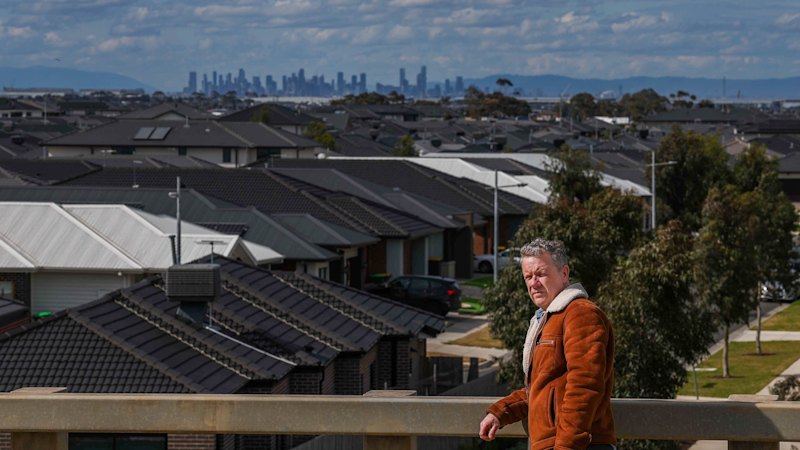
The footprint of metropolitan Melbourne will not be expanded beyond its current, official perimeter after the Carroll government vowed to put an end to decades of urban sprawl.Planning Minister Sonya Kilkenny has promised that future Labor governments will not review the urban growth boundary, resisting what she acknowledges is pressure from property interests to do so.She has also ruled out housing development of the city’s green wedge, protected zones dubbed “Melbourne’s lungs” by their champion, former Liberal premier Sir Rupert Hamer, which set aside land for environmental protection and agriculture.“We are committed to maintaining the urban growth boundary,” Kilkenny told The Age. “That’s Labor’s commitment.”The boundary is a planning line the state government established in 2002. It defines the limits of development, looping broadly around Pakenham, Cranbourne, Lilydale, Epping, Wallan, Melton and Werribee.Melbourne’s urban growth boundary.Department of Environment, Land, Water and Planning 2017.By drawing a clear line on a map, Kilkenny has also drawn a policy battleline about the future shape of Melbourne before the November election. The Coalition is backing more housing on the city’s outskirts, but will not be drawn on the question of the boundary, or the green wedge.The policy differences highlight the challenge of housing and servicing Melbourne’s booming population, which is on track to make us a global megacity this century.Melbourne would be Australia’s first megacity, defined as more than 10 million people, alongside New York, Shanghai and Tokyo.As we race towards this milestone, The Age and the University of Melbourne will in October host Melbourne Assembly, a three-day forum bringing together some of the world’s brightest minds in city planning, innovation, education, arts and sport to discuss ideas for the city’s future.In the coming days, we will zoom in closely on the shaping of megacity Melbourne by 2101 – focus on how growth will affect our neighbourhoods, consider alternatives such as decentralisation and ask whether we have a say in our city’s future.The Age has commissioned population projections from Johnny Barnard, founder of the National Forecasting Program at demographic consultancy Informed Decisions (.id).For more than three decades, Barnard has tracked the growth and development of Australian cities, factoring in trends including declining fertility and household size, and the prospect of major urban changes including completing the Suburban Rail Loop.The figures forecast that by 2101, Melbourne will soar from a current population of 5.49 million to more than 10 million.“Melbourne faces big decisions about how and where to house a population of almost twice its current size,” Barnard says. “Our forecasts should give politicians, public servants, developers and planners plenty to think about.”Even at the current population, and despite its celebrated liveability, many Melburnians already feel a little under siege with house prices unimaginable from 30 years ago, ever longer commutes, waiting times for surgery and crime on our streets.The Mt Atkinson Estate in Truganina is one of Melbourne’s new fringe housing developments.Joe ArmaoReasonably or not, it often feels like the city’s negative sides are, in part, related to our ballooning population.Indisputable, however, are the policy and practical questions posed by growth, including how and where we provide homes, infrastructure, services and safety.Or, as Julian Bolleter, author and the director of the Australian Urban Design Research Centre, asks: “We’re at an interesting point in our development and need to address these issues. Is there a plan, or are we sleepwalking into a megacity mess?”Global and local citiesOn a global scale, Melbourne, at more than 10 million people by 2101, and Australia at more than 50 million, look like trifling figures.The United Nations estimates the world’s population will surge from 7.9 billion to 10.4 billion in 75 years, with ever more people living in cities. The Shanghai metropolitan area is already at 45 million people, Tokyo more than 37 million and New York close to 21 million.Still, the rate of growth of Australia’s cities, particularly Melbourne and Perth, is well above the world average and that of most developed countries, driven largely by international immigration.It took this city 180 years to grow to 5 million inhabitants. It will take just 70 years, at most, to double that.Melbourne is fast closing in on Sydney as Australia’s largest city, while some rankings already have the southern city bigger.Estimating population growth is a fraught exercise.Official state plans for Melbourne, since the first was drawn up almost 100 years ago, have consistently underestimated our growth – and not just population expansion.While differing definitions of a city make comparisons difficult, our metropolitan footprint is already among the largest globally, bigger than more populous cities such as Paris, London and Mexico City. This is no surprise to anyone who has driven the 130 kilometres from Harkness on the city’s west edge to Pakenham on the south-east frontier.Bolleter suspects that a much bigger city, a megacity, is not what most of the city’s residents really want. “I just think that intuitively most Melburnians would doubt that, given the growth pressures already there at 5 million, that there will be less pressure at 10 million,” he said.“We have to ask, ‘Is Melbourne at more than 10 million people, good for Melbourne?’”Can Melbourne afford not to keep growing?It’s the kind of question many politicians would prefer not to be asked, and the national political focus on immigration is not making an answer any easier.On one hand, state and local governments love to spruik their cities as thriving places that everyone should either want to live in, or visit.Victoria’s state coffers, in our natural resource-poor landscape, are especially reliant on more people, the properties they occupy, homes they build. Can Melbourne afford not to keep growing, is a real question.Economics aside, however, Australians generally seem to take a dim view of big cities – the bigger the city, the dimmer the view.Opinion polls about such matters are rare, but a 2020 national survey tested population growth scenarios to 2101 and found the idea of megacities almost universally loathed.It is noteworthy that, of the cities ranked in the top 10 on the Economist Intelligence Unit’s liveable city index, only one – Tokyo – is a megacity. The top and number two-ranked centres, Copenhagen and Vienna, have less than 3 million residents. Melbourne is currently ranked number three; it used to be number one.Nonetheless, Kilkenny insists that Melbourne can thrive as a megacity. She is adamant that at 10 million people we can maintain and even improve liveability which, she says, includes environmental sustainability, equity and access to services, transport, jobs and education.“We should not be planning for anything less than that,” she says. “We must continue to plan for that liveability, and that is exactly what we’re doing.”Not everyone is convinced.Megacity challengesA major challenge is where and how we affordably house so many Melburnians, a top government priority since 2023, when the Andrews-led Labor government announced a target of 800,000 new homes by 2034. Under the plan, a network of activity centres would squeeze 70 per cent of those homes, including high-rise apartments, into established neighbourhoods.Getting those homes built – or at least approved – underpins the latest iteration of the city’s planning strategy, reworked as the statewide Plan for Victoria.Kilkenny says Labor is determined to get housing for younger Melburnians into well-serviced, established suburbs including those previously “locked up”. She specifically points to the inner-eastern Boroondara municipality, containing Hawthorn, Kew and Balwyn, where Opposition Leader Jess Wilson is MP.Melbourne is doing better than most other capital cities in terms of housing delivery and affordability, in part, however, because of our remaining supply of cheaper, greenfield homes. Contrary to the 2023 vision, our fringe estates are growing faster now than when the Andrews government was first elected in 2014.But apartment construction is well short of what Labor hoped for, the bulk of it much more expensive than could reasonably deemed affordable.The development industry argues that government preference for higher density in expensive, established suburbs over greenfield homes will reduce affordability. Developers want more of both options and to let the market decide where Melburnians live.At the same time, planners are increasingly concerned that the fast-tracking of housing approvals has taken precedence over the liveability and climate resilience of higher-density housing and neighbourhoods.Planners also highlight what they say is the government’s lack of willingness and/or capacity to weigh in to improve affordability through a mix of more public and social housing.The Planning Institute of Australia’s Victorian president Patrick Fensham says he is very disappointed that since 2023, fast-tracking housing approvals has been done “at the expense of good strategic planning and serious thinking about the future of Melbourne”.On Plan for Victoria, Fensham adds: “Actually, it’s not a plan at all. It’s a statement about where you might like housing to go without an accompanying infrastructure plan.”Kilkenny rejects the criticism. “I think we’ve worked really hard to find the balance and to ensure that as we plan for more homes, that we are planning for even greater liveability.”As for the opposition, Wilson has to date announced that if elected in November, she would scrap Labor’s activity centre plan, concentrate high-rises in central city (Labor/Green-held) neighbourhoods around the CBD, and speed up housing construction in greenfield areas already marked for growth.But opposition planning spokesman David Southwick did not respond directly to a series of questions from The Age, including whether he supported the idea of Melbourne as a megacity, and whether a Coalition government would retain the existing growth boundary.“There is no point growing a city if you don’t have the homes to accommodate the people moving here,” he says. “More homes can’t come at the cost of what makes Melbourne liveable.“Our plan is simple. Make housing affordable and build homes where people want to live.”If only it were that simple.Melbourne Assembly will be held from October 19 to October 21. More information is available on the Melbourne Assembly website, including special offers for Age subscribers.
Labor pledges to halt Melbourne’s urban sprawl, but planners ask if we’re heading to a megacity mess
Full Article
Original Source
Read the full article at Smh →KhanList aggregates and links to publicly available news content. We do not host full articles from third-party sources. Always verify important information with original sources.