
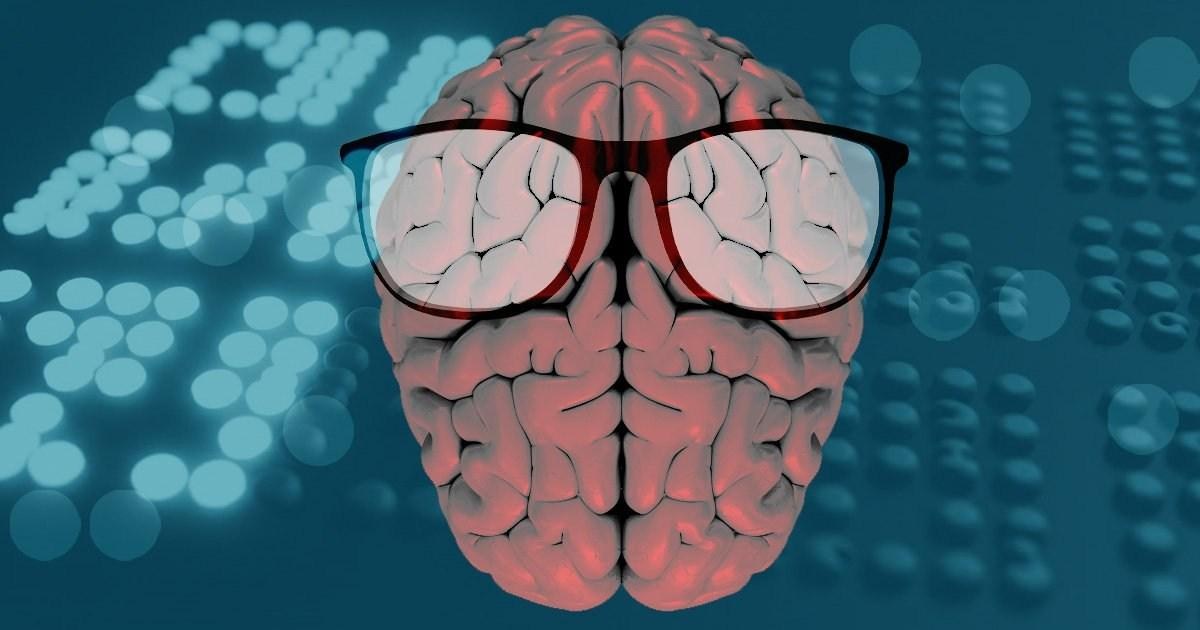
Brain organoids are sometimes called cerebral organoids (Picture: Getty/Metro) Three mini-brains are better than one, apparently. At least, when it comes to reading Braille. Brain organoids are lab-grown nuggets of cells normally found in the human brain that pulse with electrical activity. One nugget can contain more neurons – cells that chat with the nervous system – than a fruit fly or bee. Some can even play the video game Pong. And now scientists have made these mushy brains respond to the writing system used by blind or visually impaired people. University of Bristol researchers grew three organoids that have 0.00001% of the 86billion neurons a human brain has, they wrote in their paper published last week in Frontiers in Artificial Intelligence. ‘They’re definitely not miniature human brains,’ first author and PhD candidate Tianyi Liu tells Metro. A robot-mounted tactile sensor collecting Braille data (Picture: Tianyi Liu) ‘They’re tiny, three-dimensional cultures of human brain tissue, about half a millimetre across, containing neurons and other supporting cells.’ Before you ask, no, Liu says, they’re not ‘conscious’, but they can live for about 100 days. ‘You can think of them as small pieces of living tissue capable of producing neural activity, rather than scaled-down human brains,’ she adds. …But they can read Braille? Most of the time, at least. Liu and her team built an ‘organoid computer’ – hooking them up to a machine learning algorithm which could decode their neuronal activity. A robotic touch sensor jolted the mini-brains with 26 different electrical signals that represent the tactile data for the letters of the Braille alphabet. Follow Metro on WhatsApp to be the first to get all the latest news Follow us to receive the latest news updates from Metro (Picture: Getty Images) Metro’s on Whatsapp! Join our community for breaking news and juicy stories. The AI then used the organoid’s signals to guess which Braille letter was being said. The organoids could report which Braille letter had been zapped at them 61% of the time, the AI found. Brain organoids look like tiny nuggets of cells (Picture: Alysson Muotri/Quaint Magazine) When three organoids worked together, the accuracy rose to 83%. ‘We didn’t actually teach the organoids to read,’ Liu says. ‘The key is that the organoids tend to produce similar responses when presented with the same letter’s signal but distinguishable responses to different letters. ‘The external algorithm uses these differences to identify the letters. The organoids themselves haven’t learned what those letters mean.’ Researchers also pushed the mini-brains by adding ‘artificial noise’ to the signals, which should have made them too scrambled to decode. But when the AI was asked to identify the letter signals without help from the organoids, it was less able to discern them among the artificial noise. How the team’s study was set up (Picture: Tianyi Liu) Mini-brains, also called cerebral organoids, sound like the stuff of science fiction but have been around since the 2010s. Scientists have grown them to see how autism and other conditions arise during pregnancy or why we feel pain in the way we do. Some companies want to build ‘organoid intelligence’, computing life forms that use far less energy than power-hungry AI systems. This includes FinalSpark, which grew the brains-in-a-dish the Bristol team used. ‘The human brain is the best-known device for processing of complex information. What if we can use building blocks of the human brain, neurons, for computation?’ it asked in a blog post last year. We’re not there yet, Liu stressed, noting that the findings only show that machine learning systems can decode information via brain blobs. The human brain is a very complicated piece of equipment (Picture: Shutterstock/Triff) Still, Liu says, the paper offers a glimpse of what a biohybrid computer could look like. She hopes neuron clusters might process ordinary text one day, though telling words apart is very different from understanding what they mean. ‘This is just a first step,’ Liu says. ‘In the future, we hope to train organoids through closed-loop feedback so they can actually learn to process information themselves,’ she adds. ‘Imagine a robot using a living neural network to help detect when an object is slipping from its grip and adjust how tightly it holds it.’ Get in touch with our news team by emailing us at webnews@metro.co.uk. For more stories like this, check our news page. Arrow MORE: Man who flew to Somalia after speaking with Islamic State AI chatbot jailed Arrow MORE: A new star has been discovered – one scientists thought was ‘impossible’ Arrow MORE: AI giant says government can block a bot’s use ‘if it could kill more than 50 people’ News Updates Stay on top of the headlines with daily email updates.
Lab-grown human mini-brains can ‘read Braille’
Full Article
Original Source
Read the full article at Metro →KhanList aggregates and links to publicly available news content. We do not host full articles from third-party sources. Always verify important information with original sources.