
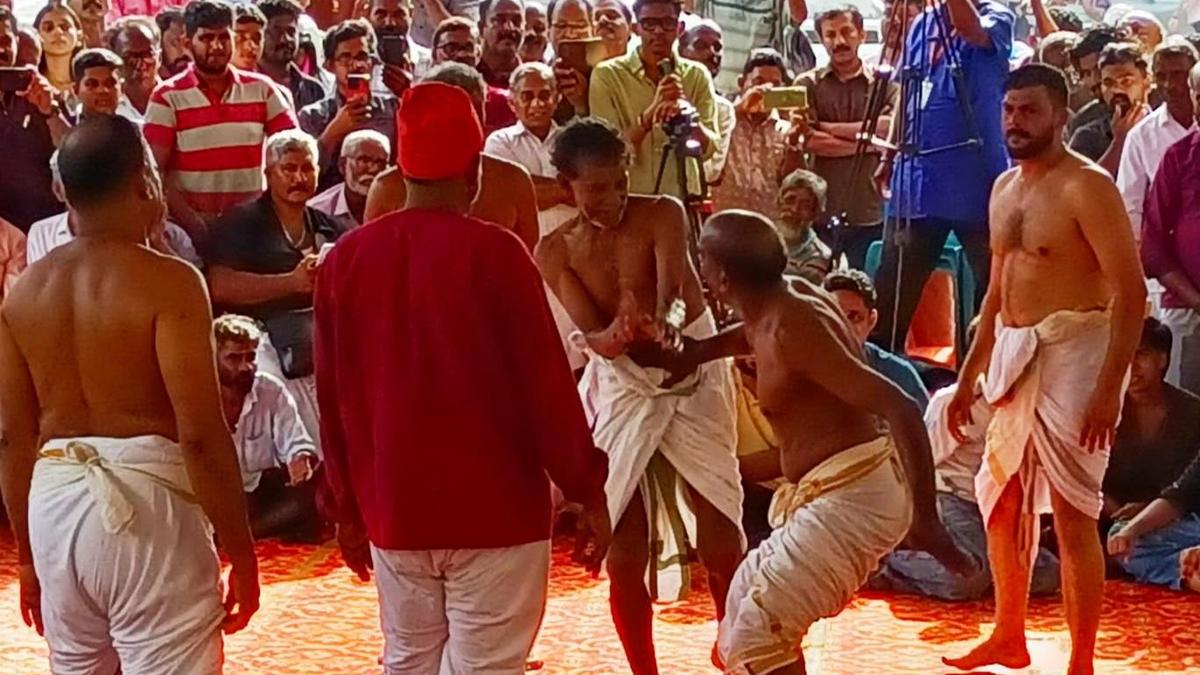
The first thing that reaches the crowd is the warrior’s call.“Hayyathada!”A fighter stamps his feet, loosens his body and springs into the arena. His opponent waits across the ground. They approach, clasp hands, exchange a few measured steps and retreat. For a moment, there is silence.Then the palms fly. The crowd erupts.This is Onathallu, also known as Kayyankali or Onappeda, an indigenous form of bare-handed wrestling that has long been woven into the Onam traditions of central Keralam. In Kunnamkulam, the old martial game once again took centre stage, bringing together fighters separated by generations but united by a shared inheritance.After a two-year break, the traditional contest returned to the town as part of the Onam celebrations. Organised by the Popular Arts and Sports Centre, around 80 fighters, ranging from youngsters to men well past 70, entered the arena under the guidance of veteran masters.There are no elaborate costumes or sophisticated equipment. What draws the fighters is the honour of participation, the thrill of the contest and the pride of keeping alive something their forefathers practised.For the veteran ashans, the arena is also a classroom.They have inherited the techniques from their teachers and are now passing them to another generation. Among those keeping the tradition alive are masters Chenamkunnath Moidu and Korangottil Vappinu, both past 75.They trace their lineage to Vettikkattiri Kunjalan Asan, regarded as one of the important figures in preserving the tradition in the region. After his death, his disciples continued training newcomers, ensuring that the techniques did not disappear with the older generation.Onathallu may look like a rough-and-ready fight to an unfamiliar eye, but there is considerable ritual and discipline behind it.The participants traditionally wear ‘dhothi in a particular style and tie a second piece of cloth firmly around the waist.The opponents then approach each other. They stretch and shake out their hands, clasp hands and move back and forth several times. This ceremonial exchange establishes the rhythm of the bout before the physical contest begins.The fighting is predominantly with the hands. Open-palmed strikes, blocks and evasive movements form the core of the contest. Kicks are not permitted.A fighter must remain alert to every movement of his opponent. A fall can end the bout. So can bleeding or the loosening of the waist cloth.It is not simply brute strength that matters. Timing, agility, balance and accuracy are crucial.The roots of Onathallu are believed to lie in the martial traditions of Keralam. Historical accounts associate it with physical training for soldiers serving local rulers and feudal chiefs.Yet Onathallu developed its own identity as a popular folk tradition.Unlike formal martial-art training, it became closely associated with village life and the festive atmosphere of Onam.At Kunnamkulam, the fighters are divided into two sides — Vadakke Cheri and Thekke Cheri. The rivalry gives the event its competitive edge, but the contest remains essentially a friendly one.As the bouts progress, the crowd becomes increasingly involved. Every clean strike is greeted with cheers. A daring move brings applause. When tempers rise with the intensity of the contest, referees intervene.Their role is important. The referees ensure that rivalry does not turn into uncontrolled violence.One of the most distinctive features of Onathallu is its ability to bring together people from different areas and communities.For some participants, the connection to Onathallu is strong enough to draw them home from abroad. Several fighters employed in Gulf countries make it a point to return during the Onam season to take part in the contest.The region still remembers the exploits of masters such as Vettikkattiri Mammi, Painkulam Kunjanthu, Varavur Syaed Ali, Kavassery Kuttan Nair and Edathara Velayudhan.Their names survive through stories passed from one generation to the next — accounts of courage, physical strength and remarkable skill.Such stories are an important part of the culture surrounding Onathallu.For younger viewers, it offers a glimpse of a sporting culture that existed long before stadiums, television broadcasts and organised competitions transformed the meaning of sport.The Popular Arts and Sports Centre has been working to keep the event alive and introduce younger people to the tradition. But enthusiasts believe greater institutional support is necessary if the art is to move confidently into the future.
Kunnamkulam’s Onathallu: where festivities pack a punch
Full Article
Original Source
Read the full article at Thehindu →KhanList aggregates and links to publicly available news content. We do not host full articles from third-party sources. Always verify important information with original sources.