
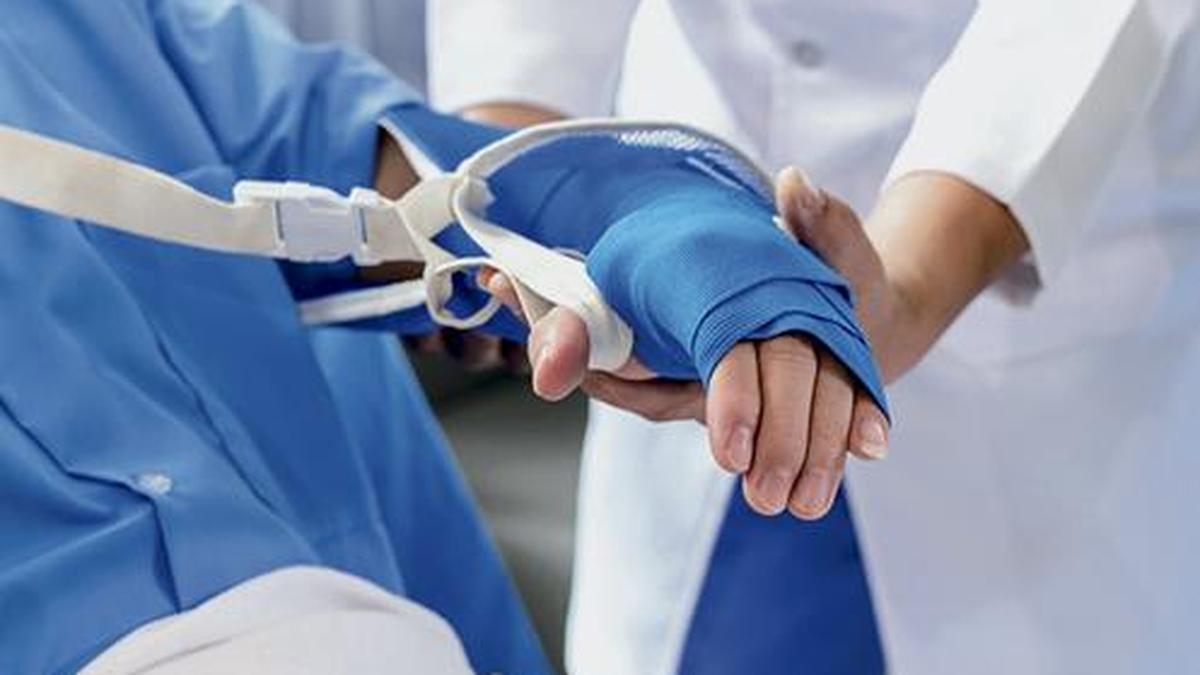
Moving patients without adequate precautions can, in certain circumstances, worsen spinal cord injury and potentially result in permanent neurological disability. (Picture for representation) | Photo Credit: Getty Images Chief Minister V.D. Satheesan’s intervention to help shift a road accident victim to hospital in his pilot vehicle on Sunday (September 21, 2026) evening has drawn attention to an important trauma care concern, with physician and public health commentator Manoj Velland pointing out that accident victims should be moved strictly according to established trauma protocols.According to reports, the Chief Minister, who saw an unconscious and bleeding accident victim on the Container Terminal Road in Kochi, while on the way to Ernakulam had directed that the person be shifted to the hospital immediately in his escort vehicle. The video of the incident had been shared widely on social media.Dr. Vellanad, in a Facebook post, said that while the Chief Minister’s gesture should be praised, he raised concern regarding the manner in which the victim was lifted and moved by several people without apparent spinal immobilisation, which could worsen a not-so-obvious spinal injury.Road traffic accident victims can have injuries to the cervical spine and other parts of the vertebral column even when such injuries are not immediately apparent. Moving such patients without adequate precautions can, in certain circumstances, worsen spinal cord injury and potentially result in permanent neurological disability, he noted in the post.He also highlighted the risk of airway obstruction in an unconscious patient if the head and neck are not properly stabilised. Moving a seriously injured patient could also aggravate internal bleeding, particularly when there are fractures involving the pelvis or ribs or associated injuries to internal organs.Dr. Vellanad said that as per trauma protocol, the head, neck and spine of a suspected trauma patient should be kept aligned and movement minimised until the patient is assessed and appropriately moved.Importance of ambulanceHe also stressed how important it was to use an appropriately equipped ambulance, with facilities for airway management, oxygen administration, suction and emergency interventions, for moving seriously injured patients.Dr. Vellanad said that barring situations in which the accident site itself poses an immediate danger — such as a fire or risk of explosion — it would generally be preferable to wait for a medically equipped ambulance rather than move a seriously injured person in an ordinary car or jeep.Even when an ordinary vehicle has to be used in an emergency, he said, the patient should be properly immobilised.The incident highlighted the need for greater awareness of basic trauma-care protocols among the public and even among personnel who are the first responders. Published - September 21, 2026 07:29 pm IST
Keralam CM Satheesan’s rescue gesture draws attention to how trauma patients should be handled
Full Article
Original Source
Read the full article at Thehindu →KhanList aggregates and links to publicly available news content. We do not host full articles from third-party sources. Always verify important information with original sources.