
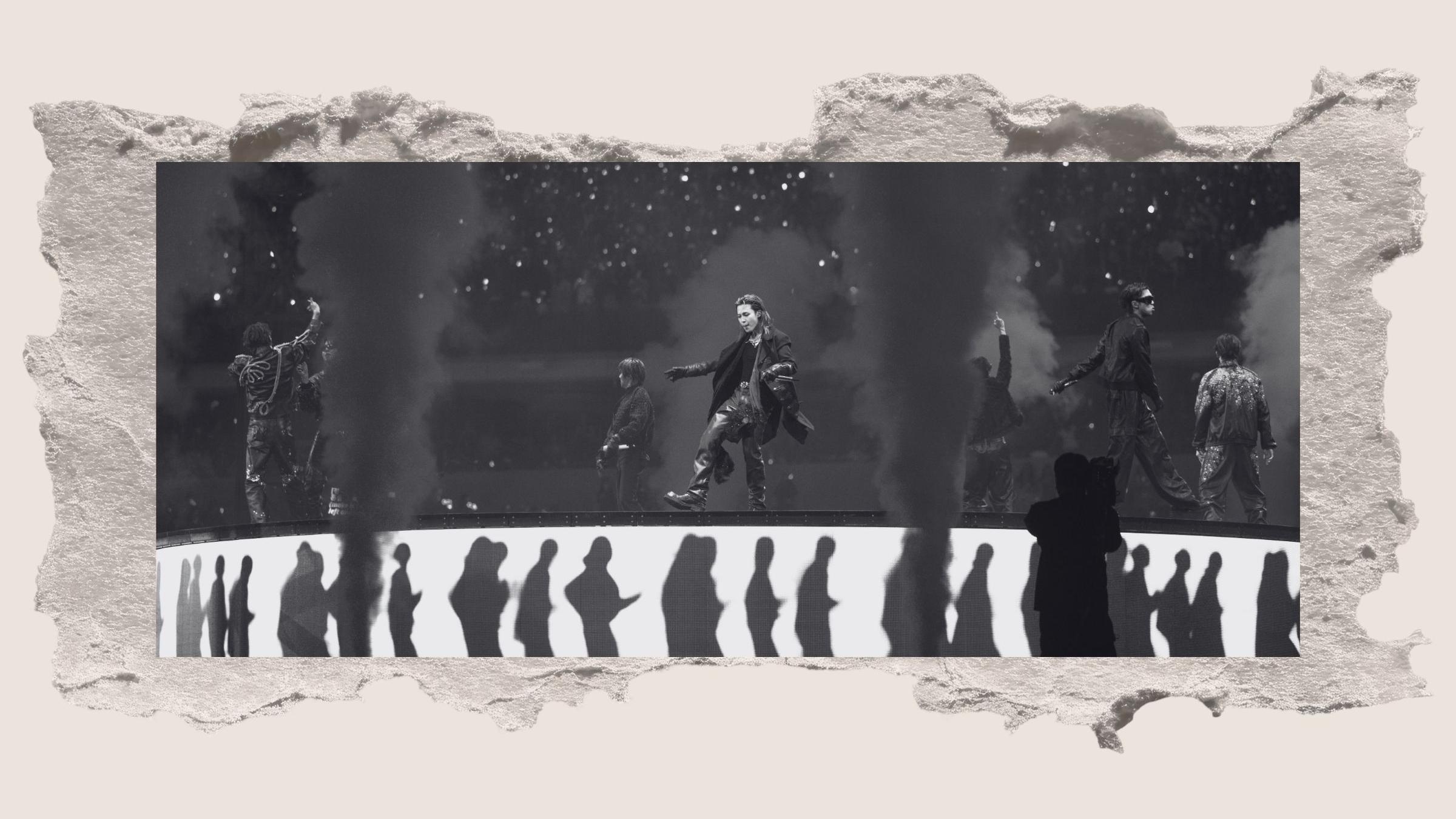
Over the last decade, I have met hundreds of American K-pop fans as a K-pop ethnographer. My first question is always the same: “Why do you like K-pop?” The question carries an assumption: “If K-pop is merely a copy of American pop, as some critics dismissively claim, why listen to the replica rather than the original?”Their responses were surprisingly similar, as if they had compared notes. K-pop was “magical” and “catchy,” while American pop was “boring” and “always the same.” According to these fans, while American pop stars sang “too much about sex, drugs, and parties,” K-pop offered “dreams, fantasies, and self-growth,” often through elaborate alternative “universes” in which idols developed distinct personas and narratives.This idea of “universe” was first systematically introduced to K-pop in 2012, when SM Entertainment debuted EXO as extraterrestrial beings from “EXO Planet,” each endowed with a supernatural power. Since then, world-building has become increasingly intertwined with K-pop’s integration of music, dance, costume, stage design, fashion, beauty, digital media, and more recently, virtual idols and AI production, making K-pop an increasingly audiovisual, narrative, and participatory cultural form for audiences worldwide.
K-pop, BTS, and What the Grammys Get Wrong About Asian Music
Full Article
Original Source
Read the full article at Time →KhanList aggregates and links to publicly available news content. We do not host full articles from third-party sources. Always verify important information with original sources.