
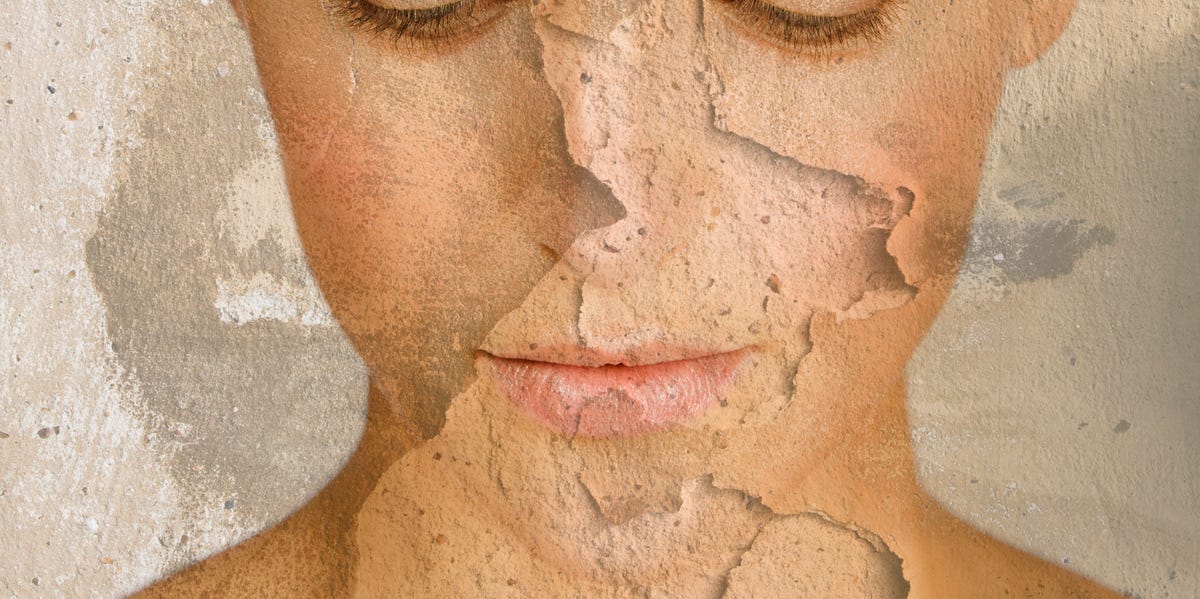
A few weeks ago, I rented a big cabin outside of the city with friends. It was the first cold weekend in New York, the kind where you might actually need to throw on the heavy jackets that were too much for those 55-degree fall days. Nestled in this mountain house, we cozied up around a fire in fleece sweatshirts and fuzzy blankets. Before bed, we turned the heat on. I slept cozy like a baby in the womb, but immediately upon waking, my skin felt tight and dry. I coated myself in moisturizer, but it was no use. My face—which is usually oily and acne-prone—was dull and rough, like it’d never produced a drop of oil in its 29 years.At first, I thought it was a sign of the times. I’m about to turn 30, and my skin’s just getting drier. But when I headed back to Brooklyn, where my stuffy apartment produces enough natural heat on its own to not need the radiator cranked up, my skin went back to normal.I’ve heard of this phenomenon before—when your skin gets dehydrated once you turn on the heat in your house—but this was my first experience. And I was determined to get to the bottom of it before my radiator goes on for good and the winter uglies take over. Two dermatologists weighed in—and it looks like this isn’t necessarily preventable but totally treatable.What happens to your skin when you start blasting the heat indoors? “Indoor heating lowers the relative humidity in the air, which makes moisture evaporate from your skin more quickly,” says dermatologist Annette Czernik, MD. “Our skin naturally produces oils that help protect it and keep moisture in, but sometimes that's not enough when the air is really dry.” You might apply moisturizer and feel like you didn’t even do anything, she adds.You’re also not always in the clear if you have oily skin, says Dr. Czernik. “A lot of people don't realize that your skin can be oily and dehydrated at the same time,” she explains. “This is because your skin can still produce oil while losing moisture from the dry air.”Are there other symptoms than just dryness? You may also feel tightness, roughness, stinging, flaking, and even itching. “As your skin loses more moisture, its protective barrier can become weaker,” says Dr. Czernik, hence why you can experience some irritation as your skin isn’t as strong enough to fight it off. The air can also make your skin look dull or even feel more sensitive, since it’s working so hard to hold onto the moisture it needs, explains Dr. Czernik. “In more severe cases, you might experience redness, peeling, or even small cracks in your skin,” she adds.Is it normal for skin to be drier in the winter?Naturally, with colder air outside, your skin might get drier too, only exacerbating the issue. “When the temperature drops outside, the air usually holds less moisture,” says Dr. Czernik. “Then, when you go indoors, you're exposed to heated air that can also be very dry.” You’re basically losing moisture on both sides, no matter what you do. “Going back and forth between the cold outdoors and warm indoors can make that dryness more noticeable,” she adds. “This is why someone might have perfectly normal skin during the summer but struggle with dryness all winter.”How to prevent moisture loss in the winter1. Get a humidifier.“When you turn the heat on, the air inside your home can become very dry,” explains dermatologist Ariel Ostad, MD. And one of the easiest ways to add moisture back into the air is a humidifier. “This can help slow down how quickly your skin loses water throughout the day or night,” Dr. Ostad adds.He recommends getting a bedside humidifier, like the Canopy Bedside Humidifier, for your bedroom and running it while you’re sleeping. “You may notice that your skin feels less tight and dry when you wake up in the morning,” he says. “It can also help with dry lips and irritated skin.” But remember to clean it regularly, as bacteria and mold can build up in your device.2. Upgrade your moisturizer.“If your skin starts getting drier, I would first look at the products you're using every day,” says Dr. Ostad. Both Dr. Ostad and Dr. Czernik recommend switching to a thicker moisturizer. Ideally, find one that both moisturizes (meaning it contains ingredients that pull water into your skin, like squalane, hyaluronic acid, panthenol, and glycerin) and seals in hydration (aka ingredients that act as a physical barrier to reduce moisture loss, including ceramides, oils, butters, and silicones). But you could also opt for two moisturizers nightly. I prefer to use a lightweight moisturizer, then follow it up with a barrier cream.“It's also a good idea to apply your moisturizer right after washing your face or getting out of the shower,” adds Dr. Czernik. If your skin is still damp, even better. This helps pull all that water into your skin (which helps plump it up and decrease dullness), plus it eliminates time for moisture to evaporate from your skin.3. Avoid super-hot showers. Just as hot air can pull water from your skin, so can hot water, explains Dr. Czernik. It doesn’t mean you need to do a daily cold plunge, but opt for mild to warm water temperatures, as scalding water can also increase skin irritation.4. Assess your current skincare routine. Some of the products in your routine could actually be making your dryness worse. Put down all the strong exfoliants, whether it’s your salicylic acid cleanser, an acid-based peel pad, or a retinol serum.Instead, Dr. Ostad suggests using a gentle, fragrance-free cleanser “that won't strip your skin of its natural oils.” And if you love your exfoliants, you don’t have to ditch them completely, he adds, but you might want to cut back to once or twice per week at most. “You don't need to completely change your skincare routine, but making a few small adjustments can really help during the colder months,” he says.When to see a dermatologist about dry skin and irritation“If your skin is just a little dry, you can usually manage it at home with a good moisturizer,” says Dr. Ostad. “However, if the dryness continues for a few weeks despite changing your skincare routine, I would recommend seeing a dermatologist.” If you notice your skin becomes extremely itchy or irritated, that’s a good sign to see a doctor too. “Cracking, bleeding, or painful peeling are signs that something more serious could be going on,” adds Dr. Ostad.Meet the experts Annette Czernik, MD, is a board-certified dermatologist and the founder of Derm Medical in Stamford, Connecticut. Ariel Ostad, MD, is a board-certified dermatologist with his own practice in New York.Why trust Cosmopolitan?Beth Gillette is the beauty editor at Cosmopolitan with eight years of experience researching, writing, and editing skin, hair, makeup, nail, and fragrance stories.Beth Gillette is the beauty editor at Cosmopolitan, where she covers skincare, makeup, hair, nails, and more across digital and print. She can generally be found in bright eyeshadow furiously typing her latest feature or hemming and hawing about a new product you "have to try." Prior to Cosmopolitan, she wrote and edited beauty content as an Editor at The Everygirl for four years. Follow her on Instagram for makeup selfies and a new hair 'do every few months.
Just Turn the Heat On? That Might Be Why Your Skin Suddenly Feels So Dry
Full Article
Original Source
Read the full article at Cosmopolitan →KhanList aggregates and links to publicly available news content. We do not host full articles from third-party sources. Always verify important information with original sources.