
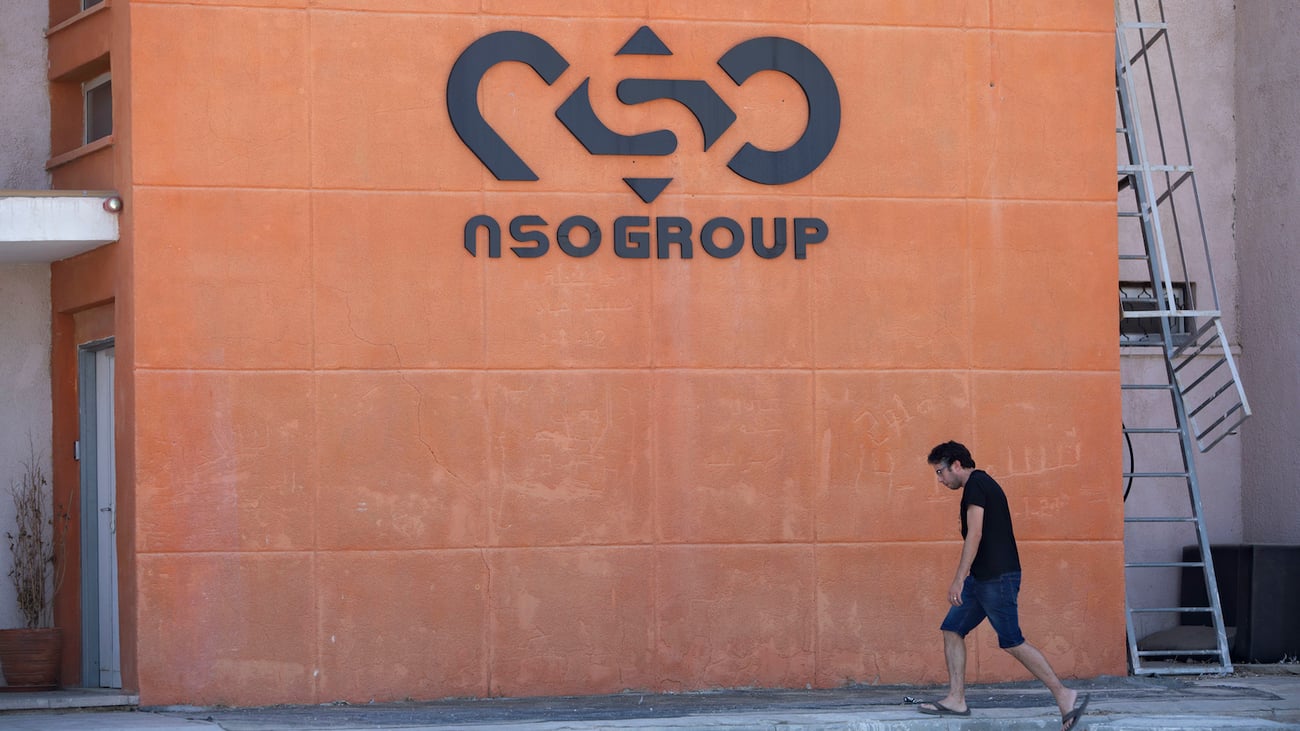
"None of this has anything to do with California," a federal judge said of the journalists’ claims.(CN) — A federal judge dismissed a case brought by a group of Salvadoran investigative journalists on Wednesday who claim they were the targets of spyware attacks from an Israeli cyber intelligence group, finding they didn’t prove California was the right venue for their suit.“The gravamen of plaintiffs’ claims is that NSO supplied spyware to an unnamed government outside the United States to access the Apple iPhones of plaintiffs working for a newspaper in El Salvador,” U.S. District Judge James Donato wrote in a 10-page ruling. “None of this has anything to do with California.”The journalists, from an investigative news outlet called El Faro, sued Israeli cyberintelligence agency NSO Group — blacklisted by the U.S. government in 2021 — and its parent company in 2022 after they said they were victims of spyware attacks in 2020 and 2021.The journalists claim between June 2020 and November 2021, hackers used the Pegasus spyware to access their iPhones. The spyware, according to the plaintiffs, allows hackers to take control of a user’s smartphone and get access to calls, texts, contacts and other personal data.They argued the companies and their unidentified clients surreptitiously installed Pegasus on the iPhones of at least 22 of El Faro’s 35 employees, calling the attacks “part of a coordinated and sustained effort to undermine independent journalism in El Salvador.”The journalists sued the Pegasus makers in the Northern District of California because that is where Apple is based, and the Israeli companies purportedly used Apple’s servers to target their phones.NSO Group argued the case should be dismissed under the doctrine of forum non conveniens, under which a court can decline jurisdiction if it believes another court is a more convenient or just venue for the case. Donato denied dismissal on that ground.“Defendants bore the burden of making a ‘clear showing of facts which establish such oppression and vexation of a defendant as to be out of proportion to plaintiff’s convenience, which may be shown to be slight or nonexistent,’” the Barack Obama appointee wrote. “They did not come close to carrying this burden.”However, he did agree with NSO Group that the court lacked specific personal jurisdiction. The journalists argued the companies had sufficient ties to California for the case to be heard there, but Donato was not persuaded.Specific jurisdiction focuses on the defendant’s contacts with the forum state: California. The plaintiffs must prove the defendants purposefully directed their activities in the forum, that the claims arise out of the defendant’s forum-related activities and that the exercise of jurisdiction be reasonable.Donato found the record didn’t support the journalists’ attempt to establish jurisdiction, citing the NSO Group’s sole presence in Israel, and all of the journalists who claim to have had their devices attacked were living in El Salvador at the time.Rather, the judge found the only potential connection to California is the journalists’ claim that the attacks required NSO Group to interact extensively with Apple’s California servers.“None of this plausibly demonstrates tortious conduct by NSO in California for purposes of specific jurisdiction,” Donato wrote. “Defendants’ dealings with Apple’s servers that may have been located in California do not constitute the conduct or claim for which plaintiffs seek redress.”Further, Donato found the journalists had not established NSO Group knew it would cause harm in California.“Plaintiffs did not squarely allege that the servers were, as a matter of fact, located in California. Plaintiffs also did not allege that NSO knew the servers were located in California and expressly aimed its conduct here,” Donato wrote.The journalists said they were disappointed with the court’s decision, and they intend to appeal.“Spyware manufacturers that participate in the persecution of journalists shouldn’t be able to operate with impunity, and U.S. courts must ensure that they are held accountable for their actions where those actions violate U.S. law,” Carrie DeCell, senior staff attorney and legislative advisor at the Knight First Amendment Institute, said in a statement.This is not the first time Donato has dismissed the journalists’ suit on forum grounds. In 2024, he ruled it should be heard in Israel or El Salvador because it was entirely about foreign groups. But a Ninth Circuit panel revived the case last summer, finding Donato had failed to consider that one of the plaintiffs is a U.S. citizen and two others are U.S. residents, which entitled them to a higher degree of deference to bring a lawsuit in a federal judicial district where they don’t reside.However, Donato found this time that those ties still did not change the conclusion that the court lacked jurisdiction.“Overall, nothing in the record indicated that any of these plaintiffs’ phones were compromised while in the United States,” Donato wrote.The defendants did not respond to a request for comment before press time.Subscribe to our free newslettersOur weekly newsletter Closing Arguments offers the latest about ongoing trials, major litigation and rulings in courthouses around the U.S. and the world, while the monthly Under the Lights dishes the legal dirt from Hollywood, sports, Big Tech and the arts.Additional Reads
Judge tosses Salvadoran journalists’ suit against Israeli spyware supplier
Full Article
Original Source
Read the full article at Courthousenews →KhanList aggregates and links to publicly available news content. We do not host full articles from third-party sources. Always verify important information with original sources.