
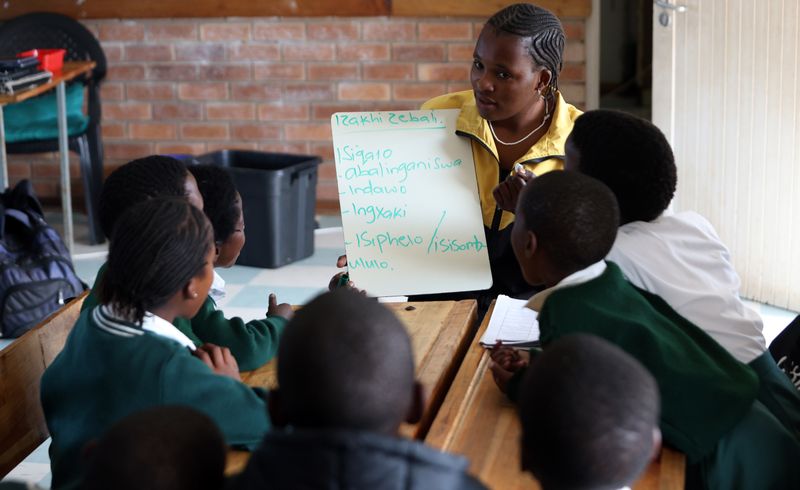
South Africa’s unemployment stats are never just numbers; they reflect the depth of the experiences of millions of people waking up each morning wanting to contribute but finding no door open to them. The latest Quarterly Labour Force Survey reminded us that young people bear the brunt of unemployment, with expanded unemployment rising to 47.4%. But it also showed us that formal sector employment is shrinking, with 41,000 jobs lost in just three months – employment decreases were mainly in the community and social services, a sector that employs mostly young people.While deeply concerning, these numbers alone don’t communicate the impact of unemployment on young people’s confidence, identity and sense of direction. At the Masinyusane Development Organisation we see first-hand the impact of not being able to find opportunities.During the last round of the Basic Education Employment Initiative, Masinyusane trained more than 400 young people to implement Zazi iZandi, a mother-tongue, play-based small group intervention that helps pupils reach the Grade 1 benchmark for reading. In turn, the education assistants supported children learning to read, assisted teachers meaningfully and became part of a broader effort to improve foundation phase learning outcomes. What often goes unnoticed is that these work opportunities provide way more than economic respite; they are a transformative experience for the young people, pupils and their households and broader communities.It’s public employment grounded in social returns.Since 2020, the Basic Education Employment Initiative has created more than one million opportunities, many in areas with poor economic activity. More applicants and assistants were female and from rural and poor areas, giving them income, experience and purpose, and strengthened schools that are often expected to do too much with too little. It showed important social returns, with 96% of school management team members welcoming the support provided by assistants. Our experience attests to this – in only six weeks of the Zazi iZandi, the proportion of pupils meeting the 40-letters-per-minute benchmark grew, from 12.3% to 32.4%. When the intervention contracts ended, Masinyusane retained more than 100 assistants through other sources of funding, because we simply could not afford to lose the gains made in schools or in the lives of those young people. Youth unemployment is heterogeneousOur assistants showed us that unemployment looks different; mostly females, some fresh out of school needing direction, others with completed tertiary qualifications are looking for opportunities. They head families, they are mothers, they are steadfast anchors in their household, navigating poor job prospects, food insecurity, mental health and trauma. Notwithstanding these difficult family conditions and a tough labour market, young people are not lazy or despondent.When Lithemba Mhlobo joined the Basic Education Employment Initiative, she was fresh out of high school, but had not been accepted into any tertiary institutions. She found herself at home, without any way to move forward.After hearing about the programme, Lithemba became an education assistant at Magqabi Primary School in Kariega, Eastern Cape, providing phonic support to a Grade 2 pupil who was repeating the grade, with low participation and little confidence. Lithemba worked with him every day, and over time he became one of the strongest pupils in his group, able to read for meaning.“That moment showed me that the work I was doing mattered. And this opportunity took me out of my misery, if I am being brutally honest – it made me feel like I had purpose again,” says Lithemba proudly. Now in her first year of a teaching degree at SANTS, and working as a literacy coach with Zazi iZandi, Lithemba’s education journey has only just begun. Four key changes for lasting public valueIn 2026, funding for the Basic Education Employment Initiative lapsed, losing almost 200,000 opportunities for young South Africans, with no clear sign of the funding for next year. The government deserves credit for creating the intervention, demonstrating the impact of acting with urgency, clear intention and at scale.But we need the same urgency and intention for bringing the programme back, with four critical improvements:Ensure multiyear funding, allowing improved programme design and implementation planning;Align the intervention with the school calendar, with a duration of at least 10 months;Provide assistants with proper training to complete their tasks, mentorship and support to help them develop next steps into further study, employment or self-employment; andLearning outcomes can be strengthened with additional mechanisms and tools, which civil society organisations with implementation experience can provide.There is urgency to bring back an improved, multiyear, funded Basic Education Employment Initiative, and to listen to the young people whose lives have already shown us what is possible when funding tackles socioeconomic challenges in communities.In a recent conversation, Lithemba told us that the programme “took me from feeling like I had nothing to offer to being trained, supported and believed in. Multiply my story by thousands. Cutting the intervention does not just cut jobs; it cuts hope – and our country needs young people with hope.” DMZama Zulu is executive director of Masinyusane and the 2025 Herald Citizen of the Year. Stanford Ndlovu is the special projects and partnerships manager at Masinyusane and a 2025 Sunday World Unsung Hero.
JOBS CRISIS OP-ED: Bring back the Basic Education Employment Initiative — SA youth need it urgently
Full Article
Original Source
Read the full article at Dailymaverick →KhanList aggregates and links to publicly available news content. We do not host full articles from third-party sources. Always verify important information with original sources.