
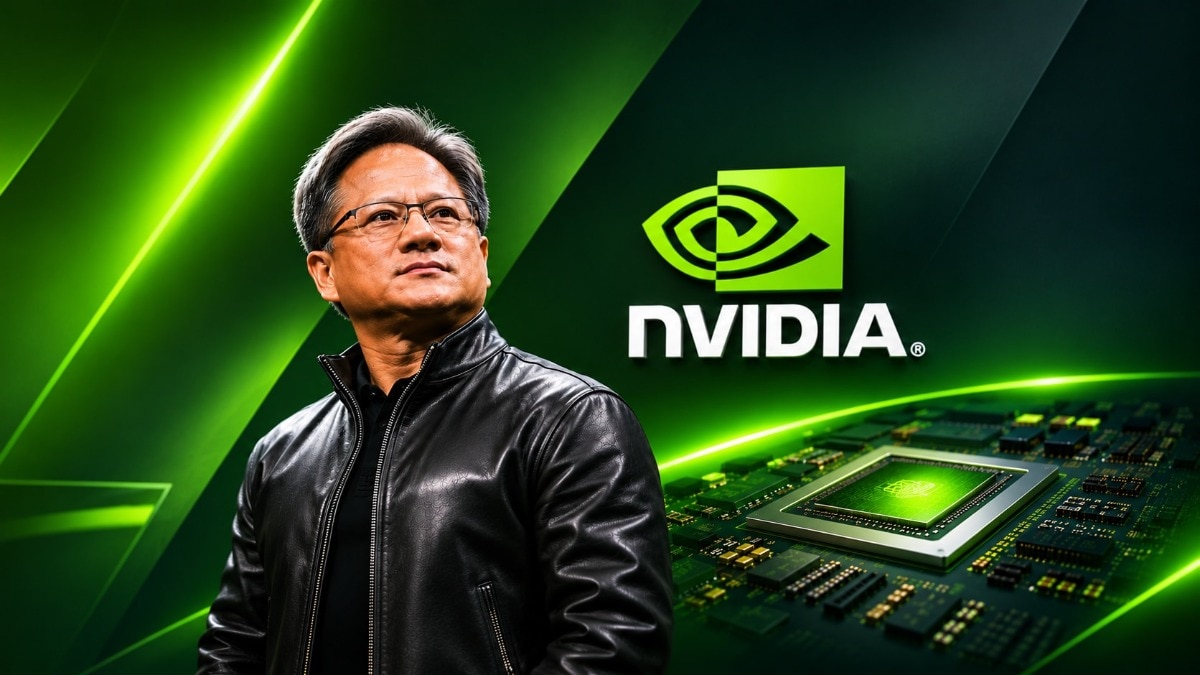
Jensen Huang is used to being the man in the spotlight. The black leather jacket, the rock-star treatment at technology conferences, the standing ovations and the billions of dollars riding on every new Nvidia product launch have made him one of the most recognisable faces of the artificial intelligence revolution.But the 63-year-old billionaire is now starring in a very different kind of drama. There are allegations involving a suspected Chinese intelligence operative, a reported $7.5-billion trail of Nvidia chips reaching Chinese companies, two alleged extramarital relationships and a boardroom crisis that could end his 33-year run as the company's chief executive.The plot has all the ingredients of a political thriller. There is a powerful technology boss, a businesswoman whose links to China have attracted intelligence scrutiny, a US administration caught between commercial interests and national security, and a company whose most valuable asset may also be its biggest vulnerability: its founder.The Wall Street Journal reported on Wednesday that Nvidia's board was preparing to oust Huang. News agency Reuters subsequently reported that the board is meeting to decide his future. A decision is expected by today. The reports followed another revelation: Huang allegedly had a second extramarital relationship, this time with an Nvidia executive who reportedly reported to him.For a company at the centre of the global AI race, this is no ordinary CEO scandal. It has brought Huang's personal life, Nvidia's China business and Washington's battle to control advanced chip technology into one extraordinary story.WHERE DID IT ALL BEGIN? The woman at the centre of the espionage allegations is Alice Huang, also identified in reports as Huang Le. She is a business executive with interests in the cloud-computing and AI infrastructure business. She is not related to Jensen Huang.Their paths crossed publicly in June 2024, when the two were photographed together during the Computex conference in Taiwan. There was another encounter in May 2025. Video footage reviewed by Reuters showed them attending a private dinner in Taipei.In October 2025, The New York Times reported that the two had been seen socialising. The report also said federal investigators were examining the activities of Megaspeed International and potential shipments of advanced Nvidia chips to China.Megaspeed's own history offers an important clue to why the company attracted attention. In March 2023, 7Road International changed its name to Megaspeed International as it expanded its cloud-computing business focused on AI infrastructure. Alice Huang was subsequently associated with the company's leadership.The business became relevant to the larger investigation because of its access to Nvidia hardware and its links to Chinese customers.US intelligence officials later reportedly became concerned that Alice Huang was acting on behalf of Chinese intelligence. The New York Times reported that she had a close relationship with Jensen Huang and was suspected of helping facilitate shipments of Nvidia chips to Chinese firms.That is an allegation, not an established finding. There is no public proof that Jensen Huang knowingly worked with Chinese intelligence or deliberately helped Beijing circumvent US export restrictions. But the possibility that one of the world's most powerful technology executives could have been targeted by a foreign intelligence operation was enough to set off alarm bells in Washington.CHINA SPY AND CHIP CONNECTIONThe timing made the relationship particularly sensitive. For a long time, Huang has argued that the US should allow Nvidia to continue selling its AI chips in China. His argument has been that shutting Chinese customers out of American technology could simply push them towards domestic alternatives, weakening America's long-term technological advantage.Washington has taken a more cautious view. Advanced AI processors can power everything from commercial chatbots and scientific research to military applications. Keeping the most powerful chips away from China has therefore become a central part of US technology policy.In December 2025, President Donald Trump said the US would allow shipments of Nvidia's H200 AI chips to China after reaching an agreement with the company.The decision brought Nvidia's commercial interests directly into the political debate over America's technology relationship with Beijing. Then came an episode that would acquire a different significance months later.In spring 2026, Secretary of State Marco Rubio oversaw the drafting of a classified memo warning senior Trump administration officials about Huang's close relationship with Alice Huang, according to The New York Times.On May 13, Trump added Huang at the last minute to a US delegation travelling to China, shortly before a two-day summit in Beijing. Then on September 14, Huang took a phone call from Trump during a live taping of the annual All-In Summit. They spoke about US leadership in AI and proposals to slow AI development.On October 8, Trump awarded Huang the National Medal of Science.So, even as intelligence concerns about his relationship with Alice Huang were reportedly circulating inside the administration, Huang remained a prominent figure in Washington's efforts to maintain American leadership in artificial intelligence.NYT REPORT ON OCTOBER 29The story moved into a different league on October 29, when The New York Times reported that US intelligence officials were concerned Alice Huang was acting on behalf of Chinese intelligence and had a close relationship with Nvidia's chief executive.Nvidia said the interactions were not unusual, describing them as part of Huang's work and the company's business relationships.But the central question was no longer simply who Huang was socialising with. It was whether a relationship could have been used to cultivate access to one of the most influential executives in American technology.A foreign intelligence operation does not necessarily need to break into a company's computer systems if it can get close to the people who control its technology, business relationships and strategic decisions.That is what made the allegations particularly sensitive. Huang is not just a chief executive. He is Nvidia's chief salesman, public face and one of the most influential voices in the US debate over AI and China.The FBI began examining whether he had been targeted by a foreign intelligence effort. Trump later said he believed Huang did not know the woman was a spy.NOVEMBER 5–8: INVESTIGATION STARTSOn November 5, senior Republican lawmakers in the US House of Representatives sought a closed-door briefing from Huang on November 18 over the allegations. Three days later, the story became personal in a way that was impossible for Nvidia to ignore.On November 8, Huang told Nvidia employees that he had been unfaithful to his wife. He apologised but did not disclose details of the relationship. The same day, Nvidia's board announced an independent investigation into reports that its founder and CEO had been targeted by a foreign intelligence effort.The board appointed a committee of independent directors, assisted by outside counsel, to oversee the inquiry.Its statement offered two messages. It said the board had no reason to believe that national security or Nvidia's secrets had been compromised. It also said the investigation would examine all available information.Huang said he supported the review and would cooperate fully. The board initially expressed confidence in him and his leadership team. That position would come under pressure within days.NOVEMBER 9-10: THE 7.5 BILLION CHIP TRAILOn November 9, Democratic House leader Hakeem Jeffries called for Congress to pass an annual defence bill containing restrictions on chip sales to China.The political argument was getting louder, but the next day's reporting gave it a potentially staggering financial dimension.The Information reported on November 10 that Alice Huang's relationship with Jensen Huang had facilitated the shipment of at least $7.5 billion worth of Nvidia chips to Chinese firms.The report described a network of companies across China and Singapore involving Alice Huang, her husband and her sister. One of the companies at the centre of the alleged network was Shanghai Century Litong, which reportedly secured preferred cloud partner status with Nvidia in October 2023.The Information said the network helped move around 240,000 Nvidia H100, H200 and some A100 chips into China.The allegation is significant because these are precisely the kinds of advanced processors Washington has sought to restrict from reaching Chinese customers.The reported $7.5-billion figure has not been established as an export-control violation, and it does not establish that Jensen Huang knowingly facilitated the shipments.Nvidia's board, meanwhile, brought in a heavyweight investigator. It retained Joon Kim, a partner at law firm Wachtell Lipton and a former acting US Attorney for the Southern District of New York, to lead the probe.The political fallout was immediate. Republican Senator Kevin Cramer called for Huang's resignation, while Senate Democratic leader Chuck Schumer urged Congress to pass the AI Overwatch Act, which would give lawmakers greater authority over advanced chip exports.Nvidia and Huang were also sued in a proposed class action accusing them of misleading shareholders by concealing Huang's alleged ties with a suspected Chinese spy.NOVEMBER 11: SECOND AFFAIR SURFACESJust when the Alice Huang story appeared to be consuming Nvidia, another report added a fresh complication.The New York Times reported that Huang had also had an extramarital relationship with Kimberly Powell, Nvidia's vice-president of healthcare, who reportedly reported to him. The newspaper cited five people who had worked at the company.Reuters said it could not independently verify the report. Nvidia and Powell did not immediately respond to requests for comment.The new allegation was different from the one involving Alice Huang. It brought workplace conduct, executive power and the relationship between a CEO and a subordinate into the picture.For Nvidia's board, the issue was no longer confined to whether its chief executive had been targeted by a foreign intelligence operation. The latest reports raised questions about his personal conduct and the company's internal governance as well.The Wall Street Journal reported that the board was preparing to oust Huang. Reuters reported that directors were meeting late Wednesday to decide his future.The White House was not intervening in the board's decision, according to people familiar with the matter cited by The Washington Post.Nvidia shares fell around 8% in after-hours trading following the reports. The market reaction reflected more than the personal scandal: investors were suddenly having to consider the possibility of Nvidia without the man who has led it for more than three decades.WHAT HAPPENS IF HUANG IS SACKED?Huang co-founded Nvidia in 1993 and has been its chief executive ever since. Under his leadership, the company moved from graphics processors for gaming to data-centre chips that now power the AI boom.He owns around 3.6% of the company, but his influence is far greater than his shareholding suggests.Nvidia has become closely identified with Huang. He is the person investors listen to, the executive who explains the company's technology to the world and the public face of its dealings with governments and major customers.That makes the succession question particularly awkward.Nvidia has no publicly established successor. Its chief financial officer, Colette Kress, is among the names discussed as a possible interim option, while the company's long-term leadership arrangements remain unclear.The board's decision comes just days before Nvidia's November 17 quarterly results, when investors will be looking for clarity on demand for AI chips, data-centre spending and the company's outlook.There is also the wider question of whether the controversy will change Washington's approach to Nvidia's China business. Lawmakers were already divided over whether American chipmakers should be allowed to sell advanced processors to Chinese customers. The allegations have given those arguing for tighter controls another reason to press their case.For now, several questions remain unanswered. Did Alice Huang act on behalf of Chinese intelligence? Were Nvidia's export-control safeguards circumvented? Did the relationship expose company information? And how much of the controversy will ultimately determine Huang's future?Nvidia's board has yet to publicly announce a final decision on its CEO. Its initial statement said it had no reason to believe company secrets or national security had been compromised.But the man who once seemed inseparable from Nvidia is now at the centre of a story that could reshape the company. The chips may still be doing the talking. This time, however, it is the man who built them who is under the spotlight.- Ends
Jensen Huang's chips are down: The affair and spy storm engulfing Nvidia
Full Article
Original Source
Read the full article at Indiatoday →KhanList aggregates and links to publicly available news content. We do not host full articles from third-party sources. Always verify important information with original sources.