
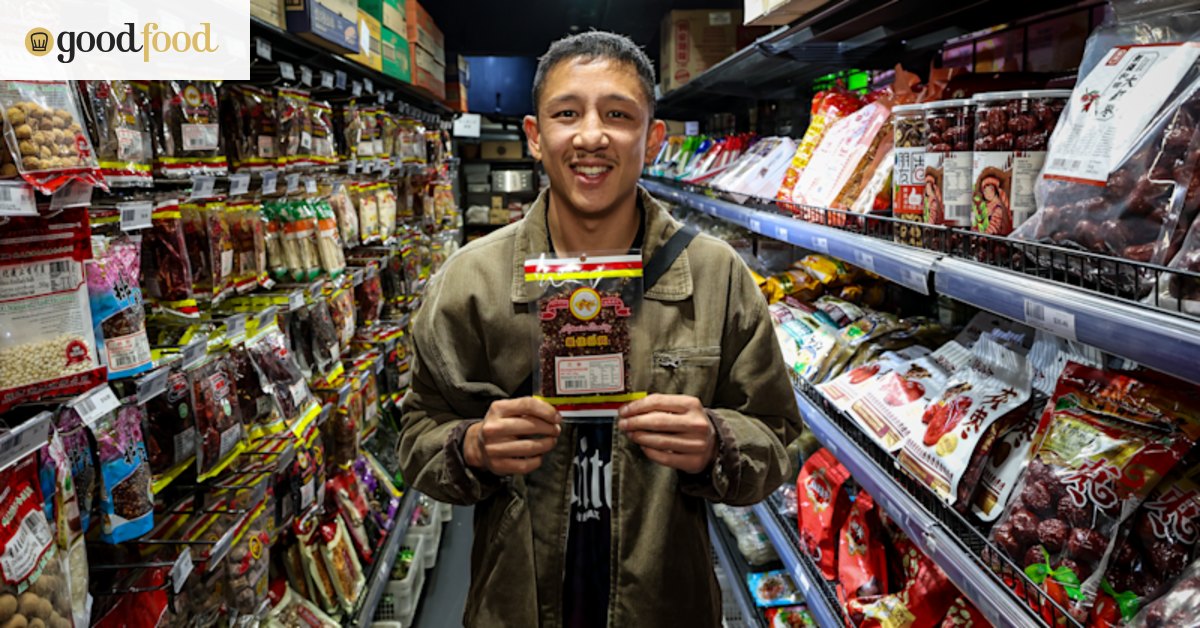
Brendan Pang sold 1 million dumplings during the five-year tenure of his Perth stall, Bumplings. My mind explodes at the thought of executing this many moreish parcels. “Every dumpling was filled, folded and pleated by us. As for how many I did personally, that’s a good question! Definitely hundreds of thousands,” Pang laughs.All that stuffing and rolling qualifies the MasterChef alumni of the 2018 and 2020 seasons with Mauritian-Cantonese heritage as an expert advisor on stocking a pantry for weeknight Chinese cooking. The Sydney-based Pang reckons he would have been eight years old when he stood by his grandmere’s side to attempt his first wonton.Now his 1 million Instagram followers pore over his every dumpling (from spicy satay to Sardinian culurgiones) and noodle move. For ingredients, he regularly treks to his four favourite Asian grocers. In Melbourne, it’s the Great Asia Food Store in Little Bourke Street, while in Sydney he makes a beeline for Thai Kee IGA in Market City, along with Gong Grocer at World Square and Kung Fu Grocery in Marrickville.The best recipes from Australia's leading chefs straight to your inbox.Sign upThese are the pantry items he cannot live without.Brendan in the soy sauce aisle.Justin McManusSoy sauceLee Kum Kee Superior Light Soy SauceFirst, a potted soy masterclass. There are three types of this fermented soy bean condiment: dark, a molasses-like, intensely sweet and salty soy used to heavily flavour as well as colour dishes, all-purpose and light. Kikkoman is an excellent Japanese all-purpose soy loved by many chefs; it has a stronger soy bean flavour than light soy. Pang reaches for the light Lee Kum Kee brand, saying it is better suited to his style of Chinese cooking. “The differences are nuanced, like wine, but I like this because it is delicate in flavour, just giving a salty hit to season dishes,” Pang says. Pang’s cooking skews more Cantonese with its fresh flavours and simple aromatics like ginger, green onions instead of heavy, spicy flavours. Light and all-purpose soy sauce can be used interchangeably in recipes (light is slightly saltier) but only use dark if specified.Oyster sauceLee Kum Kee Panda Brand Oyster SaucePang grew up with Panda oyster sauce and dollops it into dumplings, fried rice and stir-fries nearly as frequently as he does with soy. It is made by boiling actual oysters in water and salt to create an oyster broth to which sugar, corn starch and MSG are added. It brings an addictively savoury hit to dishes “almost like parmesan”, says Pang. Vegetarians or gluten-intolerant cooks can substitute it with Megachef Premium Mushroom Sauce. Both should be kept in the fridge once opened.Pang with his jasmine rice of choice.Justin McManusRiceGolden Phoenix Thai Jasmine RiceThe rice array at any Asian grocer is beguiling, especially the beautifully packaged Japanese brands with their minimalist, wholesome appeal. Pang doesn’t look twice at anything other than jasmine rice for his pantry since this long-grain, fragrant rice cooks into fluffy, separated grains, instead of sticking together like many short-grain varieties. His foolproof cooking method? Wash 1 cup of rice in a sieve under cold water, add it to a pot with 1 ½ cups of cold water. Bring this to a boil, then turn the heat to low, cover with a lid and simmer until fluffy for 10-12 minutes.Brendan with his wonton wrappers of choice.Justin McManusDumpling wrappersTak On Wonton WrappersPang is pretty fussy about his wrappers, as befits his title as “Dumpling King”. Wary of skins that are either too dry or thin, his go-to brand is Tak on, both the square yellow (traditionally containing egg) and white types. These are made in Australia and are available at most Chinese grocers. He uses the yellow wrappers, which are thin and silky, to boil or deep-fry, and the white, which are slightly thicker and more elastic, to pan fry or steam. Pang’s key piece of dumpling mastery advice (“they’re so much easier to make than you think”) is to not overfill them. They can be frozen, not touching each other, on baking paper in lidded plastic containers.Brendan Pang’s biang biang noodles with spicy cumin lambThomas DavidsonNoodlesTak On Singapore Chow Mein noodlesThere are as many types of noodles as there are tea varieties in China. A solid all-rounder suitable for a variety of different dishes that are easy to cook (many, like rice noodles can disintegrate or break during cooking) is what Pang puts in his basket. He loves a pre-blanched, thin egg noodle. “You do not need to pre-boil these, you can put them straight into whatever stir-fry or noodle dish you are making,” he says. He says the question he is most asked via his social channels is what type of noodle to use for pad Thai. “You need fresh rice noodles, not the dried ones, you can find them in the chilled section of Asian grocers.”VinegarObento Rice Wine VinegarMost Asian cuisines focus on a balance of four key tastes – sweet, spice, sour and salt. This rice wine vinegar brings the acid for the sour component, the equivalent to apple cider vinegar in Western cuisine, Pang says. “It’s not harsh at all,” he says. It is his trusted ingredient in myriad dipping sauces – his go-to for dumplings is: 3 tbsp rice wine vinegar, 1–2 tbsp light soy sauce, 1 tsp finely minced or julienned ginger. “The vinegar cuts through the fattiness of the dumplings.”Then there is Chinkiang vinegar which is a black rice vinegar with a rich, almost smoky taste, and a malty sourness like balsamic vinegar, he says. He uses this in his famous biang biang noodles, in hot pots, stir-fries and in a dressing for things like his signature smashed cucumber salad: Black vinegar and soy dressing2 1⁄2 tbsp Chinese black vinegar2 tbsp light soy sauce1 tbsp caster sugar1⁄2 tsp sesame oil1 medium garlic clove, finely minced1 tbsp finely minced spring onion, white part onlyCombine all the ingredients in a small bowl and stir until the sugar has dissolved. Cover and refrigerate until required.Fish sauceSquid Brand Fish Sauce“This is just a great umami hit, I put it in heaps of dishes to bring an instant hit of flavour and depth, even Western foods like say, a lasagna meat sauce,” Pang says. The south-east Asian salty condiment is made from anchovies, salt, water and a tiny bit of sugar.Brendan’s Chinese sausage of choice: Wing Hong Chinese-style Lup Chong.Justin McManusLap cheongWing Hong Lup ChongJust as many Italians wouldn’t be without pancetta in the fridge, many Chinese cooks could not live without lap cheong (or lup chong) sausage. Pang uses it in everything: as a base in fried rice, in stir-fries and, of course, noodle dishes. It is a dried, hard sausage usually made from pork and pork fat. It is usually smoked, sweetened, and seasoned with rose wine, rice wine and soy sauce. The wines in particular gently perfume whatever it’s added to, and you fry to render it like you would bacon to add depth and flavour, Pang says.Chinese cooking wineDouble Pheonix (red label)Many Chinese dishes call for Chinese cooking wine, or Shaoxing rice wine, to add depth of flavour and a mild saltiness to dishes. With about 16 per cent alcohol (not meant for drinking the company warns!) it’s also used to deglaze pans and in marinades to tenderise meats.Pang in the fragrant spice aisle, with his Sichuan peppercorns of choice.Justin McManusSpicesChilli flakes, Korean chilli flakes (gochugaru), dried bay leaves, star anise, Sichuan peppercorns These spices are always in Pang’s pantry because they are the essential ingredients in a chilli oil that “will change your life”. “I am never without this, I spoon it over dumplings and noodles, it’s perfect for everything.”Life-changing homemade chilli oil 250 ml vegetable oil1 cinnamon stick3 whole star anise2 tbsp Sichuan peppercorns2 dried bay leaves2 tbsp chilli flakes2 tbsp Gochugaru (Korean chilli flakes)Pinch of saltPlace the vegetable oil, cinnamon, star anise, Sichuan peppercorns and bay leaves in a small saucepan over low heat. Cook gently for about 25 minutes to infuse, taking care not to burn the spices.Meanwhile, place the chilli flakes and salt in a medium heatproof bowl.Once the oil is fragrant, increase the heat to high and cook for a further 1 minute. Carefully strain the hot oil through a fine sieve directly over the chilli flakes. Stir well and allow to cool.
‘It’s perfect for everything’: Dumpling king Brendan Pang’s essential Asian supermarket ingredients
Full Article
Original Source
Read the full article at Smh →KhanList aggregates and links to publicly available news content. We do not host full articles from third-party sources. Always verify important information with original sources.