
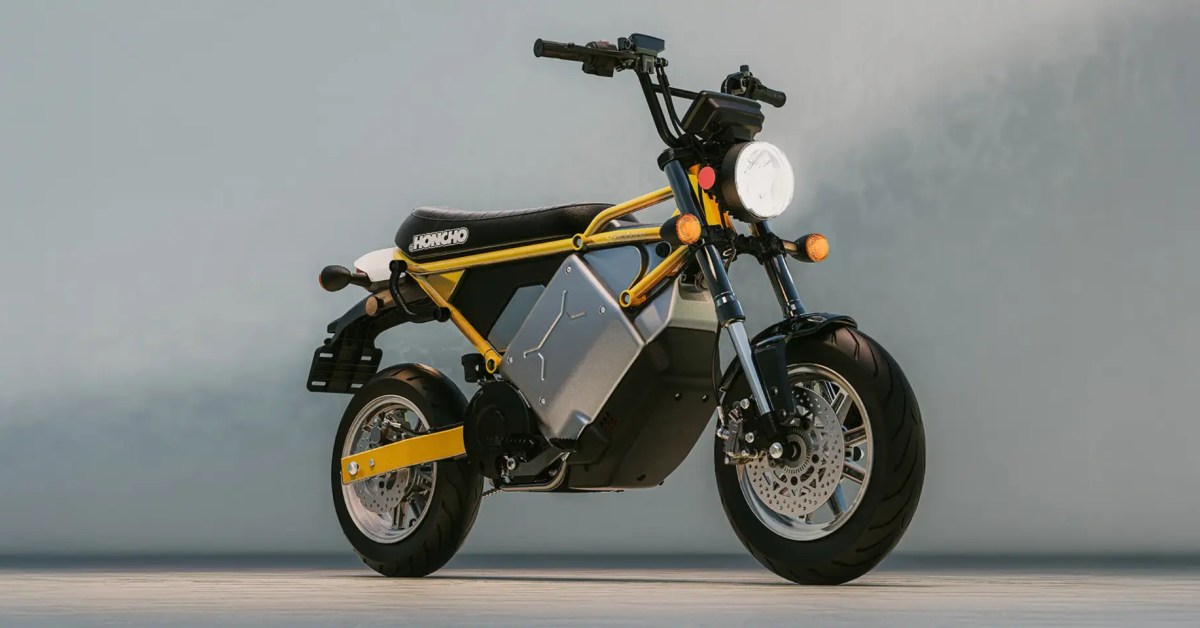
LiveWire’s smallest electric motorcycle is about to take on a new role, and it could prove to be one of the most important ones yet. The LiveWire S4 Honcho Street has now met the Motorcycle Safety Foundation’s (MSF) criteria for use in rider training programs, opening the door for new riders to learn the ropes – and potentially earn their motorcycle endorsement – without first learning how to operate a clutch and gearbox on a gas-powered motorcycle. The move could be particularly significant for the growing number of riders arriving at motorcycling through e-bikes and other electric two-wheelers. LiveWire designed the S4 Honcho as its smallest and most approachable electric motorcycle yet, and those same qualities happen to make the mini-moto particularly well-suited to rider training. As essentially a 125cc-equivalent, it fits into the smallest category of conventional motorcycling. The bike weighs just 266 lb (121 kg) and has a seat height under 30 inches, making it considerably less intimidating than many full-sized motorcycles. And because it uses an electric drivetrain, there’s no clutch lever or gearbox to master. Twist the throttle and go. That means aesthetically, the bike looks like a motorcycle. Functionally, though, it’s nearly as simple to operate as a scooter or Class 2 electric bicycle. The S4 Honcho is an urban-focused model that has a top-rated speed of 59 mph (95 km/h) but also includes reduced-speed riding profiles that LiveWire says are equivalent to first- and second-gear training environments, limiting the bike to 18 mph (29 km/h) or 28 mph (45 km/h), respectively. That’s great for the parking-lot-style training used in MSF classes that teach new riders the skills they need to safely operate a motorcycle. The bike’s range is rated at 53 miles (85 km) using the WMTC standard or up to 73 miles (117 km) at 20 mph (32 km/h). For parking lot training, that’s more than enough to get through an entire day, but the swappable battery system should also allow training schools to keep bikes running continuously instead of waiting around for them to recharge. “The next generation of riders is coming up on e-bikes and electric vehicles, so their expectations for mobility are changing,” explained LiveWire Head of Commercial Jon Bekefy. “For many, an electric motorcycle is a more natural first step into motorcycling. The S4 Honcho removes traditional barriers to entry and paired with MSF’s world-class training programs, Honcho gives new riders a more approachable way to learn safely and build confidence. That matters for LiveWire, and it matters for the future of motorcycling.” The Motorcycle Safety Foundation appears to see the potential as well. Corey Eastman, the organization’s Director of Rider Education Expansion, said the Honcho will join the training demo fleet at the MSF RiderCoach Tour, giving coaches a chance to use the electric motorcycle during several MSF exercises and allowing training providers to evaluate it for their own programs. It’s not yet clear which MSF programs and in which areas will adopt the Honcho as an option for new riders, though hopefully we’ll learn more as the bikes roll out this year. But for LiveWire, getting the Honcho into training programs could also introduce an entirely new group of riders to electric motorcycles before they ever throw a leg over a gas bike. And frankly, that makes a lot of sense. Electrek’s Take I love this. It was already good news when the LiveWire S2 platform began being used for rider training last year, but now the smaller S4 Honcho bike makes the process even less intimidating and more approachable for a larger number of future riders. And since it starts at just $4,999 (or $5,499 for the street version), it’s an affordable bike that riders might want to continue on after learning with it for their training and licensing. I’ve long believed that small, lightweight and approachable electric motorcycles are going to be one of the most important tools for getting more people out of cars and onto two wheels. Not everyone needs a 500-pound motorcycle with 100 horsepower. In fact, most commuters absolutely don’t. And since most car trips are single occupant affairs, having a small and affordable electric motorcycle that can carry one or two people is a great alternative, or at least an addition to a household instead of getting a second car. In fact, years ago I had to get my US motorcycle license at a Harley-Davidson dealer on a 500+ lb gasoline-powered motorcycle, after which I spent probably 99% of my time on electric bikes, ranging from LiveWires to Zeros to Energicas to Ryvids and just about everything in between. If there had been an electric option for my rider training class at the time, I would have jumped on it. A little electric motorcycle that is comfortable, unintimidating, cheap to operate and capable of handling normal city and suburban roads is probably a much better transportation tool for a huge number of people. But there’s been a frustrating chicken-and-egg problem for prospective electric motorcycle riders: getting the license. Imagine you’ve spent the last several years riding e-bikes. Maybe you’re perfectly comfortable on two wheels and now you want something that can keep up with faster traffic. You’ve got no interest in gasoline motorcycles. You don’t want to own one, and you don’t particularly care about learning to operate one. Yet depending on where and how you take your motorcycle course, your path toward getting licensed may involve learning clutch control and shifting gears on a gas motorcycle anyway. That’s a pretty silly obstacle for someone who never wants to ride a bike that requires those skills. And I’m not discounting them. Clutch control is an important skill if you want to ride a manual motorcycle. Ultimately, I’m glad I learned it because I’ve occasionally borrowed or rented gasoline-powered bikes, and it allows me to actually ride them. But if you’re buying an electric motorcycle, it’s about as relevant as learning to crank-start a Model T before being allowed to drive a Tesla. There are plenty of genuinely important motorcycle skills that new riders need to learn: braking, cornering, low-speed maneuvering, situational awareness, looking through turns, emergency maneuvers, and generally understanding how to survive around drivers who somehow manage not to see a human being wearing fluorescent clothing sitting six feet in front of them. I even recommend MSF classes to electric bicycle riders because so many of the skills overlap. But operating a clutch doesn’t need to be part of that equation for someone who intends to ride electric. That’s why I think the S4 Honcho entering MSF training programs is a much bigger deal than simply adding another motorcycle to the fleet. E-bikes have introduced millions of people to electric two-wheelers, including plenty who never considered themselves “motorcycle people.” Some of those riders are inevitably going to want more speed, more range and more capability. Small electric motorcycles are the obvious next rung on that ladder. And if riders can take their training and testing on the same type of clutch-free electric motorcycle they actually intend to ride, that ladder just became considerably easier to climb. That could be a big boon for LiveWire, sure. But more importantly, it could help welcome an entirely new generation of riders into motorcycling – riders who might never have bothered if their first assignment was learning to feather a clutch on a gas bike. FTC: We use income earning auto affiliate links. More.
It’s now easier than ever to get your motorcycle license on an electric bike
Full Article
Original Source
Read the full article at Electrek →KhanList aggregates and links to publicly available news content. We do not host full articles from third-party sources. Always verify important information with original sources.