
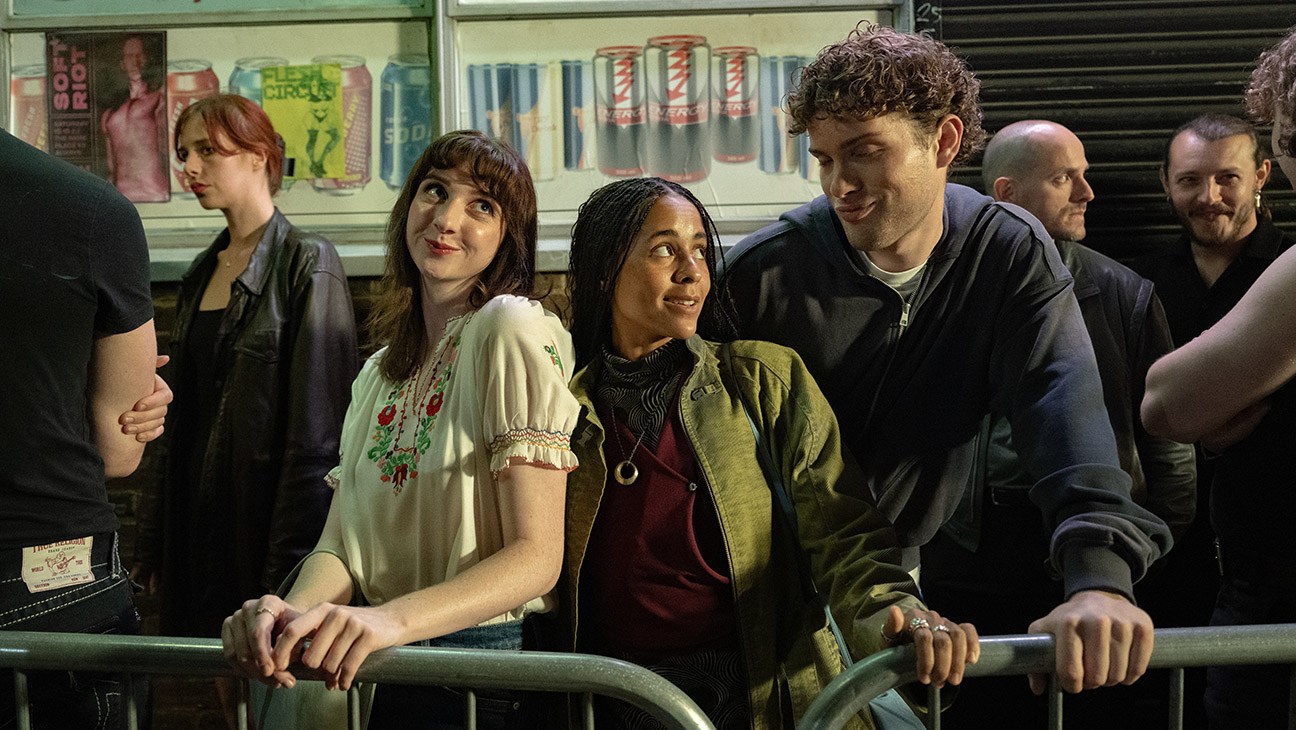
Accused at some dismal sex party of using humor as a defense mechanism, Ethan (creator Leo Reich) turns the tables on the pretentious prig who dares to judge him. “What is wrong with all of you people?” he scoffs. “You can’t laugh at yourselves. And it’s so sad, because you’re missing out on a really funny joke.” Ethan, by contrast, could never be accused of missing the joke. He’s the first to laugh off a minor heartbreak, or to regale his friends with tales of his sexual misadventures. His show, Paramount+’s It Gets Worse, doesn’t mind having fun at his expense, either: The very first scene opens with narrator Zadie Smith dryly observing, “Ethan had one of the easiest lives in recorded human history.” It Gets Worse The Bottom Line It's pretty good, actually. Airdate: Friday, Nov. 6 (Paramount+)Cast: Leo Reich, Emily Fairn, Olive Gray, Zadie Smith, Sean Delaney, India Mullen, Vicki Pepperdine, Emmeline Downie, Dane WilliamsCreator: Leo Reich But if the Brit-com (produced by A24 with the U.K.’s Channel 4 and Canada’s Crave) rarely passes up a punchline, what makes its humor land is its equal measure of heart. In its mix of wry self-awareness and sincere empathy, it captures the giddy agony of young adulthood, when all that life stretching before you can feel simultaneously like a blessing and a curse. Anyway, Ethan’s hardly alone in suffering despite having no real problems. On the show, he’s joined by his friends and co-protagonists Abi (Emily Fairn) and Sam (Olive Gray) — all of them 20something Londoners unfettered by serious responsibilities like marriage or kids or demanding careers, let alone troubled by genuine catastrophes like World War II or the AIDS crisis. In the broader TV landscape, they’re part of a long lineage of comedies about young people partying or hooking up or navel-gazing in the big city, along with the friends from Friends, the girls from Girls and the adults from Adults. Like the best of those shows, It Gets Worse leans on the vivid personalities of its leads and the warm chemistry between them. Ethan is the most aimless of the trio, a self-deprecating yet self-absorbed layabout raised by well-to-do parents whose greatest sin is correctly perceiving him to be lazy and entitled — “which is a really pernicious trope about white gay men!” he insists, halfheartedly crying homophobia. Sam is a Substacker building her reputation on essays about the “Blairite construction” that is Kim Kardashian, and making her money tutoring rich kids in English lit. Abi is the most settled, with a steady albeit thankless office job in HR and a steady albeit passionless relationship that seems on course toward marriage. The three of them are different enough that you suspect life will eventually pull them in disparate directions. For now, though, they’re close-knit enough that none could possibly imagine life without the others — not least because up until the start of the show, they’ve been roommates as well as besties. It’s the end of their lease that sends them off on their own separate but intertwined adventures, and gives It Gets Worse the opportunity to send up all manner of annoying types a young person is bound to encounter in 2026. Ethan crashes with his latest terrible hook-up, a perpetually shirtless aspiring actor (Adrian Nik) whose latest self-tape, in a rather The Other Two-ish touch, is for a live-action remake of Ratatouille. Sam finds shelter with her unethical non-monogamist ex (India Mullen) and an exhausting community of artists and intellectuals who couch their requests for a roommate’s share of the Mubi subscription fee in grandiose talk about fostering “a liberationist environment.” Abi moves in with her boyfriend (Sean Delaney’s Tom), a humorless foodie viciously but accurately mocked by her friends as “Jeremy Allen Beige,” and tries to climb the ladder at a startup run by a nightmare girlboss played by Lena Dunham. But Reich saves his sharpest reads for the trio themselves. Some are delivered in that cutting narration: “Unlike Ethan, Abi knew what she wanted,” goes the start of the Abi-centric episode, which is exactly how you know to expect a storyline about Abi having no idea what she wants. Others are passed from one character to another. Sam scoffing that Abi doesn’t love Tom, she just loves “your Dyson and natural wine and feeling like you’ve won” might be way harsh, Tai, but it isn’t wrong. And then there are the stinging life lessons embedded in the storylines themselves. Sometimes their crises are laugh-out-loud hilarious, as with a certain blowout argument punctuated by a perfectly disgusting sound effect (you’ll know it when you hear it). Some play more bittersweetly low-key, as when Sam is forced to deal with uncomfortable feelings at the funeral of a classmate she didn’t know all that well or like all that much. A few play as repetitive, even within the modest space of six half-hour episodes — are Sam and Ethan’s tendencies to fall for people who don’t love them back really so different as to merit two separate storylines? But then, anyone who’s been 24 could tell you that some lessons take a few disastrous rounds to stick. What keeps It Gets Worse from feeling too hard on its characters is the clear affection it has for them, demonstrated through the attention it pays not only to what they’re doing or saying or feeling but what they’re not saying to each other; what they’re trying not to realize about their sense of guilt or regret; what they’re pretending not to feel about the fuckboys and fuckgirls they’ve given their hearts to against their better judgment. It make space for their feelings, however petty or futile or mundane they might be, when the characters struggle to make that space themselves. And even as it documents the silly ups and downs of their lives, It Gets Worse captures the strange nostalgia of being just old enough to realize you’ll never be so young again. “Ethan wasn’t stupid. He had never imagined things would be easy. But he had imagined more interesting difficulties,” the narrator observes as Ethan stares grumpily at a hole in the wall he’s obligated to patch up. What she knows, and what Ethan also seems to sense on some level, is that the title of this series might well turn out to be a prophecy — that even such terrible mundane tasks could transform, one day, into a precious memory about the best days of your youth.
‘It Gets Worse’ Review: Paramount+’s Hilariously Observed, Affectionately Drawn Comedy About the Agony and Ecstasy of Early Adulthood
Full Article
Original Source
Read the full article at Hollywoodreporter →KhanList aggregates and links to publicly available news content. We do not host full articles from third-party sources. Always verify important information with original sources.