
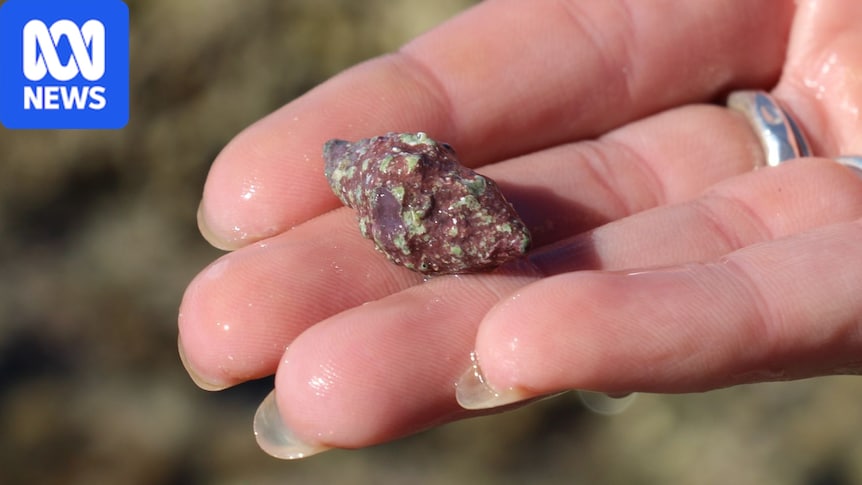
Queensland tourism operators have helped cull more than 420,000 benign-looking predators that are killing coral on the Great Barrier Reef.Drupella snails, a native gastropod that can grow up to 5 centimetres long, feed on living coral tissue, much like the destructive crown-of-thorns starfish.Outbreaks of the snail species have the potential to destroy entire reefs because they eat coral faster than it can regenerate.Tour guides on Lady Elliot and Lady Musgrave islands are among 26 tourism operators who are doing their bit to monitor the ravenous snail populations and cull them to save threatened reefs.Island staff use elongated tweezers to extract Drupella snails from the crevices around coral. (Supplied: Lady Elliot Island Eco Resort)The snails are prolific breeders, with each female able to produce almost 160,000 embryos in a single spawning event, meaning Drupella populations can quickly overwhelm a healthy reef.Over the past few months, tour operators have found colonies of the snails on the southern end of Great Barrier Reef, including in the lagoons of Lady Elliot and Lady Musgrave islands, off the coast of Bundaberg.Lady Musgrave Experience owner Brett Lakey said he and his staff "collect as many snails as they can" during their daily tours to the island.Brett Lakey has seen a rise in the number of Drupella snails around Lady Musgrave Island. (ABC News: Johanna Marie)Using special tweezers, staff from both islands manually remove the snails from coral crevices to protect the coral cay ecosystem."Because they're not like a fast killer of the corals, or they're not a fast mover … they're subtly overlooked," Mr Lakey said."But they're definitely out there; they're definitely increasing. "We're finding more of the bigger ones, that are the breeders, in the lagoon."Thousands of Drupella snails have been culled from lagoons around Lady Elliot and Lady Musgrave islands. (Supplied: Lady Elliot Island Eco Resort)Mr Lakey said staff recently removed 1,500 snails during a two-hour scuba diving session off Lady Musgrave Island.Great Barrier Reef Marine Park Authority chief scientist Roger Beeden said without proper management the snails could destroy large areas of coral."They can certainly consume an amount of coral that's equivalent to about their size, a few centimetres in a day," he said.The native Drupella snails are eating coral on Lady Musgrave Island. (Supplied: Gladstone Area Promotion and Development Limited)Studies have shown their consumption rate increases with temperature, and they target faster-growing plating and branching corals."Those create lots of little nooks and crannies, crevices inside, and then those relatively small snails can actually get right inside those and hide," Dr Beeden said.A healthy balanceLady Elliot Island environmental manager Jessica Blackmore said staff first noticed increasing numbers of Drupella snails about two years ago.The discovery prompted fortnightly management action, involving the culling of thousands of the snails.Jessica Blackmore monitors the number of Drupella snail and crown-of-thorns starfish, top left, around the island. (Supplied: Lady Elliot Island Eco Resort)"We're just trying to get them back to a level that allows the coral to recover because basically it only becomes a problem when the snails are eating the coral faster than the coral is able to [grow]," Ms Blackmore said.Staff wearing scuba or snorkelling gear "get right into the base of the coral and literally [remove] the snails one by one"."It's quite a time-consuming process," she said.Reef protectionThe Tourism Reef Protection Initiative involves 26 tourism operators who help manage more than 270 sites on the Great Barrier Reef, and keep a lookout for crown-of-thorns starfish and Drupella snail outbreaks.Roger Beeden says nutrients in the water from agricultural runoff might be fuelling the snails' population boom. (ABC News: Conor Byrne)Dr Beeden said they had collectively removed more than 420,000 snails since the program began in 2022."We work really closely with the tourism industry and that gives us the greatest insights into both where the snails are and when they're at problematic numbers," he said.Following a spawning event, snail embryos can drift for up to 180 kilometres, making widespread infestations possible.Scientists believe agricultural run-off is contributing to their spread."We see greater survivorship of both the Drupella snails and crown-of-thorns starfish when we have elevated nutrients," Dr Beeden said."There's a concerted program by the Australian government and the Queensland government to improve water quality, and that can help tackle this problem."Lady Elliot Island is a coral cay at the southern end of the Great Barrier Reef. (ABC News: Grace Whiteside)Ms Blackmore said Lady Elliot Island had entered more of a maintenance phase to prevent large outbreaks of Drupella."They're starting to get back to … a point where the corals are able to naturally recover and naturally grow and tolerate the number of snails that are there," she said.Mr Lakey said it was important to spread awareness and educate their guests about the coral predators and other threats against the marine park.Coral creates habitats for the reef's menagerie of marine life. (ABC News: Grace Whiteside)"We've got a permit through the Great Barrier Reef Marine Park Authority to undertake the collection and the disposal [of the snails], also the culling of the crown-of-thorns," he said."It'll continue as part of our stewardship of the area and it's always great to encourage the staff to promote it with the guests and get our passengers and our guests involved as well."
It doesn't look dangerous, but this sneaky snail causes enormous damage
Full Article
Original Source
Read the full article at Abc →KhanList aggregates and links to publicly available news content. We do not host full articles from third-party sources. Always verify important information with original sources.