
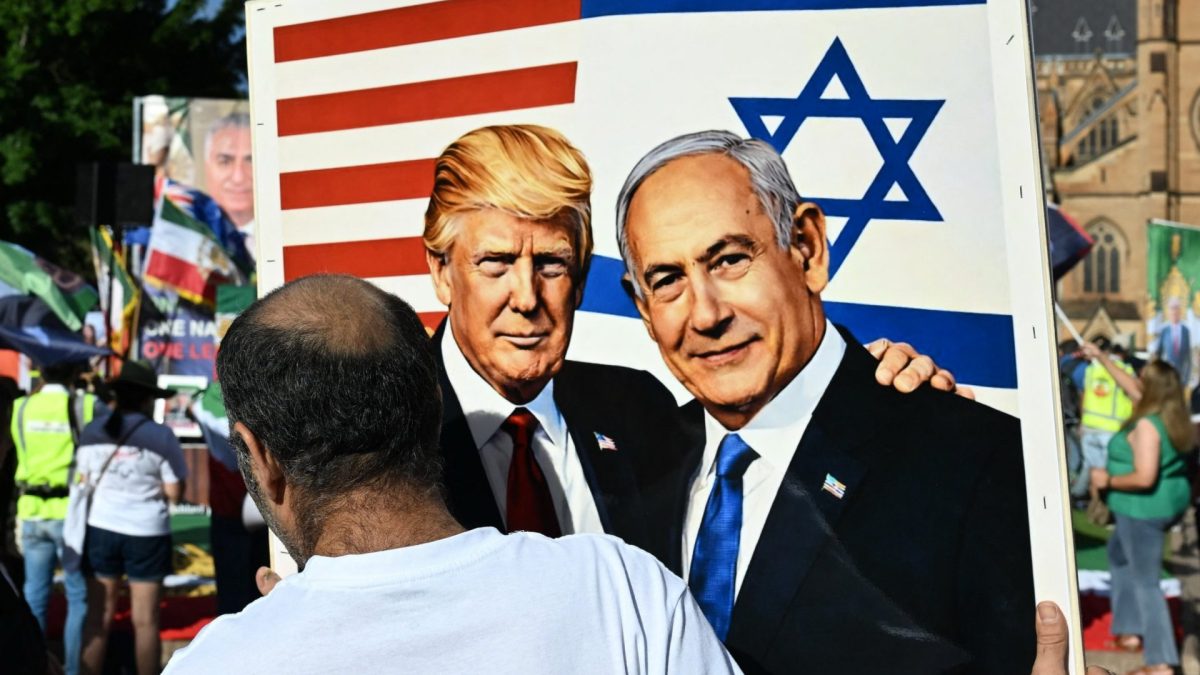
On one of Benjamin Netanyahu‘s election posters, he stands shoulder to shoulder with Donald Trump under the Israeli flag, with what appear to be two F-35s overhead. The message is that the partnership that bombed Iran is on the ballot. Now that Israel’s general election is over, and after Americans vote in next week’s midterms, expect the war with Iran to resume, full throttle. It suits both men to start bombing again. Netanyahu is clinging on in a caretaker government while tortuous coalition negotiations get under way. His critics – and this election was, above all, a referendum on his premiership – say he is more than capable of inviting Iranian missiles to fall on Israel again to maintain his grip on power. Meanwhile, President Trump is desperate to force Iran back into talks and finish the war on something less than humiliating terms. The Wall Street Journal reports that US officials have privately warned several Gulf Arab states to prepare for a “short, intense military campaign” after the midterms. The Journal also says the US is sending another Patriot missile defence system to Israel and has moved American troops off Middle East bases where they might be at risk. Shorts “We may do another little Epic Fury,” Trump told an election rally last week, using the US military’s name for the operation to bomb Iran. “Or they’ll agree,” he said, referring to what he hopes will be Iranian capitulation at the negotiating table. While President Trump may not yet have made up his mind fully about resuming the attack, Netanyahu has consistently pushed for more bombing. It’s what his supporters want. At his Likud party headquarters last night, campaign videos ran on repeat with images from the wars Netanyahu has prosecuted. A camera in the nose of a warplane showed buildings being turned to billowing clouds of dust under Israeli bombs. The Prime Minister’s face appeared next to his campaign slogan: “Netanyahu does not surrender.” Netanyahu would probably carry the country with him if he embarked on a new round of warfare. There is no Israeli peace party with a large constituency of support. On security policy, Netanyahu has remade the political opposition in his own image. As Ezra Klein put it in The New York Times on Sunday, the opposition’s leaders have “accepted Netanyahu’s worldview, and even run to his right”. His main challenger is a former chief of the Israel Defence Forces, Gadi Eisenkot, who has said there will be no Palestinian state if he wins. The leader of the Knesset opposition, Yair Lapid, has said Israel should “bomb all the energy facilities” so that “the Iranian economy is demolished”, because “it’s the only thing that will overturn the regime”. A third prominent opposition figure, the former prime minister Naftali Bennett called for Qatar to be designated as an enemy state. On one of Netanyahu’s election posters in which he stands shoulder to shoulder with Trump (Photo: Amir Cohen/ Reuters) Netanyahu’s governing coalition is sustained in power with the votes of far-right parties. Itamar Ben-Gvir, leader of one of those parties, spent the election campaign calling for what his critics call the ethnic cleansing of Gaza. “This is our place,” he said, calling for Palestinian “emigration” to Britain or France, where they could live more “comfortably”. Netanyahu recognises the danger for Israel in his “security first” policy. In a remarkable interview on Channel 10 TV last Friday, he told Israelis to prepare for the day when the United States cut off its billions of dollars in military aid. “America has changed,” he said. “It’s over, it’s over, and it will end, OK. It’s only a matter of time.” Netanyahu went on to say that Israel should prepare for international sanctions, including on its banks. His government, he said, was already working on a “bypass economy”, using cryptocurrencies to get round banking restrictions. It was a telling moment: Israel’s Prime Minister planning to adopt the same sanctions-busting measures as Russia, North Korea, and indeed Iran. For the next two years, though, Israel and Netanyahu himself have a friend in the White House in Donald Trump. It’s true that Trump – who likes to play a geopolitical version of The Apprentice – initially withheld his endorsement of Netanyahu. But then, on 18 October, Trump came out for Netanyahu, calling him a “Great Warrior Prime Minister, and an even greater Partner for Peace in combating the Islamic Republic of Iran”. So, when the early results showed Netanyahu doing better than the polls had suggested, Trump could not resist taking the credit. He posted a message written in the third person: “When President Trump endorsed Bibi Netanyahu, the whole tide turned.” He continued – still in the third person – that “President Trump…only wants what is good for the Middle East, Israel, and the United States of America!” The Middle East may be forever changed by Trump’s decision to go along with Netanyahu’s war on Iran. The Foreign Minister of Oman, Sayyid Badr Albusaidi, has called on the Gulf Arab states to – in effect – make their own deal with Iran, with the United States no longer their main protector. Speaking at Girton College, Cambridge, on Monday, he proposed a non-aggression pact binding the six Gulf states, Iran and Iraq; America would no longer be the region’s main guarantor of security. The Gulf had “relied for too long on the involvement of external powers” for its security, he said. One of those Gulf states, Qatar, is working on negotiations to avert the threat of renewed conflict between the US and Iran. On Sunday, Qatari mediators handed Iran a fresh draft agreement; Tehran is expected to answer by the end of the week, before Americans vote on Tuesday. Would Netanyahu resume the bombing on his own, before these various deadlines arrive? In his “victory” speech last night, Netanyahu emphasised that the war with Iran was only on pause: “Iran is weaker than ever, while Israel is stronger than ever, yet, it is not over.” He went on: “As long as this regime exists, it will seek to destroy us. Together, with our wonderful friend President Trump, we must eliminate this threat once and for all.” It sounded like a campaign launch. Netanyahu seemed to be preparing the ground for another election, perhaps early next year if the deadlock holds. By that time, no doubt Netanyahu hopes for the decisive victory over Iran that has so far eluded him and President Trump. This election has not settled much, but it has confirmed one thing: war remains popular in Israel.
Israel’s election result means one vital thing for Trump
Full Article
Original Source
Read the full article at Inews →KhanList aggregates and links to publicly available news content. We do not host full articles from third-party sources. Always verify important information with original sources.