
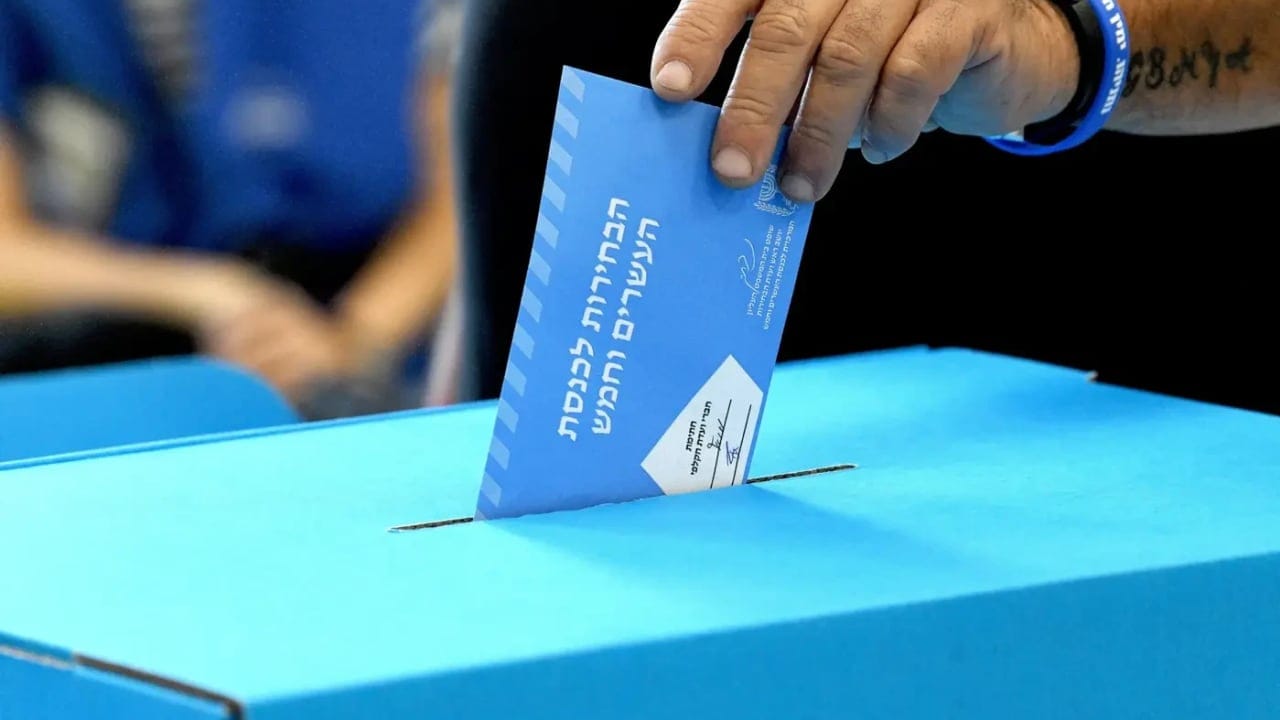
OCTOBER 30, 2026 04:28Updated: OCTOBER 30, 2026 06:04Prime Minister Benjamin Netanyahu’s Likud party appears to have won more votes than any other party in Israel’s October 27 election. Yet Netanyahu could still be out of office, replaced by someone whose party received far fewer votes. And the next government, whoever leads it, might include ministers from parties with very different political philosophies, perhaps even from opposite ends of the political spectrum.For more stories from The Media Line go to themedialine.orgFor Americans, accustomed to seeing the winner of a presidential election take office and appoint a Cabinet, this may seem strange. But the explanation is easier to grasp when we consider how American political parties operate.The Republican Party, for example, encompasses religious conservatives, libertarians, populists, fiscal conservatives, and moderates. These groups disagree over taxes, government spending, foreign policy, immigration, and the role of religion in public life. Some disagreements are so fierce that, in another political system, they might be separate parties.The same is true of the Democrats. Progressives, democratic socialists, labor-oriented politicians, environmentalists, and business-friendly centrists coexist within the party, frequently fighting over its platform and direction.In the United States, these factions generally compete for influence within two large parties. The parties themselves are broad coalitions, assembled before voters go to the polls. Their members may have little in common beyond preferring their own party over the other.Yashar party chairman Gadi Eisenkot is seen at his party’s election headquarters in Tel Aviv, October 28, 2026 (credit: AVSHALOM SASSONI/FLASH90)Israel approaches the problem differently. Rather than forcing so many political tendencies into two dominant parties, its electoral system lets many of those tendencies be represented by separate parties, each seeking its own share of parliamentary seats.Imagine the Republican Party splitting into four or five parties, with religious conservatives, libertarians, moderates, and populists running separately. Now imagine the Democrats doing something similar, with progressive, centrist, environmentalist, and labor parties competing for votes.After the election, these groups would have to negotiate which ones could work together, which policies they could agree on, and who would lead the resulting government.That is roughly how Israeli politics work.Winning seats not the same as winning powerIsraelis vote for party lists rather than individual parliamentary candidates. The 120 seats in the Knesset, Israel’s parliament, are distributed roughly according to each list’s share of the national vote, provided it receives at least 3.25% of valid ballots.In the 2026 election, 38 candidate lists were approved, although one withdrew before voting. Preliminary results indicated that 11 would enter the Knesset.The parties represent a broad range of political, religious, and social interests. Some are secular, others religious. Some favor territorial compromise with the Palestinians, while others oppose it. Some represent the ultra-Orthodox community, some draw much of their support from Arab citizens, and others focus on economic and security policies.With the votes still being counted Wednesday, Likud was projected to receive approximately 26 seats, or 21.7% of the Knesset. That would make it the largest party, but it would leave the other 94 seats in the hands of its rivals and potential partners.For an American comparison, imagine Republicans holding 26 seats in a 120-member House of Representatives, Democrats holding 21, and nine smaller parties dividing the rest. Republicans would have the largest delegation but would be unable to govern without making deals.Israel’s prime minister is not elected separately by the public, as an American president is. The prime minister heads a government that must command sufficient support in the Knesset to take office and remain in power. Usually, that means assembling a coalition with at least 61 of the 120 seats, although minority governments can sometimes survive with support from parties outside the coalition.A party holding just six seats might determine whether a prospective government commands a majority. Its leader can demand substantial concessions to join the coalition, even if the party represents only a small fraction of the electorate.Those concessions might involve religious education, military conscription, housing, economic policy, or the Israeli-Palestinian conflict. They can also involve Cabinet appointments.In the United States, the president generally chooses Cabinet secretaries from among political allies, although presidents occasionally appoint members of the opposing party. In Israel, prospective coalition partners negotiate over which ministries their parties will control.A small party might demand the Education Ministry or Finance Ministry as part of a coalition agreement. Another might insist on the Foreign Ministry, even if its foreign policy views differ considerably from the prime minister's.A right-wing prime minister could therefore serve alongside a center-left foreign minister or a left-wing health minister. The coalition agreement sets out the broad compromises that let these parties govern together, though they may still disagree on key issues.The prime minister whose party won seven seatsIsrael provided a striking example of this system in 2021, when Netanyahu’s Likud won 30 seats, considerably more than any other party.Yair Lapid’s centrist Yesh Atid party finished second with 17 seats. Yet neither Netanyahu nor Lapid became prime minister initially.Instead, Naftali Bennett, whose right-wing Yamina party won just seven seats, took the job.Bennett and Lapid reached an agreement that brought together eight parties spanning much of the Israeli political spectrum. Their coalition included right-wing parties, centrists, the left-wing Labor and Meretz parties, and Ra’am, an Islamist Arab party.Few of these parties would ordinarily have chosen to govern together. Their common objective was to replace Netanyahu, who had dominated Israeli politics for years.Under their agreement, Bennett became prime minister, while Lapid became foreign minister and alternate prime minister, with an arrangement for the two men eventually to exchange positions. Nitzan Horowitz, the leader of Meretz, became health minister.Ra’am did not receive Cabinet posts, but it negotiated policy commitments and funding for Arab communities in exchange for participating in the coalition.Despite leading the party that won the most votes, Netanyahu became leader of the opposition.The outcome was entirely consistent with Israel’s electoral system. Bennett and Lapid had assembled enough parliamentary support to establish a government, something Netanyahu had been unable to do.Their coalition lasted only about a year before collapsing under the weight of its internal disagreements. Netanyahu returned to power following another election in November 2022.Bennett’s premiership remains a particularly instructive example for Americans: A politician whose party finished far behind the election's leading party became prime minister because he reached an agreement with other parties that together commanded enough parliamentary support.When political rivals need each otherPersonal relationships and political rivalries can matter as much in coalition negotiations as ideological differences.Two parties might agree on nearly every major policy issue but refuse to govern together because their leaders distrust one another. Parties with substantially different views, meanwhile, might find common ground in their determination to remove an incumbent prime minister.That helps explain the deadlock following this week’s election.As of Wednesday afternoon, Netanyahu’s traditional right-wing and religious allies were projected to hold 53 seats, eight short of a majority. The four-party opposition bloc was projected to win 48, while two Arab-led lists were expected to win 19 combined.On paper, the opposition and Arab parties would have enough seats to replace Netanyahu. In practice, some opposition leaders have firmly rejected governing with Arab parties or relying on their parliamentary support. The arithmetic allows for a government that the politicians involved may be unwilling to create.American politicians are familiar with this problem, even if they encounter it in a different form. A president trying to pass legislation must often negotiate with members of the president’s own party whose views differ sharply. Congressional leaders spend considerable time keeping their party’s competing factions together, sometimes finding that a handful of members can frustrate the wishes of a much larger group.Israeli coalition bargaining makes those tensions more visible because many of the competing factions have their own parties, leaders, and electoral mandates. Their negotiations over Cabinet positions, policy commitments, and the leadership of the government take place between separate political organizations.Israel’s system gives voters a wider choice of parties and allows smaller religious, ideological, and minority groups to gain parliamentary representation. But those parties can exercise considerable leverage, and the compromises required to accommodate them may produce unstable governments.America’s two-party system offers a different bargain. Its parties generally present voters with two broad alternatives, but the ideological divisions within them do not disappear after an election. Much of the political bargaining Israelis do between parties happens within the Republican and Democratic parties themselves.Of course, there are limits to the comparison. America's president is elected independently of Congress through the Electoral College, while Israel's prime minister depends on parliamentary support. Even if American political factions broke away to form separate parties, they would not be choosing a president through congressional coalition negotiations.Still, the comparison helps explain why the results of an Israeli election are often only the beginning of the struggle over who will govern.Netanyahu's Likud appears to have finished first, but neither he nor his allies or opponents currently has a clear route to forming a government. The next stage will involve negotiations among parties that have spent months campaigning against one another, with decisions about the premiership, Cabinet appointments, and government policies all potentially on the table.For Netanyahu, the question is whether he can attract enough partners to remain in power. For his opponents, the question is whether they can overcome their differences and agree on an alternative.The 2021 election reminds us how surprising the outcome can be. Netanyahu's party won 30 seats, Bennett's won seven, and Bennett became prime minister. The party that finishes first on Election Day has an advantage, but the alliances formed afterward determine who governs Israel.Follow us on Google
Israel’s coalition politics: How can you win an election and still lose power? - explainer
Full Article
Original Source
Read the full article at Jpost →KhanList aggregates and links to publicly available news content. We do not host full articles from third-party sources. Always verify important information with original sources.