
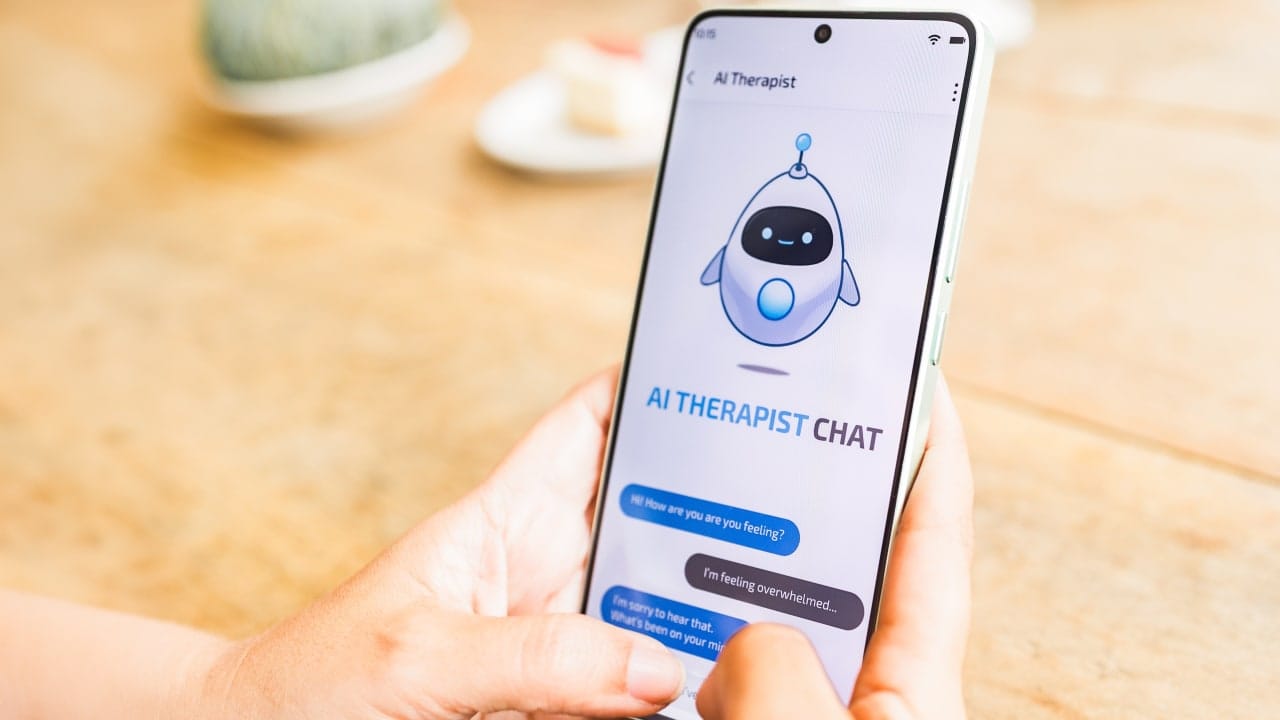
NOVEMBER 7, 2026 07:48Punsters joke that sausages containing baking soda simultaneously cause and cure heartburn: a self-contained, problem-solving food.When it comes to Generative AI, however, the dynamic may be the exact opposite: a technology that promises comfort while potentially worsening the very isolation it aims to soothe.AI might act as a digital “bandage” that ultimately deepens emotional isolation or an antidote that secretly fuels distress, according to a new study by Tel Hai College of the Galilee in Kiryat Shmona.The researchers revealed that among Israeli users experiencing severe psychological distress, nearly half of them turn to generative AI for emotional support, thus raising urgent questions about the risks of leaning on artificial intelligence during moments of acute vulnerability.While generative AI (GenAI) systems like ChatGPT and Gemini are primarily built to draft emails, write code, or create artwork, their natural, conversational interface makes them deceptively human-like. But relying on these algorithms for mental-health support carries substantial risks.DR. DORIT HADAR SHOVAL (credit: Noam Ben-Gurion Mosseri)Beyond well-documented issues like fabricated information, privacy concerns, and deepfakes, AI lacks genuine empathy, clinical boundary awareness, and crisis-intervention capabilities, leaving vulnerable users at risk when they need real human help the most.Thus, GenAI could be a self-reinforcing or paradoxical dynamic, a loop in which actions taken to solve a problem or achieve a goal feed right back into making that same problem or goal harder to reach.The new study, titled “AI-mediated mental health support: The role of attachment orientation and psychological distress,” has just been published in the peer-reviewed academic journal Cyberpsychology, Behavior, and Social Networking.One in three AI users sought emotional support, study findsLed by Tel Hai’s Dr. Dorit Hadar Shoval of the School of Psychology, together with Elad Refoua of Bar-Ilan University (BIU) in Ramat Gan, the team surveyed 584 Israeli adults aged 18 to 70 who had used a general-purpose generative AI tool such as ChatGPT at least once in the previous year.They found that almost one in three of those surveyed who use GenAI tools reported seeking emotional support, coping advice, or mental-health assistance from platforms such as ChatGPT and Gemini. Among users experiencing severe psychological distress, that figure rose to nearly one in two.The study delved into how attachment styles and psychological distress relate to the use of general-purpose GenAI for emotional support.Participants were recruited in November 2025 through an online panel, and the figures describe this sample of AI users rather than the general population, so it was not representative of all Israelis, Hadar Shoval stressed.Overall, 29.3% reported using AI at least once for emotional support, coping advice, or mental health-related assistance. Among participants with severe levels of psychological distress, 47% reported such use.The findings suggest that emotional distress is the psychological variable most strongly associated with turning to AI for support. Younger participants and women were also much more likely to report using AI for mental health-related purposes than older people and men.“Our findings show that many people, particularly those experiencing significant distress, are turning to generative AI systems for emotional support and guidance,” Hadar Shoval told The Jerusalem Post in an interview.“These tools offer immediate, accessible, and nonjudgmental interactions, but they were not designed to function as mental-health providers. The high level of use among distressed individuals highlights the urgent need to better understand both the possible benefits and the potential risks of relying on AI during periods of emotional vulnerability.”She said that they were not talking about mental illness but emotional stress. “It was rated as ‘severe’ in 66 people, and 119 were ‘medium.’ Of the 66, a total of 47% said they had been consulting with AI for help.”Hadar Shoval asserted that people with higher levels of attachment anxiety were more likely to seek psychological assistance from AI, but once psychological distress was taken into account, attachment anxiety was no longer a significant predictor.The two are closely related, and the study cannot determine which comes first, she added.AI is functioning as informal help-seekingThe most important thing about this study is not simply that distressed people are turning to AI for emotional support; it is that we do not yet know whether the interaction helps them cope, delays their seeking professional help, or sometimes makes their distress worse.The researchers explicitly acknowledge that their study cannot answer those questions yet, but they are going ahead with more research.The team declared that generative AI is increasingly functioning as a form of informal, AI-mediated help-seeking.Unlike psychologists or dedicated digital therapeutics, consumer AI systems carry no clinical mandate and have no recognized safeguards for managing psychological crises, she continued.The study does not evaluate whether AI interactions were helpful or harmful, nor does it determine whether users substituted AI for professional care.However, the researchers maintain that the widespread use of these tools by distressed individuals demands closer attention from clinicians, researchers, and policymakers.“Understanding patients’ digital help-seeking behaviors is becoming an important part of modern mental health care,” Hadar Shoval asserted. “Future research should focus on safety, crisis-response quality, and whether AI serves as a complement to professional support or, in some cases, replaces it.”The authors stressed that the data reflect any self-reported use for mental-health support, ranging from a single interaction to more sustained engagement, and that additional research is needed to understand how people use AI in real-world emotional contexts.The team measured psychological distress using the DPA questionnaire (Data Processing Agreement), a widely utilized evaluation tool. “It was used a lot by professionals during the coronavirus.”The team is also starting to study whether psychological distress drives people toward AI, or whether infrequent emotional reliance on AI contributes to psychological distress, the psychologist said.Asked if people who voted for the opposition parties in the October 27 Knesset elections were likely to consult with AI on the morning after, Hadar Shoval said: “I have no doubt that many did, because the confusing and unexpected results pushed them to seek answers and even consolation.“We didn’t measure whether people felt better or worse after their AI conversations, but they did ask whether they were ‘satisfied’ and ‘would recommend’ them to friends. “Hadar Shoval said she “wouldn’t trust AI to diagnose whether a user were in danger of an acute mental health crisis. A chatbot can sound compassionate, confident, and attentive without actually understanding a person’s emotional state.“AI does offer approval and often says the user is ‘right,’ but it has to set borders. Users who have a complicated problem need a professional’s help. But they can get some help.”She agreed that people can become emotionally attached to an AI system because it is available at any hour, remembers (or appears to remember) personal details, and rarely challenges the user in the way a human friend might. It is accessible.There are taboos, such as having suffered sexual abuse, and they may lack trust in people. Users can admit it to themselves and then are ready to tell AI, which doesn’t judge.It’s often hard to treat this with a human counselor, but a professional is needed for serious problems.”Hadar Shoval has trained volunteers for ERAN (the free, anonymous Emotional First Aid service) and wonders “if people go to ERAN before consulting AI, after, or not at all.”There is a severe shortage of accessible, public mental-health professionals for distressed people to consult, “Not only in Israel but around the world, so if there is a tool like AI that calms them down, people will turn to them,” she said.“This is ‘self-medicine’ for mental health, like taking supplements of vitamins and minerals without asking their doctors. Professionals have to realize that this is part of self-care,” she concluded.Follow us on Google
Israelis in emotional distress are turning to ChatGPT for help, study finds
Full Article
Original Source
Read the full article at Jpost →KhanList aggregates and links to publicly available news content. We do not host full articles from third-party sources. Always verify important information with original sources.