
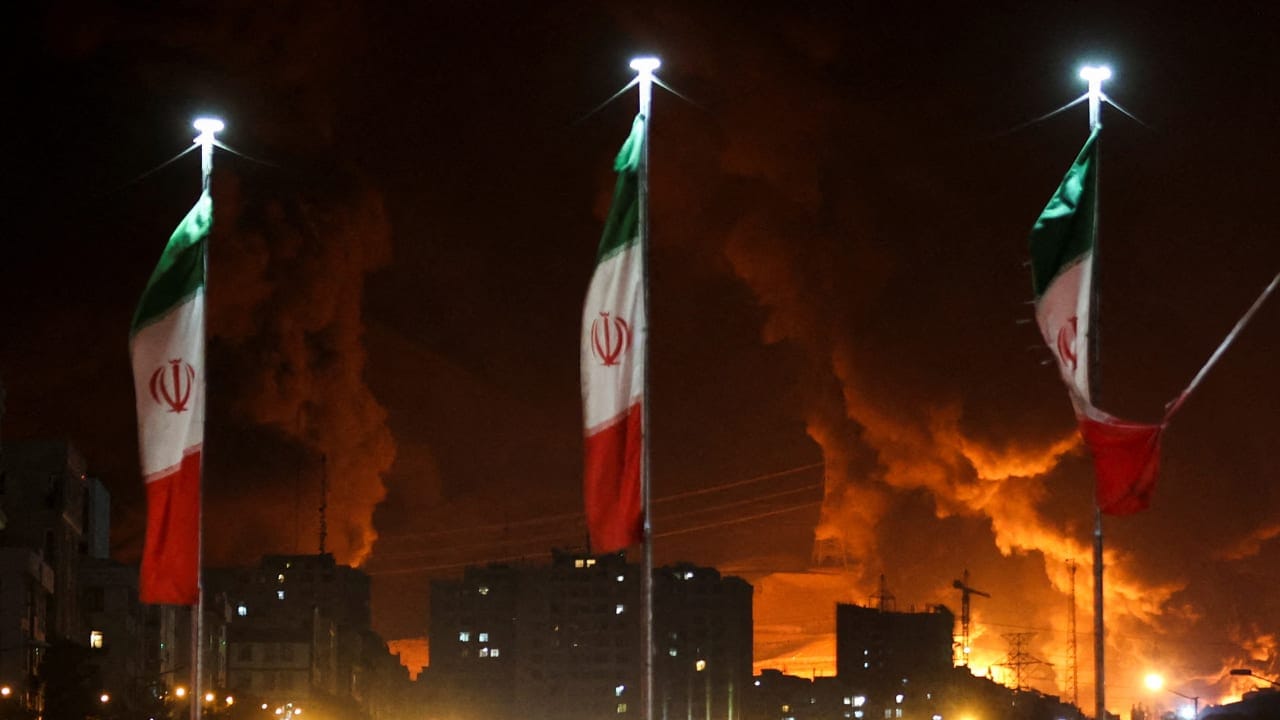
NOVEMBER 11, 2026 17:00The elections in America and Israel have handed Tehran a reason to wait. Democrats’ capture of Congress will give US President Donald Trump a divided government amid public opposition to the Iran war. Israel’s inconclusive election points toward prolonged paralysis or a fragile coalition. The political window is narrowing. The Iranian threat remains.Israel needs to use that window to help Iran’s opposition establish a protected foothold inside the country – where it can organize, govern, and offer a credible alternative to the regime. Jerusalem needs a strategy for turning military and economic pressure into political change.The cost of failing could be an emboldened regime. Tehran’s leaders may interpret survival as proof that they can outlast their adversaries, rebuild their proxies, and renew aggression against Israel and the Gulf states. They could also decide to dash for nuclear weapons, calculating that a nuclear arsenal would deter future intervention and give them greater freedom to intimidate the region.Robust sanctions and a comprehensive blockade can deny Tehran revenue and complicate military rebuilding. But the Revolutionary Guards have learned to preserve their power amid national impoverishment.Nor can a blockade be sustained indefinitely: it requires American military resources and political consent while imposing unpopular economic costs. Pressure buys time; it does not create a successor.Iran’s Crown Prince Reza Pahlavi, with the Iranian, Lion and Sun flag. (credit: JERUSALEM POST)That requires an opposition capable of surviving repression. A protected enclave would give its leaders space to build institutions – and wavering officials somewhere to turn if they break with the regime. Without such protection, another appeal for mass revolt risks another January slaughter.Four mutually reinforcing efforts would give this strategy substance. First, build a strong opposition able to administer territory and speak beyond its own faction. That means bringing domestic opposition networks together with the Iran Freedom Congress, Reza Pahlavi and other diaspora figures around an agreed transition framework and clear responsibilities for governing.Second, widen divisions within the governing coalition by distinguishing those responsible for atrocities from officials, businessmen and military personnel who could serve a different government.Give potential defectors concrete reasons to break ranks: protection for their families, continued professional roles, and assurances against collective punishment, while preserving individual accountability for crimes.Third, sustain an information effort that exposes the regime’s failures while making a credible alternative visible. Support independent Persian-language journalism, access to uncensored communications, and reporting that documents both official corruption and the opposition’s ability to govern.Fourth, pair the blockade’s pressure on the IRGC’s commercial networks with a credible offer of sanctions relief, investment, and recovery under a successor government. An enclave could bring these efforts together: a place where opposition leaders cooperate, defectors find protection, independent information circulates, and Iranians see that the regime’s survival is no longer inevitable.Syria shows why protected territory matters. In Idlib, opposition forces maintained an organized leadership and developed a local government that ran courts and public services. Turkish protection helped them survive and consolidate their position.When Assad’s military weakened, and his foreign allies proved unable or unwilling to rescue him, these forces had the organization and experience to help turn an opening into regime collapse.Other cases reinforce the point. In Ethiopia, the Tigray People’s Liberation Front developed governing structures in its regional base before becoming central to the coalition that overthrew the military regime in 1991.Eritrea’s liberation movement built extensive institutions before securing independence. Neither became a liberal democracy, but both movements demonstrated the value of building institutions before taking power.Making this work in Iran would require three conditions.The first requirement is broad support. Kurdish organizations have established networks and experience, but a Kurdish enclave alone would not constitute an Iranian alternative. Credible Persian leaders must play a central role in shaping a national political framework that can command support across Iranian society.Minority representatives, labor networks, and respected civilian and religious figures must help shape that framework and have a meaningful stake in the transition. Foreign sponsors should support this coalition without appointing Iran’s future rulers.Outside assistance should remain discreet: the more visibly the opposition is associated with foreign sponsors, the easier it becomes for Tehran to discredit it as serving foreign interests.The second requirement is credible protection. A declared refuge that cannot survive an assault invites catastrophe. Israel can help create the opportunity, but sustaining it would require support from Washington and willing regional partners.The third requirement is competent government. Courts that resolve disputes, functioning clinics, reliable administration, and restraints on arbitrary coercion would matter more than another declaration from exile. An enclave must offer residents a tolerable life and other Iranians evidence that change need not mean disorder.The pitfalls are equally clear. Iraqi Kurdistan survived and developed institutions under outside protection, but did not itself bring down Saddam Hussein. Libya’s rebels removed Muammar Gaddafi without securing a workable national settlement.A protected base can become an isolated dependency; a victorious opposition can fragment. The objective must be a cohesive alternative connected to the rest of Iran, with a practical arrangement for maintaining state institutions when power changes hands.Israel's short deadline to actSanctions and airstrikes alone cannot be counted on to end the threat. Building an alternative offers no guarantee of success, but Israel should pursue it against a clear deadline: January 2029. Israel cannot count on Trump’s successor to give Iran the same priority.By the time he leaves office, the aim should be a durable, Iranian-led enclave with functioning institutions and national political connections.Israel’s enemies understand patience. Jerusalem must understand deadlines.The writer teaches political risk at Johns Hopkins University’s School of Advanced International Studies and writes about and works on fragile states and political transitions.Follow us on Google
Israel needs to turn military pressure on Iran into political change - opinion
Full Article
Original Source
Read the full article at Jpost →KhanList aggregates and links to publicly available news content. We do not host full articles from third-party sources. Always verify important information with original sources.