
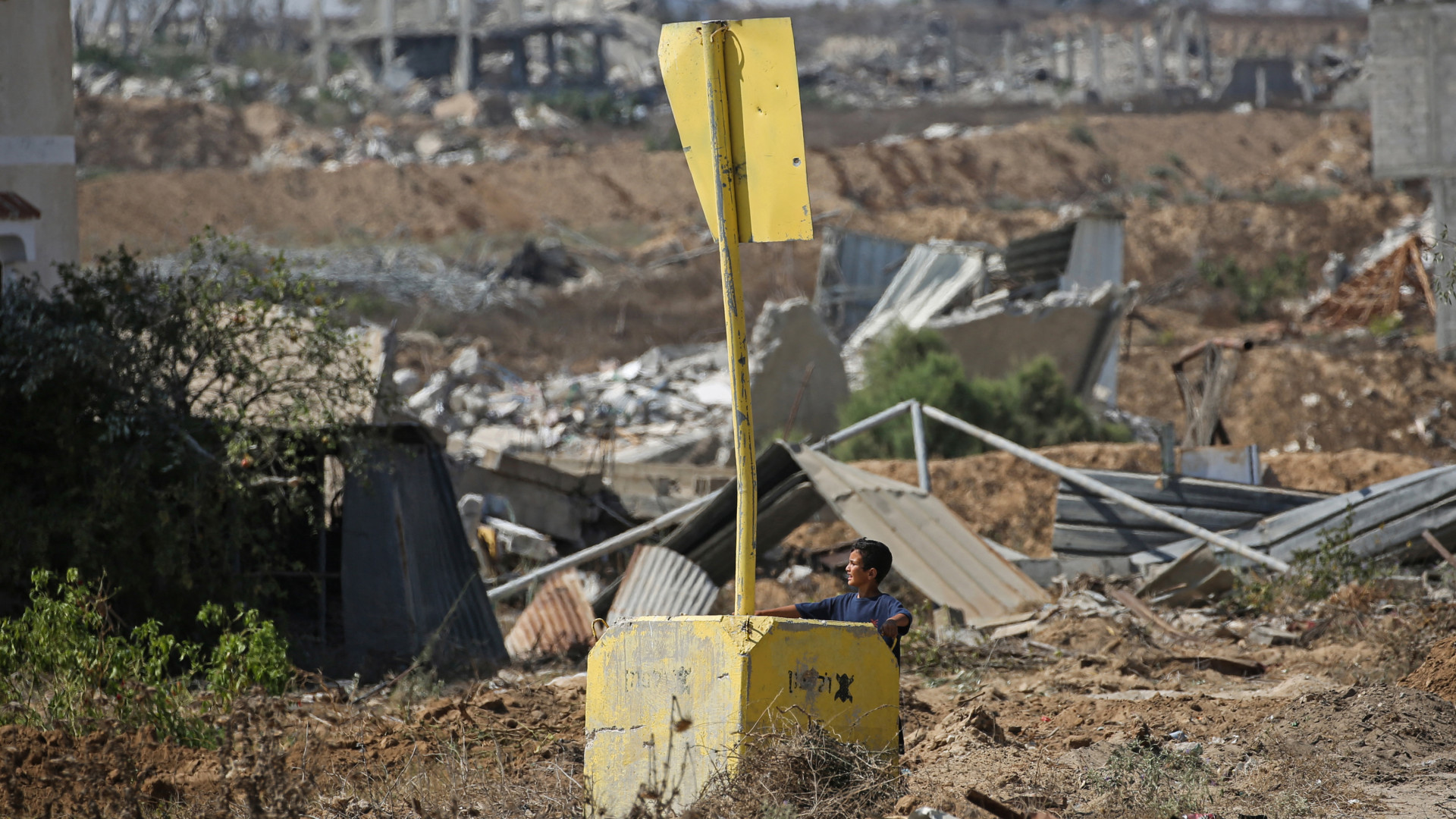
Before the start of the genocide in Gaza, I lived in Beit Lahia in the north. My house was destroyed in an Israeli air strike that killed my father and my brother. They are still buried beneath the rubble of my home. We have not been able to give them a proper burial. Today, I am displaced with my family in Deir al-Balah, in central Gaza. When Palestinians were allowed to return to the north of Gaza in January 2025, following the second "ceasefire", I went back to Beit Lahia. I walked around 13km to get there, because something inside me told me I might never get another chance to see my home. I arrived with bleeding feet. I did not care. I just wanted to see it with my own eyes, because I knew it might be the last time. It was. New MEE newsletter: Jerusalem Dispatch Sign up to get the latest insights and analysis on Israel-Palestine, alongside Turkey Unpacked and other MEE newsletters A year on from the third so-called "ceasefire", which began on 10 October 2025, almost nothing has improved for the population here, including my own family. People still live in worn-out tents and struggle to meet their most basic needs. They are still carrying immense grief and loss. People continue to lose their loved ones in different ways: through bombs and through the destruction left behind, when buildings damaged in Israeli attacks collapse on the people sheltering inside them, sometimes while they are asleep. The atrocities do not stop there. Our land is being taken from us. The "Yellow Line" that Israeli forces have drawn around us is moving further every day - 10 metres here, 100 metres there, as if no one is watching. We are watching. Everything beyond the Line A short time ago, my family received the news that the Yellow Line of Israeli military control had advanced further into Beit Lahia, beyond the rubble of our home. It has become impossible even to look at the area without risking being targeted or shot at by the Israeli military. We heard this news and immediately thought of the people buried beneath the rubble of our home: my father and my brother. Killing them was not enough. Their graves have now been erased, just like everything else beyond the Line. I, like many people in Gaza, have had to search for what is left of my home through satellite imagery, and it feels like losing my father and brother once again. To me, the word 'yellow' has come to mean everything left behind the Line: homes and neighbourhoods that remain deserted, emptied, erased To me, the word "yellow" has come to mean everything left behind the Line: homes and neighbourhoods that remain deserted, emptied, erased. We see what is being destroyed, and we know that erasing the evidence does not erase what happened. We are still here. We witnessed it. We remember. My home was between two hospitals: the Indonesian Hospital and Kamal Adwan Hospital. The Indonesian Hospital stands empty, shut down by Israeli troops in June 2025, and the Israeli military has built a base beside it. Kamal Adwan Hospital, meanwhile, now sits around 150 metres from the Yellow Line. One of northern Gaza's few remaining hospitals, it has been repeatedly attacked and forced to suspend its services, including in September. As a humanitarian, I have seen up close how this ongoing genocide is affecting people's health and their access to healthcare. I have seen premature babies born with complications in hospitals struggling with constant shortages. I have seen doctors doing everything they can to save lives. I have seen the fear and hope in mothers' eyes as they bring their children in for treatment. Wherever I go, I leave with a heavy heart. I cannot imagine what local health workers must be carrying on their shoulders every single day. They are exhausted and grieving, and yet still show up for their patients. My colleagues and I at Medical Aid for Palestinians (MAP) stand alongside them and support them with the resources we have. We will not back down. We cannot leave them to face all of this alone. Another winter in tents The summer heat has passed, but winter is on the way. Hundreds of thousands of people living in makeshift shelters across Gaza are going to face another harsh winter. These tents are already worn out and cannot withstand the storms to come. With roads and infrastructure destroyed, rainwater will collect around the tents, adding even more to people's suffering. No human being should have to live through what people in Gaza have been living through. No one should have to spend years without safety, without a home, without access to the healthcare they need and without knowing what tomorrow will bring. For Gaza's orphans, the safety of childhood vanished with their parents Read More » When it comes to children, the cost is even harder to put into words. They deserve to be born safely and to get medical care when they need it. They deserve to sleep without fear, to grow up happily and to have a future they can look forward to. After three years, I feel like I am repeating myself, but I will keep saying these things for as long as people are forced to live like this. These are not impossible demands. We are asking for the most basic things: safety, dignity, healthcare and the chance to live. Until that becomes a reality, I will keep on repeating myself. What has happened in Gaza cannot simply be erased. You can destroy homes, hospitals, streets and entire neighbourhoods. You can erase places from the map. You cannot erase what happened to the people who lived there. We carry it with us. We remember every loss, every displacement, every moment we were forced to endure. We will carry those memories for the rest of our lives. I keep asking myself: how much more does the world need to see? How many more lives have to be shattered before words become action? We have heard enough statements. People in Gaza do not need another promise. We need action. We need our rights to be respected. We need this daily suffering to end. We need safety, dignity and healthcare. We need homes we can return to and the chance to build a future. After everything we have lost, we should not have to keep asking for the right to live. The views expressed in this article belong to the author and do not necessarily reflect the editorial policy of Middle East Eye.
Israel killed my father and brother. A year after the 'ceasefire', I cannot reach their graves
Full Article
Original Source
Read the full article at Middleeasteye →KhanList aggregates and links to publicly available news content. We do not host full articles from third-party sources. Always verify important information with original sources.