
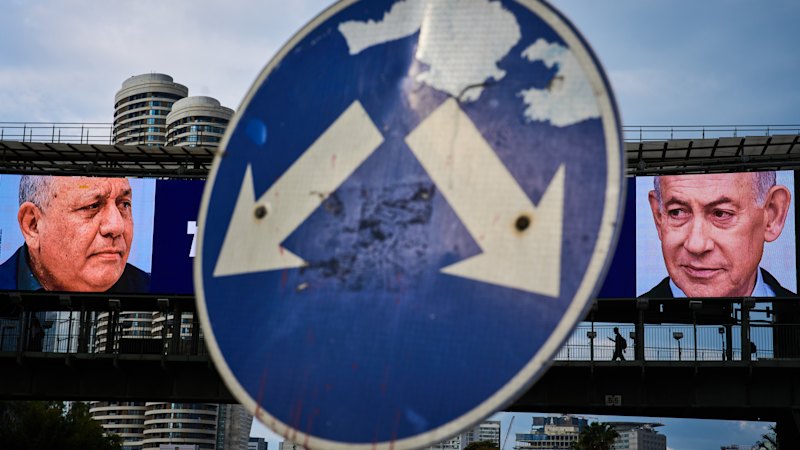
October 27, 2026 — 3:30pmJerusalem: Israel begins voting on Tuesday afternoon in a parliamentary election, its first since the Hamas attack on October 7, 2023, that shook the country and plunged the Middle East into turmoil.Prime Minister Benjamin Netanyahu’s hold on power is at stake, with centrist rivals promising to usher in a new era, but it might take time before clear results are known.A television campaign advertisement on a bridge featuring Israeli Prime Minister Benjamin Netanyahu, right, and his main rival, opposition candidate Gadi Eisenkot, ahead of the election.AP Photo/Oded BaliltyWhat happens on election day?Voting in Israel is voluntary, not compulsory. Even so, turnout is usually high, reflecting the high levels of political engagement in society. In the last elections, 4.8 million of the country’s 6.8 million eligible voters showed up at the polls – a turnout rate of 71 per cent. Even more people are expected to vote this year, reflecting the heightened stakes.Unlike in Australia, where postal voting has become increasingly popular in recent elections, Israelis must vote in person on election day. (Only those serving their nation overseas, like diplomats and defence personnel, can vote in advance by mail.)When will we know who won?It is likely this will be known within a few hours of polls closing, but it could take days or even weeks to become clear.Voting starts at 7am in Israel (4pm AEDT) and ends at 10pm (6am Wednesday AEDT), when Israeli TV channels will air exit polls giving the first indications of the outcome. The election results will then start coming in.A clear picture may emerge quickly but if no party or group of parties has a clear parliamentary majority, it could take much longer.The final tally is expected by October 30 and official election results are formally published a week after the election, on November 4.Why is it so complicated?Elections to the 120-seat Knesset are meant to be held every four years, but early elections have been frequent.Crucially, voters vote for party lists rather than individual candidates. The Knesset seats are allocated by proportional representation to national party lists, with parties needing to pass a threshold of 3.25 per cent of the national vote to secure seats.About a dozen parties are widely thought to have a chance of crossing the threshold, so the final tally and seat allocation will take time.The key number to aim for is the 61 seats required to form a government, though leaders prefer a more substantial buffer to create a more durable coalition. It is possible to govern in minority, but such a government would be even more fragile.What happens after the results are published?After the final tally is in, President Isaac Herzog will consult party leaders on whom they want as prime minister and then tap the candidate he believes has the best chance of forming a government.That nominee has up to 42 days to form a government.No single party in Israel has ever won an outright majority, so governments are formed by a coalition of parties, and negotiations on forming a government often take weeks. Every Knesset seat counts and small parties can have a big impact by becoming kingmakers.If the nominee fails, others can get a chance to try. If no government emerges, another election is called, with the present cabinet staying on as a caretaker government.From our partners
Israel heads to the polls: What happens next?
Full Article
Original Source
Read the full article at Smh →KhanList aggregates and links to publicly available news content. We do not host full articles from third-party sources. Always verify important information with original sources.