
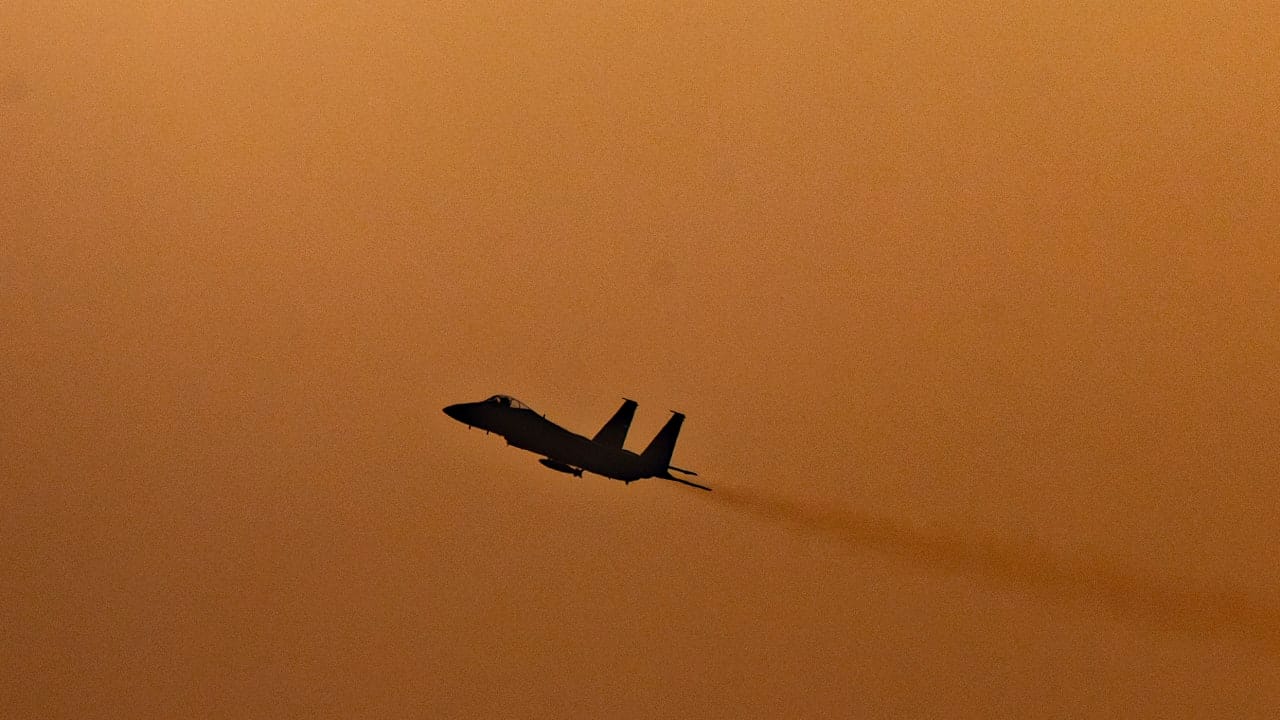
To minimize risk of being caught off guard, the IDF is strengthening coordination with the US military and raising its level of alert across intelligence monitoring, early warning, and air defenses.Follow us on GoogleAn Israeli Air Force fighter jet flies over central Israel amid the ongoing war between Israel, Iran and Hezbollah, March 12, 2026.(photo credit: NATI SHOHAT/FLASH90)NOVEMBER 14, 2026 22:00Ongoing negotiations between the United States and Iran have put Israel's defense establishment on high alert over the possibility of being caught off guard by a sudden escalation.Israeli security officials are preparing for three concerning scenarios: a surprise Iranian attack on US interests, including Israel; a sudden US decision to strike Iran without giving Israel sufficient advance warning; or a diplomatic agreement that would allow Tehran to resume uranium enrichment in the future, produce large quantities of precision ballistic missiles, and continue funding terrorist groups across the Middle East, including Hezbollah, Hamas, and the Houthis.Such an agreement could allow Iran to maintain its position as the leading destabilizing force in the Middle East.Tensions in the region are already running high. Iran's overnight attack on a US radar installation in Bahrain, carried out in retaliation for a strike on an Islamic Revolutionary Guard Corps command and control facility, highlights the volatility of the situation and the extent to which American deterrence in the Middle East has weakened.Israel unsure of what Trump's next move will beSources within Israel's defense establishment acknowledge that US President Donald Trump's next moves are difficult to predict. US military officials have reportedly told their Israeli counterparts that they are preparing for the possibility of receiving orders to go from "zero to a hundred" at a moment's notice, allowing Washington to launch a surprise attack against Iran.US Navy warships transit the Arabian Sea in close formation as CENTCOM forces continue to promote regional security and stability, June 30, 2026. (credit: US Navy photo)"There were instances during the war when we were the ones updating them on what was happening," one Israeli security source said.To reduce the risk of being caught off guard, the IDF is strengthening coordination with the US military and raising its alert level across intelligence monitoring, early warning, and air defense systems. The military is also maintaining its readiness to respond rapidly to any developments.At the same time, Israel Air Force officials say regular assessments are being conducted to prevent fatigue among ground and air crews, many of whom have been operating under heightened alert for an extended period.Concerns mount about Iran's proxy groups across the regionThe security source said Israel is also considering a scenario in which critical intelligence received from foreign partners in the Middle East could prompt the country's political leadership to consider launching a preemptive strike.Meanwhile, IDF Chief of Staff Lt.-Gen. Eyal Zamir has visited the Lebanese border, where he warned Hezbollah and the Lebanese government that any involvement in an escalation led by Iran would be met with a severe military response.Attention is now turning to the head of the IDF's Military Intelligence Directorate, Maj.-Gen. Shlomi Binder, as Israel's intelligence agencies work to identify potential threats and provide accurate early warnings.The threats range from an isolated military incident to a coordinated campaign in which Iran and its regional proxies launch simultaneous attacks across the Middle East.Israeli intelligence efforts are focused primarily on monitoring missile launchers and missile bases, amid assessments that Iran has restored approximately 20% of the ballistic missile production capacity it possessed before Operation Roaring Lion, following damage to its defense manufacturing facilities.IDF officials believe the current tensions could continue for several weeks or even longer, raising concerns about the physical and operational strain on military personnel who have already spent an extended period on high alert.To prevent fatigue from undermining operational readiness, the defense establishment is conducting regular situational assessments whenever new intelligence becomes available.Follow us on Google
Israel fears surprise US strike on Iran as nuclear talks fuel concerns of escalation - analysis
Full Article
Original Source
Read the full article at Jpost →KhanList aggregates and links to publicly available news content. We do not host full articles from third-party sources. Always verify important information with original sources.