
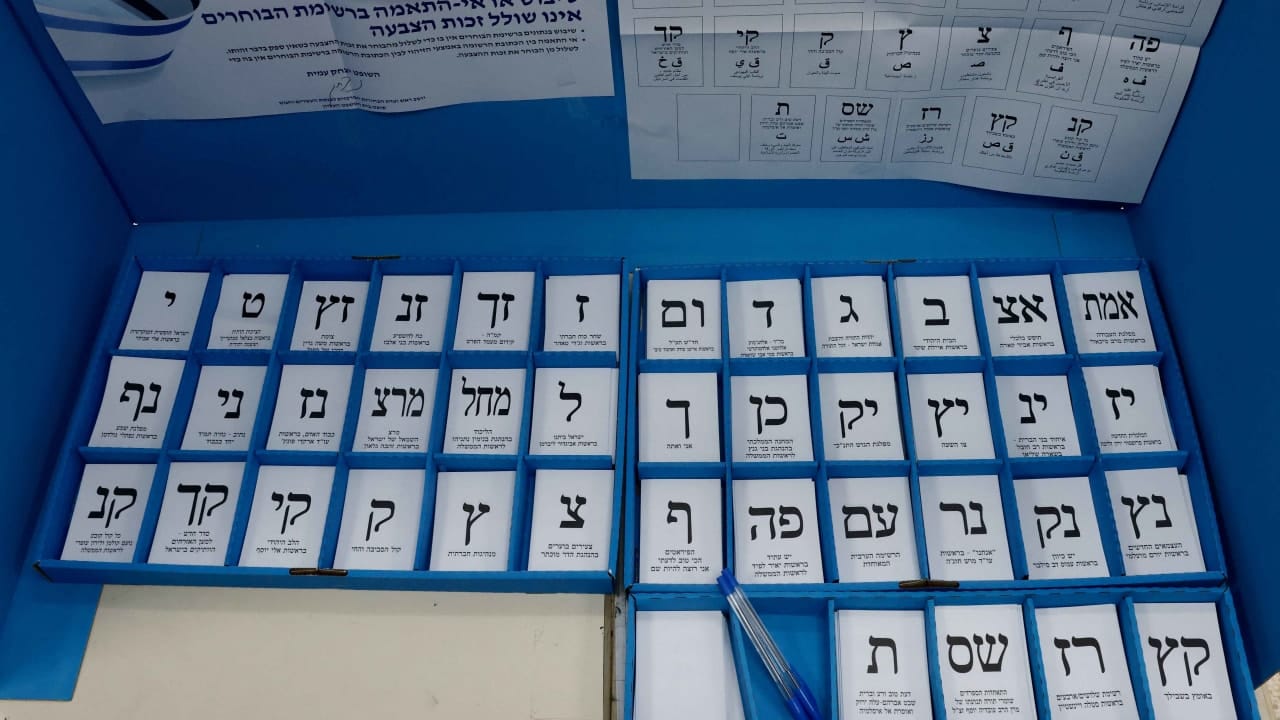
OCTOBER 22, 2026 10:36As the latest polls suggest that Ofer Winter's People of Israel party or Yoaz Hendel and Yaron Zelekha's Reservists-Economic Party may fail to cross the electoral threshold in the upcoming election, new figures show how many votes parties will need to enter the next Knesset.According to the updated estimates from the Taub Center, a political party will need approximately 166,000 votes to enter the Knesset if voter turnout matches that of the 2022 election.With the electoral threshold set at 3.25% of valid votes, the number of votes a party needs depends on how many people turn out on election day.The Taub Center's updated calculations, prepared by Prof. Alex Weinreb, head of its Demography Area and research director, estimate that at a 70% turnout rate, similar to the 2022 election, a party would need 165,635 votes to cross the threshold.How does voter turnout affect the threshold?The number of votes required increases as turnout rises, meaning smaller parties could face a greater challenge if more Israelis head to the polls.A graph illustrating how many votes are needed to cross the electoral threshold in Israel's 2026 election. (credit: Taub Center/The Jerusalem Post)According to the Taub Center, the estimated thresholds are:Voter turnout Votes required60% 141,97365% 153,80470% 165,63575% 177,46680% 189,297Every percentage-point change in turnout adds or subtracts approximately 2,370 votes from the number required to enter the Knesset.The updated estimates are slightly lower than the Taub Center's original projections, which were based on an anticipated 7.56 million eligible voters, approximately 229,000 more than the final figure.The figures follow the Central Elections Committee's publication of Israel's final voter registration data, which confirmed that 7,331,981 Israelis are eligible to vote in the upcoming election.Why does this matter for Winter and Hendel?The latest polls illustrate how closely the fate of smaller parties could be tied to the electoral threshold.An N12 poll published Wednesday evening projected that Winter's People of Israel party would win four seats, putting it above the threshold, while the Reservists-Economic Party remained below it with 2.8% of the vote.A Channel 13 poll published the same evening showed the opposite result, with Hendel and Zelekha's party winning four seats while Winter's party failed to enter the Knesset.Both polls placed Gadi Eisenkot's Yashar party ahead of Prime Minister Benjamin Netanyahu's Likud, although neither political bloc secured a clear majority.The implications of smaller parties failing to enter the Knesset could be considerable. Votes cast for parties that do not cross the threshold are excluded from the allocation of Knesset seats, potentially changing the distribution of seats among the parties that do qualify.In the 2022 election, nearly 420,000 votes, representing 8.8% of valid ballots and the equivalent of approximately 10 Knesset seats, went to parties that failed to cross the threshold.The Taub Center noted that only if turnout falls below approximately 65.5% would the number of votes required to cross the threshold be lower than the 154,854 votes needed in 2022.With smaller parties potentially determining which bloc has the stronger position after the election, even relatively modest changes in turnout could prove consequential.Follow us on Google
Israel Elections 2026: How many votes will parties need to cross electoral threshold? - explainer
Full Article
Original Source
Read the full article at Jpost →KhanList aggregates and links to publicly available news content. We do not host full articles from third-party sources. Always verify important information with original sources.