
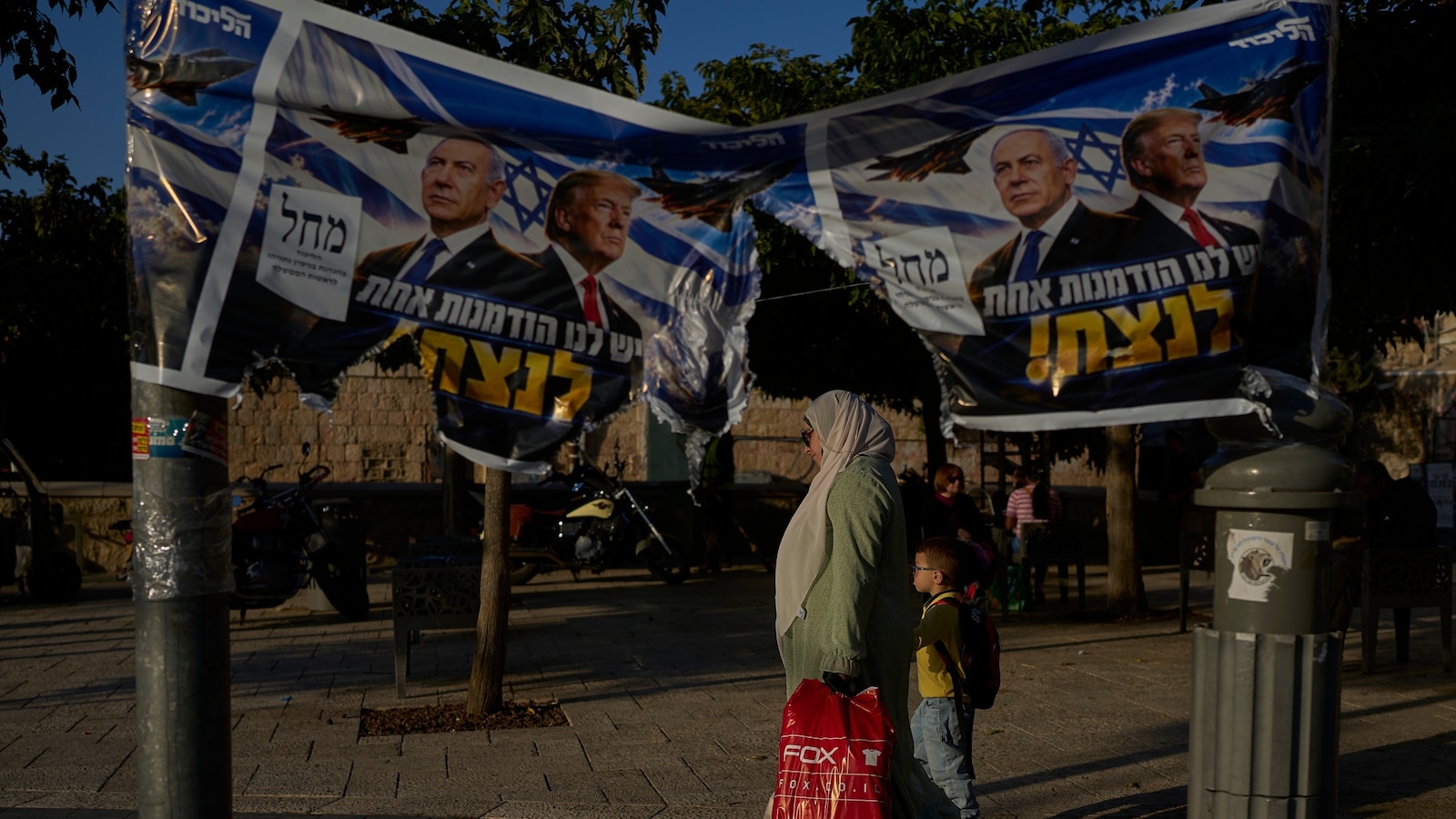
LONDON -- The final vote count from Tuesday's parliamentary election showed that Prime Minister Benjamin Netanyahu's bloc maintained its lead, securing 53 seats in the next Knesset, but no coalition secured a 61-seat majority.The opposition bloc seeking to replace the premier won 48 seats, according to official Central Elections Committee figures released on Thursday after all votes had been counted.Despite some claims of electoral interference, Israel's Election Committee also says the Knesset elections were conducted lawfully, adding there is no basis for claims of systematic interference with the integrity of the vote.This combination of pictures created on Oct. 28, 2026, shows Yashar party leader Gadi Eisenkot (L) addressing his supporters at an election night rally in Tel Aviv and Prime Minister Benjamin Netanyahu addressing his supporters at an election night rally in Jerusalem.Maya Levin,jewel Samad/AFP via Getty ImagesThe two coalitions led by Netanyahu and Gadi Eisenkot may need the backing of the Arab-Israeli parties to have any chance of a majority in the Knesset.Both Netanyahu and Eisenkot have previously ruled out forming a coalition with the Arab parties. In his post-election speech, Netanyahu suggested that any government that included Arab parties would "endanger Israel."Arab party leaders have indicated willingness to work with the anti-Netanyahu opposition. The Arab-led Joint List -- a collection of three parties which between them were on course to win 12 seats as of Wednesday -- said in a statement that they were ready for "political cooperation to oust the Netanyahu government."The path to building a majority for the Netanyahu bloc is slim because it cannot form a coalition with the Arab Israeli parties due to the likely possibility it would lose the settler parties. Eisenkot's opposition party, however, does have a path to a majority with the backing of the Arab Israeli parties.An Arab woman walks with a child next to a torn Likud party campaign ad featuring Israeli Prime Minister Benjamin Netanyahu and U.S. President Donald Trump, in Jerusalem on Oct. 28, 2026.Ohad Zwigenberg/AP Photo"The Joint List will work with all its strength to bring an end to Netanyahu's rule. We are ready for political cooperation to establish an alternative government, which will present a true alternative and commit itself to a true change of the current government's racist policy," it said in a statement.Popular ReadsMansour Abbas, the leader of the United Arab List -- also known as Ra'am -- which was projected to win seven seats, said he had been in touch with representatives of both the Netanyahu and Eisenkot coalitions.Opposition leaders condemned the prime minister's remarks, maintaining that the elections in Israel were free and fair and there was no evidence of election fraud. The Israeli police said they will investigate any credible allegations of wrongdoing. Israeli Prime Minister Benjamin Netanyahu gestures to his supporters at the election night rally after the first exit polls were announced, in Jerusalem on Oct. 28, 2026.Jalaa Marey/AFP via Getty ImagesDean Livne, the acting director general of the CEC said on Wednesday that there was "no basis for allegations of election theft," as reported by Israel's Kan radio station.Eisenkot, meanwhile, said on Wednesday night that he had undertaken "a long day of meetings, conversations, and preparations to realize the will of the voter.""We are focused on the heavy task entrusted to us -- bringing change to Israel," he wrote in a post to X.ABC News' Nasser Atta and Joe Simonetti contributed to this report.
Israel election results: Netanyahu's bloc maintains lead but does not secure majority
Full Article
Original Source
Read the full article at Abcnews →KhanList aggregates and links to publicly available news content. We do not host full articles from third-party sources. Always verify important information with original sources.