
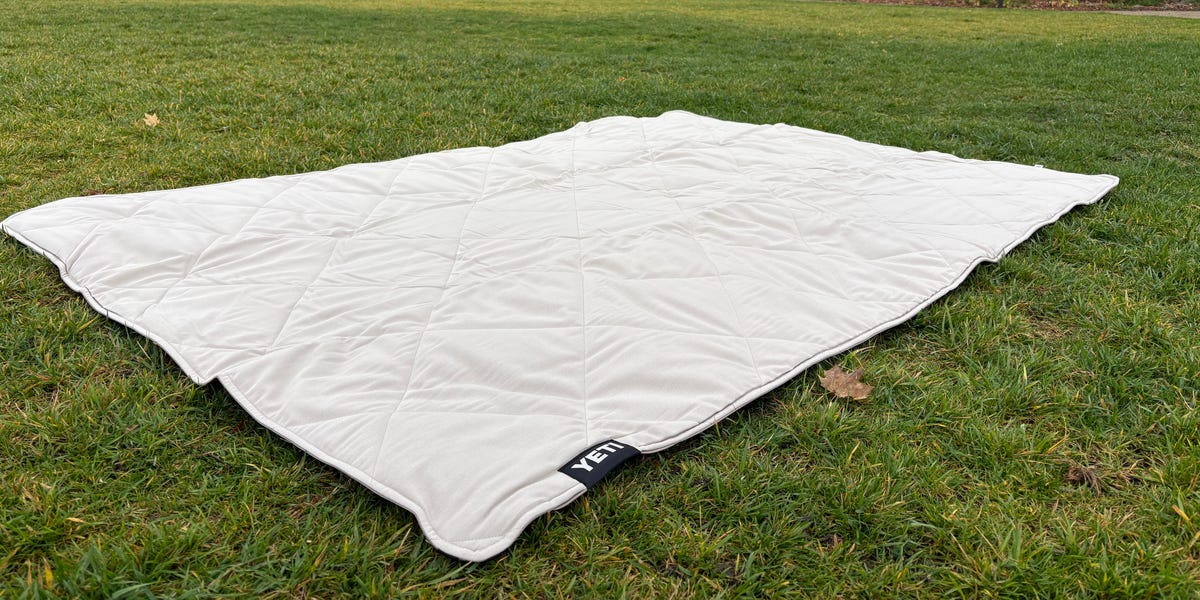
6 min readYETI IS KNOWN to drop a lot of product. The Austin-based brand emerged as a key player in the cooler category and has since grown immensely, putting out everything from fleeces to outdoor furniture.The Lowlands Blanket, an durable outdoor blanket, might be a piece that gets overlooked in the brand’s offering. The original came out a few years back but Yeti has added some new colors as well as improvements like the diamond-stitched pattern. It’s waterproof, claims to repel dirt and pet hair, and comes in a host of core and seasonal colors (not to mention two different sizes). As an all-purpose, throw-kind of blanket, it’s meant to be put to use pretty much anywhere, from the back of your car or atop some cold bleachers at the soccer game to the campsite or picnic at the beach or state park.Do you need one though? That all depends. The $200 blanket proved quite capable during testing, packing down nicely and drying at speed. There are pros and cons to the thing, and it really depends on the lifestyle you’re trying to cater to, not to mention the elements you might be operating under.While we were sitting on a regular-sized Lowlands Blanket during the summer months (quite literally), packing it to a few outdoor concerts and park picnics, we mostly waited patiently for fall. We wanted to really assess the burly, insulated build of the thing and its waterproofness. We spent several weeks with the blanket in the back of the car, at the ready for everything from dog naps and post-paddle warmups to hangouts near the wet soccer field or full-fledged fall camping trips.What We LikePacked tight and at the ready.Right out of the gate, this is easily one of the most comfortable outdoor blankets we’ve tested in recent history. Down blankets can offer a similar level of sensory joy but the softness of the topside of this blanket feels like something you’d get draped over the best chair in a ski lodge, right in front of the great room fire. It’s mildly fuzzy on one side and more coarse and rugged on the other.The seasonal colors really pop and add some flavor while the two sizes of the blanket are actually quite distinct and useful in their own ways. The smaller, about 28-in. by 38-in., is about the size of a dog bed and is (surprise) best for pets—setting up a dry sitting spot for one, or thawing wipe downs after playing in the snow. It does not come with a carrying case but rolls up plenty small and doesn’t necessitate one. The larger (the one we tested), measuring 55-in. by 78-in., is more like a bed topper, great for picnics, topping your camp bed, or just wearing around in the cold.The corner loops are a nice touch for securing the blanket in blustery conditions and can also be used for hanging or tying down valuables. We even tried hanging it up and utilizing it as a temporary wind barrier during outings that involved occasional sideways rain. We found that it worked well as a barrier during offseason camping trips. In other words, as a comforter of sorts to protect you from dirt or the elements while keeping your base-layers or sheets beneath dry.Cleaning the thing is pretty simple, whether that be a quick wipe-down to address grass stains and mud or a full machine wash after a weekend camping in the woods. One of the blanket’s biggest merits is its thickness, offering more depth than most at close to a half-inch. You can genuinely feel it too. Often, when you throw a packable blanket atop the grass or the sand at the beach you’re banking on the inherent softness of that natural surface and not getting much else. Not so with the Yeti, as it does afford a true layer of added comfort, one that can easily eat up contours in uneven surfaces or small rocks and sticks.SHOP YETI LOWLANDS BLANKETWhat to Watch Out ForA great sidekick for wet chair season.Yeti tends to follow the go big or go home philosophy, which we’re used to at this point and oftentimes suits the product and its intentions well. At nearly six pounds, it’s admittedly a bit heavy for a blanket. But you can feel instantly where all that weight is going (the ample insulation and reinforced exterior). The weight is not a huge deal, especially if you utilize the packing bag that it comes with, which you can grab by hand or sling over your shoulder. It’s more noticeable if you’re just carrying it about unfolded or rearranging that picnic spread. But, because it translates to more comfort and durability, we’re all for it. Just keep it in mind for towing purposes if you’re looking for something to pack along on a hike, you can find something far lighter.The internet has alerted us to the possibility of mold if not dried off properly or machine-washed fairly often. While we didn’t experience that, the blanket is thicker and seemingly takes on odors a bit more than some. What’s perhaps more of an issue is the noise, which is only relatively louder than, say, a puffy blanket, which tends to offer a more whispered kind of sound when moving about beneath it. This is probably only a real issue for sensitive sleepers.SHOP YETI LOWLANDS BLANKETAlternativesFor do-it-all blankets built for the outdoors, there are a few alternatives. Rumpl has a line of nimble options that often come in cool patterns. The price is right but you’re generally getting either a mat or a puffy (although you can certainly pair the two up for more waterproofness). They’re billed as weather-resistant and while they look great and feel like snuggling into a zipped sleeping bag, they don’t quite have the waterproof build and toughness of Yeti. However, if you’re after a high warmth-to-weight ratio, it’s tough to go wrong here. Nomadix makes another quality option, a puffer blanket that packs more tightly than most, weighs just two pounds, and is even made with a bunch of recycled material. Yet, if you’re going to be dealing with more than wet grass (e.g. snow) or plan to be in more than low-level precipitation, you’ll want something more substantial.White Duck Outdoors makes a solid one too in the Trailside Blanket, which comes in under $100, weighs just three pounds, has a streamlined layer of insulation, and smart magnetic closures for when you want to wear it. While a lot of Pendleton’s blankets are form over function, the Oregon brand does make a nice all-weather option in the Roll-Up Blanket, priced comparably to the new Yeti. It does come armed with a weather-resistant nylon side and a soft wool side to hang out on.SHOP YETI LOWLANDS BLANKETVerdictQuilted for added texture and warmth.For an all-purpose outdoor blanket that can take you from the snowy slopes to the trail and pretty much everywhere in between, this is a tough one to beat. It’s more durable than many we’ve tested, offers more comfort by way of added depth and nicely-stitched insulation, and even fends off pet hair swimmingly. While a great accompaniment to camping adventures, the Lowlands Blanket is also great for elevating the outdoor music festival, throwing atop a damp yard, or lugging to the tailgater (especially in the fall and winter).This regular size is $200, a fair chunk of change (the small version is $75). And while that’s not cheap, it simply outdoes just about every other blanket in its class. You may not need a heavier, weatherproof blanket if you mostly spend time car camping. But if you want a burly blanket that’s not afraid of the terrain or weather, this one’s for you. Offseason campers are wise to consider it, as are diehard sports fans who like to show up for their team.SHOP YETI LOWLANDS BLANKETAlternative Camp BlanketsMark Stock is a writer from Portland, Oregon who covers food, drink, travel, culture, outdoors, gear, and tech. He's formally trained in journalism but stumbled into the wine industry just when it was getting good and can't seem to fully let it go. His outlets are many, from Men's Health, Women's Health, and The Manual to Vinepair, SevenFifty Daily, Sip Northwest, and others He's a devout soccer fan and thinks about Iceland daily.Ryan Brower is the Senior Gear and Reviews Editor at Men’s Health, where he tests the best products in outdoor gear, tech, running shoes, and more. He has written about the outdoors for nearly two decades and was previously the Managing Editor, Content Performance at Gear Patrol. He holds a B.A. in Sport Management and is a Certified Beer Server, having previously covered the craft beer industry. Ryan currently lives on the water in New Jersey with his wife and their dog.
Is Yeti’s $200 Camp Blanket Worth It? I Tested It Out for Months to Find Out.
Full Article
Original Source
Read the full article at Menshealth →KhanList aggregates and links to publicly available news content. We do not host full articles from third-party sources. Always verify important information with original sources.