
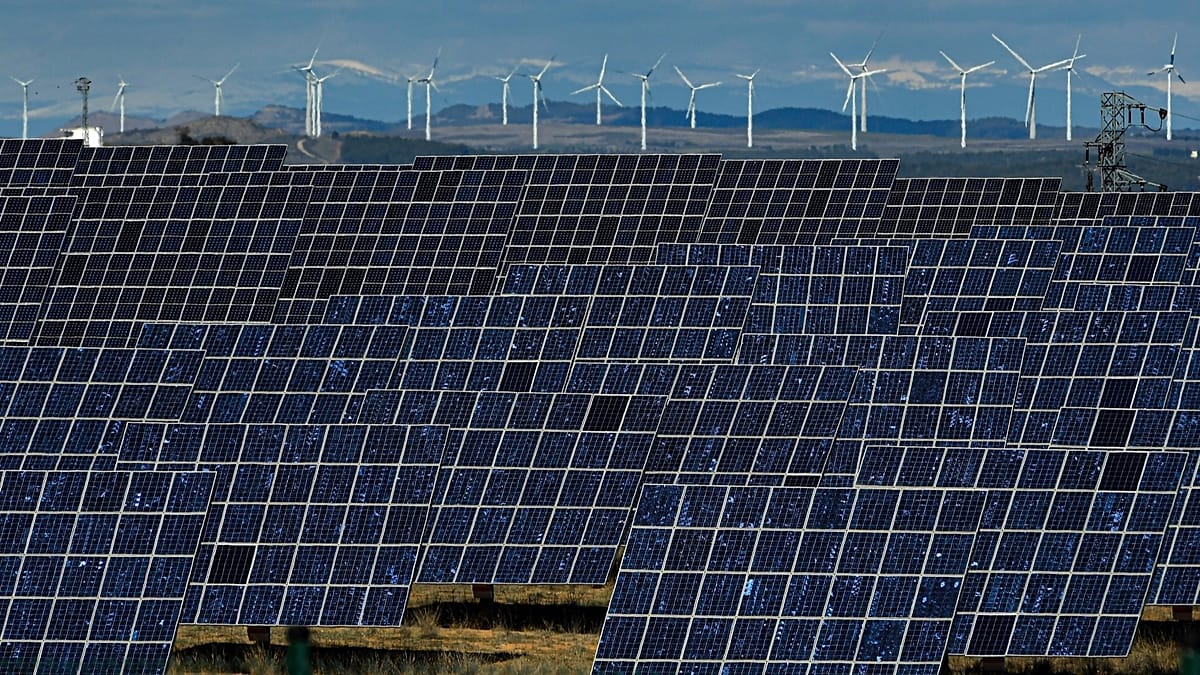
Published on 24/09/2026 - 7:02 GMT+2 The European Union is struggling to reduce its reliance on gas, despite vowing to accelerate the shift to clean, homegrown energy following the war on Iran. ADVERTISEMENT ADVERTISEMENT New data from Eurostat found that more than half (54.1 per cent) of electricity generated in the EU came from renewable energy sources during the second quarter (Q2) of 2026. This marks a slight decrease compared to the same period last year (54.3 per cent). Total EU electricity generation increased by 3.2 per cent year-on-year in Q2, but during that same period gas-fired generation increased by 3.9 per cent while renewable generation only grew by 2.8 per cent. This is despite solar witnessing significant growth, making up 41.6 per cent of renewable electricity generation – compared to 37 per cent last year. Why the EU needs even more solar Jonathan Bruegel, a power sector analyst at the Institute for Energy Economics and Financial Analysis (IEEFA), tells Euronews Earth that the dip highlights the “case for a diversified mix” of hydro, wind and solar power. Earlier this year, experts warned that Europe’s scorching summer – which triggered drought across the continent – meant hydropower flow in the Alpine region was reaching “close to an all-time low”. At the beginning of Q3, energy intelligence firm Montel warned that inflows to reservoirs and run-of-river hydropower plants in Austria and Switzerland were nearly 50 per cent below average. Total hydro production for Austria in July was only 51 per cent of normal levels (compared against the last 15 years) due to low rainfall, Montel adds. Similarly, Switzerland saw 48 per cent of normal production, while Germany (63 per cent) and France (68 per cent) also suffered. Weather conditions that tend to cause a drop in hydropower are usually compensated by a boost in solar. So far, solar power has already saved the EU €35.4 billion in avoided gas imports since the beginning of the Iran war. However, it seems the EU’s boost in solar has not managed to curb gas generation, which increased by 0.1 per cent in Q2. “Gas held at 13.3 per cent, even with renewables above 50 per cent,” Bruegel adds. “This means that weak hydro and wind generation still bring gas back in, underlining again the need for more solar – which is a more stable intermittent technology than hydro and wind – storage, and flexibility.” Which EU country is leading the renewables transition? Latvia came out victorious this Q2, with an impressive renewables share of 97.7 per cent (made up of mostly hydro and solar). This was followed by Denmark (94.3 per cent) and Croatia (92.2 per cent). Lagging behind with the lowest shares were Slovakia (19.8 per cent), Czechia (20.9 per cent) and Malta (24.5 per cent). *The share of renewables in net electricity production is not the same as the share of renewables on gross electricity consumption.
Is the EU's electricity ‘diverse’ enough? Renewables slip year-on-year despite huge solar boom
Full Article
Original Source
Read the full article at Euronews →KhanList aggregates and links to publicly available news content. We do not host full articles from third-party sources. Always verify important information with original sources.