
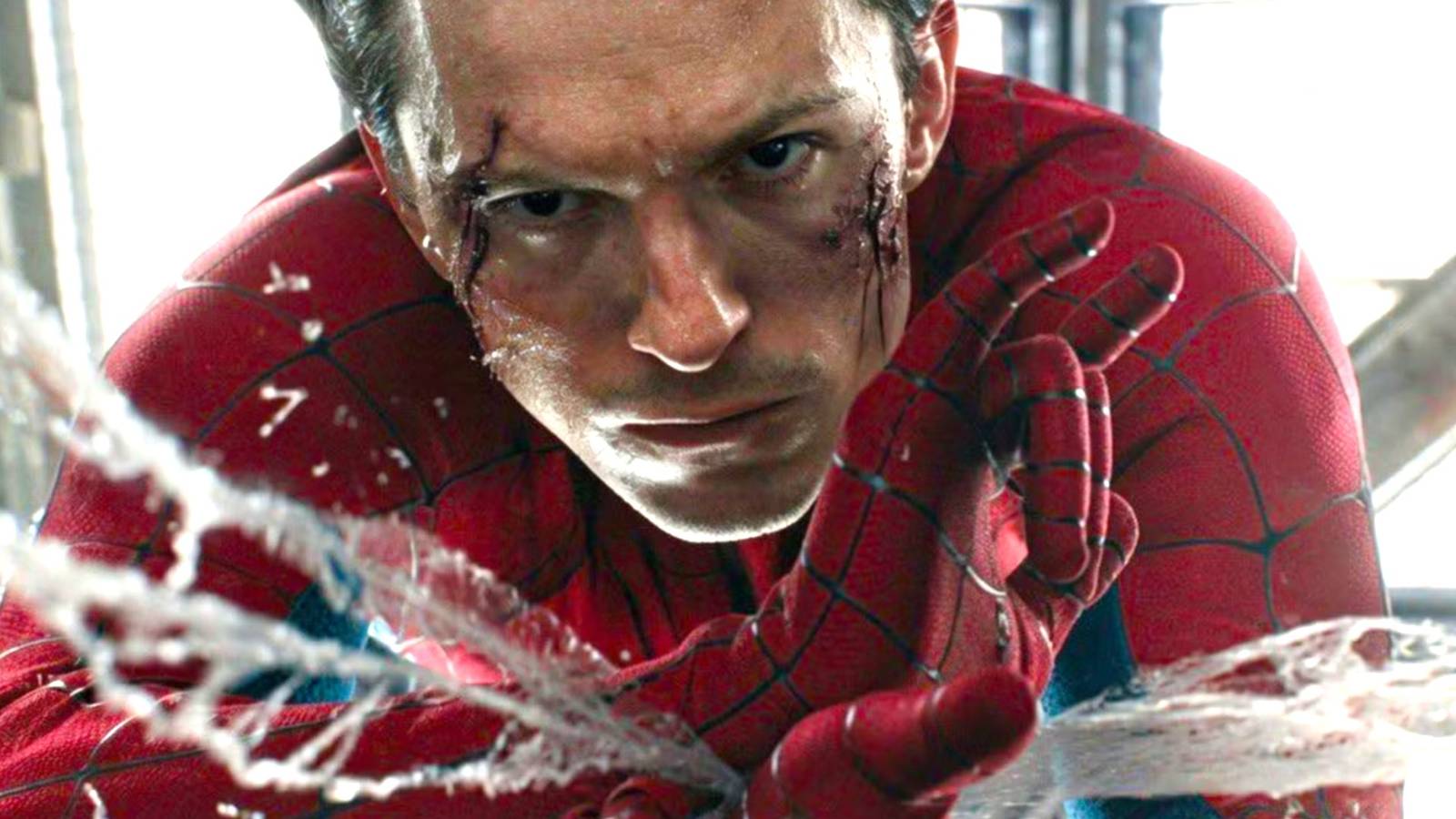
Published Aug 26, 2026, 11:30 AM EDT Simon Gallagher has worked in movie and TV journalism for more than 15 years. He has written more than 6000 articles and reviews, and edited thousands more. He is an expert in the entertainment industry, particularly in the golden age of screen superheroes. Simon is also a Rotten Tomatoes approved critic. Sign in to your ScreenRant account Is the MCU really back? Having made more than $2 billion at the global box office, Spider-Man: Brand New Day has just toppled Avengers: Endgame to claim the second highest domestic box office take of all time. Given the conversations about the death knell of theatrical, and the insistent evidence of industry trends, that's an astronomical achievement. And it's once more kicked off a fresh round of talk about the overall health of the MCU. You'll probably remember that the same thing happened when Deadpool & Wolverine made more than $1 billion, and indeed when Spider-Man: No Way Home came within a whisper of a $2 billion haul. But then the movies released between those behemoths rather flattered to deceive, failing to capture ticket-buyers' attention on anything like the same scale. Dangerously for Marvel, that didn't exactly correlate with quality, either, suggesting the cynical accusations that the superhero bubble is over - and Marvel's supremacy with it - may be worth consideration. But Brand New Day's box office success, and confidence in the next two Avengers movies might genuinely mean we've already reentered another boom period for the theatrical arm of the MCU. There's also the X-Men era to come, and the impressive feat of hiring stars as significant as Adam Driver and Ryan Gosling almost 20 years into the lifespan of the franchise. So is it actually happening? From “I Am Iron Man” to “I Am Inevitable” · Eight Questions How Well Do You Know the MCU? “Whatever it takes.” 🤖Phase OneRDJ & the founders, 2008 🛡The AvengersWhedon’s team, 2012 💎Infinity SagaThanos & the stones ⚡EndgameWhatever it takes, 2019 🌏MultiversePhase 4–6, 2021– ASSEMBLE → 01 Iron Man (2008) is, in retrospect, the most consequential casting decision in modern blockbuster history — but at the time Marvel Studios and parent company Paramount were openly hostile to director Jon Favreau’s push for the lead actor he eventually got. Favreau later said he had to fight “tooth and nail” and the actor had to do a paid screen test, a screen-test deal almost unheard of for an A-lister. What was the executive objection to him? AHe was considered too old for a 15-year contract BHis history of drug arrests made him uninsurable CHe was already under contract to DC/Warner Bros. DHe’d publicly refused to do any superhero work ✓ Correct! Robert Downey Jr. had been arrested multiple times between 1996 and 2001 on drug and weapons charges, served roughly a year in California state prison (1999–2000), and was fired from Ally McBeal in 2001 after relapsing. By 2007 he’d been clean for several years, but Marvel/Paramount considered him essentially uninsurable for a $140 million tent-pole. Favreau pushed for him over studio favourites Tom Cruise (who’d had Iron Man development at Fox years earlier) and Sam Rockwell (who’d later play Justin Hammer in Iron Man 2 as a consolation). RDJ took a reported $500,000 base salary — less than Terrence Howard, whose role he then permanently overshadowed. ✗ Wrong. The answer is his arrest history. RDJ had drug-related arrests from 1996–2001, served prison time in 1999–2000, and was fired from Ally McBeal in 2001 — which made him uninsurable in studio terms even though he’d been sober for several years by 2007. Favreau fought for him over Tom Cruise and Sam Rockwell, and RDJ took a reported $500,000 base salary — less than co-star Terrence Howard. NEXT → 02 The Avengers (2012) — the film that proved the shared-universe model could work, grossed $1.52 billion, and ended Phase One with Loki, Thanos’s mid-credits reveal, and the “swarm shot” of the team rotating in Manhattan — was written and directed by a TV showrunner best known at the time for Buffy the Vampire Slayer and Firefly. Name him. AJon Favreau BKenneth Branagh CJoss Whedon DJoe Johnston ✓ Correct! Joss Whedon. Marvel hired him in mid-2010 partly on the basis of his uncredited script rewrites and his comfort writing ensemble team dynamics from Buffy/Angel/Firefly. He directed The Avengers (2012) and the follow-up Age of Ultron (2015), then exited the MCU and Marvel handed the next two Avengers films to the Russo brothers. The three other directors named all really did make Phase One films: Favreau directed Iron Man (2008) and Iron Man 2 (2010), Branagh directed Thor (2011), and Joe Johnston directed Captain America: The First Avenger (2011) — which is why this question separates Phase One trivia from Avengers-specific trivia. ✗ Wrong. The answer is Joss Whedon — hired largely on the strength of Buffy, Firefly, and uncredited Hollywood script work. The three wrong options are deliberately all real Phase One MCU directors: Favreau did Iron Man 1 & 2, Branagh did Thor (2011), and Joe Johnston did The First Avenger (2011). Whedon directed Avengers (2012) and Age of Ultron (2015) before exiting the MCU. NEXT → 03 Marvel co-architect Stan Lee (1922–2018) appeared in every theatrical MCU film from Iron Man (2008) onward, even shooting cameos in advance to outlast him. He died on November 12, 2018. In which film does his final filmed MCU cameo appear — as the long-haired young driver of a 1970 car bearing the bumper sticker “NUFF SAID”? AAvengers: Endgame (2019) BAvengers: Infinity War (2018) CCaptain Marvel (2019) DSpider-Man: Far From Home (2019) ✓ Correct! Avengers: Endgame (April 2019). Lee appears digitally de-aged behind the wheel of a 1970 Chevy at the New Jersey army base where Tony Stark and Steve Rogers travel back to retrieve the Tesseract; he shouts “hey man, make love, not war!” The cameo was filmed before Lee’s death and confirmed by the Russos as his final filmed MCU appearance, although the next-released film, Spider-Man: Far From Home (July 2019), became the first MCU film with no Stan Lee cameo at all. Captain Marvel (March 2019) has him reading the script for Mallrats on the L.A. train and was the first posthumously-released cameo, but Endgame was the last one he actually shot. ✗ Wrong. The answer is Avengers: Endgame — the de-aged hippie-era driver in the 1970 New Jersey time-heist scene. Captain Marvel (March 2019) was the first cameo to release posthumously, but Endgame (April 2019) was the last one Lee actually filmed. Spider-Man: Far From Home (July 2019) became the first MCU film with no Stan Lee cameo at all. NEXT → 04 Across Phase One through Three, each Infinity Stone is hidden inside a distinctive container before being claimed for Thanos’s Gauntlet. The blue Space Stone is housed inside a glowing cube that originates with the Asgardians, is recovered by Howard Stark from the wreckage of the Red Skull’s plane, is taken to Asgard by Loki in 2012, and is finally retrieved by Hulk on Sakaar before falling to Thanos. What is that container called? AThe Tesseract BThe Aether CThe Orb DThe Eye of Agamotto ✓ Correct! The Tesseract — the blue cube that houses the Space Stone — first appears in Captain America: The First Avenger (2011), powers the portal Loki opens over Manhattan in The Avengers (2012), and is destroyed by Thanos in Infinity War (2018) when he crushes it to claim the stone inside. The wrong options are all real Infinity Stone containers from the MCU: the Aether (red liquid form) houses the Reality Stone in Thor: The Dark World, the Orb houses the Power Stone in Guardians of the Galaxy, and the Eye of Agamotto houses the Time Stone in Doctor Strange. So all four answers refer to genuine stone containers — only the Tesseract holds Space. ✗ Wrong. The answer is the Tesseract. The trap is that all four options are real Infinity Stone containers: the Aether holds Reality (Thor: The Dark World), the Orb holds Power (Guardians of the Galaxy), and the Eye of Agamotto holds Time (Doctor Strange). Space — the blue stone shown in Cap’s 1942 plane wreckage and Loki’s 2012 invasion — is the Tesseract. NEXT → 05 In Avengers: Infinity War (2018), the Soul Stone is hidden on Vormir and guarded by a Stonekeeper — revealed to be a cursed Red Skull. To claim it, the seeker must sacrifice the person they love most by throwing them from a cliff. Thanos arrives on Vormir with one adopted daughter, weeps, and pushes her over the edge. Which character does Thanos sacrifice to obtain the Soul Stone? ANebula BGamora CMantis DProxima Midnight ✓ Correct! Gamora (Zoe Saldaña). Thanos forces her to lead him to Vormir because Nebula has earlier revealed under torture that Gamora knew the Soul Stone’s location all along. The scene is the emotional pivot of Infinity War: it confirms that Thanos really does love Gamora, which means the sacrifice qualifies. In Endgame (2019), a 2014 version of Gamora returns through time travel with her father — meaning Gamora-of-Infinity-War remains dead at the end of the saga, while a different Gamora wanders the cosmos in Guardians of the Galaxy Vol. 3. Nebula is alive throughout Infinity War; Mantis survives Vormir entirely; Proxima Midnight is one of Thanos’s Black Order children, killed in the Battle of Wakanda. ✗ Wrong. The answer is Gamora. Nebula is alive throughout Infinity War (she’s the one whose torture reveals Gamora knew where the stone was hidden). Mantis isn’t on Vormir. Proxima Midnight is Thanos’s adopted daughter via the Black Order, not via Zen-Whoberi, and is killed during the Battle of Wakanda by Scarlet Witch. Thanos sacrifices Gamora — the only adopted daughter he genuinely loves. NEXT → 06 In Avengers: Endgame (2019), Steve Rogers travels back in time to return the Infinity Stones, then chooses to remain in the past and live out a life with Peggy Carter. He returns to the present as an old man, sits on a bench by the lake at the Avengers compound, and hands his vibranium shield to a younger Avenger as the symbolic transfer of the Captain America identity. To whom does Steve give the shield? ABucky Barnes BSam Wilson CT’Challa DPeter Parker ✓ Correct! Sam Wilson (Anthony Mackie) — the Falcon. The choice deliberately bypasses Bucky, the original comics successor, because the Russos and screenwriters Markus & McFeely wanted the moment to read as a deliberate, racially-charged passing of an American icon rather than the obvious comics-canon handoff. The thread is then picked up directly in The Falcon and the Winter Soldier (Disney+, 2021), in which Sam initially gives the shield to the Smithsonian, sees the government install John Walker as a replacement Cap, and ultimately takes the mantle himself — setting up Captain America: Brave New World (2025) with Mackie as the franchise’s new lead. ✗ Wrong. The answer is Sam Wilson, the Falcon. In the comics Bucky is the classic Cap successor, but the Russos and screenwriters Markus and McFeely deliberately picked Sam instead — a choice the entire Falcon and the Winter Soldier series (Disney+, 2021) then unpacks before Mackie carries it into Captain America: Brave New World (2025). NEXT → 07 After Endgame, Marvel Studios’ Phase Four launched the MCU on Disney+ with a sitcom-pastiche limited series in which Wanda Maximoff and a resurrected Vision live inside a reality-warping suburban hex. Each episode parodied a different era of US TV sitcom — The Dick Van Dyke Show, Bewitched, Family Ties, Modern Family. The show premiered January 15, 2021 and ran nine episodes. Which series was it — the first MCU project on Disney+? AWandaVision BLoki CThe Falcon and the Winter Soldier DHawkeye ✓ Correct! WandaVision (January 15 – March 5, 2021), created by Jac Schaeffer and directed by Matt Shakman. It launched Phase Four, earned 23 Emmy nominations, and effectively rebooted Wanda Maximoff as the Scarlet Witch ahead of Doctor Strange in the Multiverse of Madness (2022). The Falcon and the Winter Soldier followed it in March 2021 — not first — and Loki landed in June 2021. Hawkeye is the 2021 Christmas series with Jeremy Renner and Hailee Steinfeld. The original launch order was WandaVision → FATWS → Loki → What If...? → Hawkeye, and WandaVision’s sitcom format remains the boldest swing of the Disney+ era. ✗ Wrong. The answer is WandaVision (January 15, 2021), the first MCU show on Disney+ and the launchpad for Phase Four. The Falcon and the Winter Soldier came in March 2021, Loki in June 2021, and Hawkeye in late 2021. The sitcom-pastiche structure — Dick Van Dyke through Modern Family — is unique to WandaVision. NEXT → 08 At the closing panel of San Diego Comic-Con on July 27, 2024, Marvel Studios president Kevin Feige brought the Russo brothers back on stage to announce a new title for the next Avengers film — previously labelled “The Kang Dynasty” before Jonathan Majors’s December 2023 conviction forced a pivot — and then unmasked a cast of actors wearing green hoods. The final hood came off Robert Downey Jr. RDJ is returning to the MCU, but not as Tony Stark. As whom? AMister Sinister BDoctor Doom CNorman Osborn DMephisto ✓ Correct! Doctor Doom — Victor von Doom, the Latverian dictator and Reed Richards’s lifelong nemesis, generally considered Marvel’s greatest comics villain. The next Avengers film, originally announced as Avengers: The Kang Dynasty, was retitled Avengers: Doomsday after Jonathan Majors was dropped as Kang following his December 2023 assault conviction. Doomsday is scheduled for May 2026, with Avengers: Secret Wars to follow in May 2027 — both directed by Anthony and Joe Russo, returning to the MCU after Endgame. The in-universe explanation for RDJ playing Doom rather than Stark hinges on the multiverse: Doom is being positioned as a variant of Stark from another timeline. ✗ Wrong. The answer is Doctor Doom. The film was retitled from Avengers: The Kang Dynasty to Avengers: Doomsday (May 2026) after Jonathan Majors was dropped, and the Russos returned to direct. RDJ’s casting as Doom — rather than as Tony Stark — is being explained in-universe via the multiverse: Doom as a Stark variant from another timeline. REVEAL MY RATING → The Stones Are Cast · Final Scorecard Your Avengers Standing 💎 / 8 A worthy Avenger — or dusted in the snap? ⤴ ROUND TWO How Spider-Man: Brand New Day Became Marvel's Biggest Hit Since Endgame Even without the MCU boost behind it (which cynics might not even call that much of a factor these days), Spider-Man is an almost unfathomably popular brand. Behind only Mickey Mouse, Spidey is Disney’s second most lucrative consumer-products brands (per WSJ), and has been for some time. You can’t buy that kind of guaranteed audience, so Brand New Day was already starting from a strong position. Then you add in the goodwill earned through Sony and Marvel’s collaboration in the MCU era. Tom Holland was strong casting, of course, and the integration with established MCU storylines meant smart cross-pollination, and quality and hype are directly correlated. Early word of mouth for Brand New Day was hugely positive, the marketing campaign leaning towards fan activation (in terms of feeding speculation) was genius, and a strong opening weekend meant longer legs. None of it is rocket science: there wasn’t really any misleading stunt marketing, the trailers didn’t over-spoil, and nobody could possibly have come out complaining about feeling short-changed. So is Marvel really back? Were the comparatively underwhelming box office takes of Captain America: Brave New World, Thunderbolts* and The Fantastic Four: First Steps mere blips? Both of the latter movies were great, so quality wasn’t a ruinous mitigating factor, and all three still made more than $300m…. But narratives were set, pencils were sharpened to proclaim the bubble burst (again), and then Brand New Day blew away even the most enthusiastic predictions. Maybe we are back? Avengers: Doomsday Is Basically Guaranteed To Be Another Huge Hit Somewhat pleasantly given its relationship with Avengers: Endgame, December’s Doomsday also feels inevitable as a box office powerhouse. Firstly, even Age of Ultron - which some people still inconceivably cast as somehow bad - made $1.4 billion, proving beyond any reasonable doubt that the Avengers sits alongside Spider-Man as one of Marvel’s blue chip IPs. Then you consider the promise that Doomsday is effectively a direct sequel to Endgame (underlined further by the latter’s re-release with tempting new footage to bridge the two), and you get a piggyback effect. Add in the returns of both Chris Evans and Robert Downey Jr, and the added spice of the former Iron Man star playing Doctor Doom and you’re at near melting-pot status. A dash of the other Avengers, a sprinkle of the crossover of universes, and the cherry of the OG X-Men and you have a billion dollar recipe. Maybe even $2 billion again. Marvel Has More Heavy Hitters Coming Up Image courtesy Jesse Grant/Getty Images One success is great, and two consecutively is even better, but for anyone to proclaim that the MCU is truly back, you really have to start talking about a string of back to back box office wins. As an aside, how reductive it is that the conversation seems tied only to box office, as if some of the most underperforming MCU projects haven’t also been great… Looking beyond Doomsday, there is reason to be hopeful of more sustained success, even putting quality aside. In 2027, Secret Wars will round out the Multiverse as the only announced movie of the year, and will do well for all the same reasons as Doomsday with even bigger potential for nostalgia and crossovers. Barring a monumental disaster with Doomsday, chalk that one up as a billion earner too. And then into 2028, Black Panther 3 will complete Ryan Coogler’s trilogy (which so far has a flattened average of $1 billion per release), and the X-Men will finally make their MCU debut as a team after possibly the slowest foreplay build in the history of cinema. That’s not necessarily a guaranteed Avengers-level hit, but it’s a huge enough brand that Disney spent a lot of money regaining the rights to the Marvel team. And that level of confidence feels markedly different to the launches of other sub-franchises at this stage. It feels like an event. So there’s a lot of things could be right for Marvel in the next couple of years. But again, does it actually mean the MCU is back? Marvel Isn't Truly Back Yet - The Real Test Comes In 2028 & Beyond It might sound strange to say in the wake of such a huge win, but billion-dollar successes like Brand New Day arguably don't matter as much to the long-term viability of the MCU as some smaller projects. They're a better indicator of overall health, at the very least, and real rejuvenation comes from new sub-franchises, as Spider-Man's addition to the roster proved. And now that Marvel Studios can't count on individual brands like Iron Man, Steve Rogers, and even the Guardians of the Galaxy, and the sun potentially setting on Thor and Hulk sooner rather than later, that rejuvenation is really needed. Obviously, we're heading towards the Mutant Saga, and there will be a lot of expectation placed on the X-Men, but whether it can compete with the Avengers as Marvel needs it to is far from a slam dunk. The X-Men franchise has cumulatively made more than $6 billion before Deadpool & Wolverine, but you can't overlook the downward trend from Apocalypse onwards (Deadpool aside). And any reboot comes with inherent challenges, even if the first round of casting looks very good. And then you consider something like Ryan Gosling's Ghost Rider. Gosling is excellent casting, of course, but is there longevity? Would that project lead to the long-mooted Midnight Sons crossover? Can it overcome the baggage of the Nic Cage era? And does a likely R-rated stand-alone really fit in this conversation at all? And what of Nova? The character means a lot to engaged comic fans, but very little for broader audiences, so the marketing and casting need to be on point. Given the failure of Blade to even get off the ground, nobody should be holding their breath here. And then there's the bigger question: can Marvel even launch new franchises in the way it used to? That is, after all, where the franchise has really struggled post-Endgame. Eternals failed, Captain Marvel's sequel burnt up on entry, and even high-quality projects like Shang-Chi and Thunderbolts* have either underperformed or been unfairly lost in the shuffle. If the rebooted X-Men series takes off, fears will be put aside, but a lot also depends on how Secret Wars resets the timeline (if it even happens), and whether Marvel can both bring back legacy heroes in a new way and keep things fresh. It's certainly an exciting prospect, but it's far from a guarantee. Spider-Man: Brand New Day 7/10 Release Date July 29, 2026 Runtime 145 minutes Director Destin Daniel Cretton Writers Chris McKenna, Erik Sommers Cast Peter Parker / Spider-Man Four years after No Way Home, Peter Parker lives alone, forgotten by everyone he loves, and devotes himself entirely to being Spider-Man.
Is Marvel Back? What Spider-Man: Brand New Day's Box Office Really Means For The MCU
Full Article
Original Source
Read the full article at Screenrant →KhanList aggregates and links to publicly available news content. We do not host full articles from third-party sources. Always verify important information with original sources.