
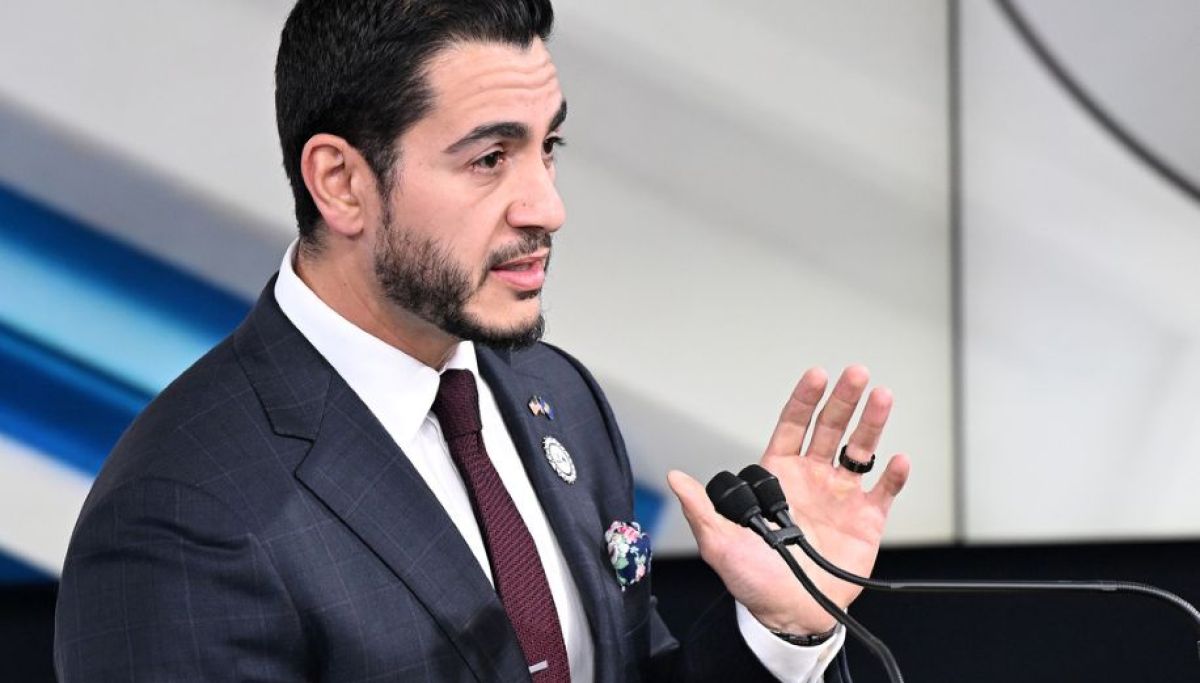
IS IT TOO LATE TO MOVE THE MIDTERM NEEDLE IN MICHIGAN? Six weeks ago, on Sept. 9, this newsletter asked, “Are midterm results already baked in the cake?” The answer was yes, mostly — although we don’t know what the results are.Voter attitudes, like views of President Donald Trump and the economy, are indeed set, and have been for a while. But there is, as a Republican strategist suggested, “room to maneuver” left in one area: shaping voter feelings toward specific candidates, especially candidates who are relatively new to the scene.So even at this late date there is still time to knock a candidate’s polling down a few notches with negative advertising, especially if there is new, unflattering information about the candidate. One place that theory could be tested is the race for Senate in Michigan. There, Democrat Abdul el Sayed has been leading in the polls for a long time; no poll since Sept. 3 has shown Republican Mike Rogers in the lead. But el Sayed’s lead is really, really narrow; right now, it is 2 points in the RealClearPolitics average of polls, so it’s reasonable to call the race tied.In a conversation Wednesday, the GOP operative noted that as far as the issue of affordability is concerned, el Sayed has run a good campaign, with good ads — better than Rogers. “But the thing is starting to drift toward a discussion of ‘What is this Muslim Brotherhood thing and why are you so obsessed with the Middle East?'” the operative said. “He has foolishly started to take the bait.”The Republican was referring to last weekend’s el Sayed town hall in which he became evasive when asked whether he would disavow the Muslim Brotherhood. The question came in the wake of reports that his family had ties with the U.S. government-designated terrorist organization; a half sister once wrote that, “My family has long been [Muslim Brotherhood],” and on another occasion wrote that she was “Praying for all my family that supports that #MB in Egypt.”Had el Sayed said simply, “Yes, I disavow the Muslim Brotherhood,” he might have put a quick end to the discussion. Instead, he engaged the questioner in a extended exercise in misdirection. His main strategy was to argue that questions about his family’s ties to the Muslim Brotherhood somehow violated the religion clauses of the First Amendment. His opponents’ strategy, he said, “is to point to me and my name and my faith and to say that we’re different. And that you should suspect people simply because they are different than you in how they pray.”Apparently believing it would boost his campaign, el Sayed posted a video of the exchange that quickly went viral. When it did, some in both parties noticed that the video told viewers more about el Sayed than he might have thought. “If you look at him, he’s a guy who has to win every argument,” the Republican operative noted. Then former Obama speechwriter Jon Favreau said that even if a politician dislikes an audience member who asks a question, as el Sayed clearly did, he needs to remember that he is giving an answer for the entire audience, and not for just one person. “I thought he could have used 20 percent less condescension in the answer,” Favreau said of el Sayed.The Republican strategist predicted that el Sayed would dial back his approach on the Muslim Brotherhood at his second, and last, debate with Rogers Wednesday night. To a degree, that is what happened, but Rogers, who suggested el Sayed is “a risk to our national security,” made sure that enough of the story got to the audience to remind everyone of the town hall scene and el Sayed’s resistance to questions about his family’s Muslim Brotherhood ties.“You can pray any way you want,” Rogers said to el Sayed. “This is about an ideology — an ideology that’s banned in five Muslim countries, an ideology that’s banned in another six different countries.”The issue seemed to have gotten to el Sayed, who after the town hall exchange released a 30-second ad stressing his faith. The implicit message was that questions about possible ties between el Sayed’s family and a radical Islamic organization were in fact attacks on his constitutional right to practice religion as he sees fit. The ad did not mention Islam but included images of a menorah, a church with a cross atop it, and a photo of el Sayed in a black church. It ended with: “I’m Abdul el Sayed, man of faith — that’s a good thing — and I approve this message.”Where does that leave things? There are just 12 days left before the election. Most voters have made up their minds. But the Michigan race could be an example of Republicans influencing the thinking of those relatively few voters who have not already made their decisions. And that could be bad news for el Sayed, as the GOP operative concluded: “This thing is starting to end in an area that’s not good for him.”
Is it too late to move the midterm needle in Michigan?
Full Article
Original Source
Read the full article at Washingtonexaminer →KhanList aggregates and links to publicly available news content. We do not host full articles from third-party sources. Always verify important information with original sources.