
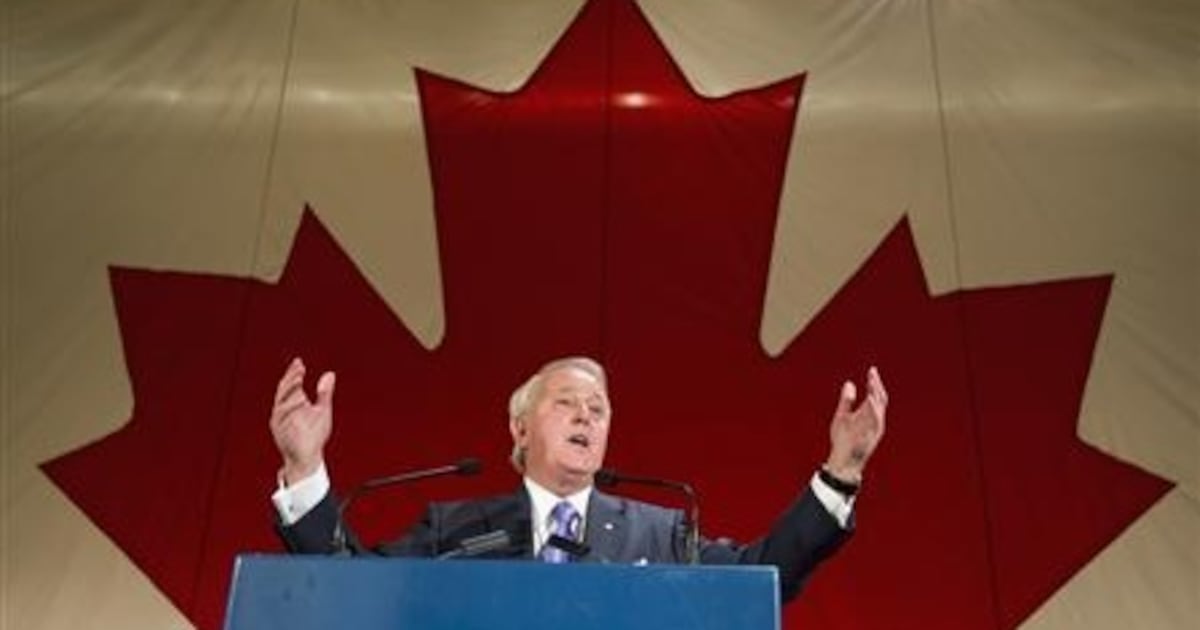
Summer schools focused on history have long been a part of our cultural hinterland. They often ask the speakers and audience to consider the lessons to be learned from various eras and personalities. That can result in dispiriting reminders that it seems not to be in human nature to learn the lessons of experience, but these gatherings can nonetheless stimulate productive discussion, provide necessary long-term perspectives and make us appreciate how the lines between past and present are tangled. This week at the 15th Thomas D’Arcy McGee summer school in Carlingford, Co Louth, there were particularly charged reminders of that. McGee was born in Carlingford in 1825 and emigrated to the United States in 1842 where he demonstrated considerable literary flair, prompting his return to Ireland in 1845 to write for the Freeman’s Journal newspaper. He subsequently joined The Nation, the weekly paper of the Young Ireland group, and became secretary of the Irish Confederation, a group of Young Irelanders who had split from Daniel O’Connell’s Repeal Association. Arrested for sedition in 1848, he escaped to America after the Young Ireland rebellion that year, where he started newspapers, clashed with Catholic Church authorities over their critical attitude to the Young Irelanders, involved himself in emigrant welfare and wrote a history of Irish settlers in America. He also made several trips to Canada and started to view it, rather than the US, as a more desirable destination for Irish emigrants. He settled there, grew more conservative, and in late 1857 was elected to the legislative assembly for Montreal. McGee proposed the “new nationality”, a political association of British North American colonies, envisaging a political state within the British Empire, and he became one of the father figures of this federation of the Canadian provinces. He was elected to the Canadian House of Commons, and was a renowned rhetorician, but his increasing criticisms of Fenians led to his assassination, most likely by one of those Fenians, in 1868.In Carlingford this week the University of Toronto historian David Wilson, McGee’s biographer, departed from his script to address Canada’s current plight, as US president Donald Trump uses economic warfare to fulfil his aim of making Canada a vassal state. Wilson cited McGee speeches from the 1860s that could just as easily have been drafted last week, designed as they were to defend Canada’s right to self-determination and resistance to encroachment. Wilson also focused on McGee’s distaste for an “intolerant nationalism”. A strong critic of American nativist politics during his career, he also did not want to witness Canada import the orange and green animosities scarring Ireland; a state of war, he contended, would be created “if we carefully convey across the Atlantic half-extinguished embers of strife in order that we may by them light up the flames of our inflammable forests”. Canada, McGee insisted, needed to embrace diverse groups prepared to compromise instead of opting for ethnic nationalism. READ MOREThis was too conservative a path for some Irish republicans, costing McGee his life aged 42, but Wilson drew a thread between McGee and Canada’s long engagement with multiculturalism, culminating in its Multiculturalism Act of 1988. McGee made the case, suggested Wilson, for “unity through diversity” and respect for minority rights in religion and education, so that “the Highland Scotch, Scottish Presbyterians, American loyalists, Germans, French Canadians, English Canadians, Irish Protestants and Irish Catholics would all be protected by Confederation and thus have a stake in the country that protected them”. In McGee’s words, this amounted to a “guarantee by which we have carried the principle of equal and reciprocal toleration a step further in Canada, than it has yet been carried, in any other free government - American or European”. The proposer of the Multiculturalism Act in 1988 was the Conservative prime minister Brian Mulroney, long an admirer of McGee, and who made it his business every year to ceremoniously mark the anniversary of McGee’s assassination. The current Canadian prime minister Mark Carney, also of Irish heritage, is now tapping into a strong determination to protect Canadian sovereignty and national identity in the face of Trump’s assault.But the summer school in Carlingford was not about a smug embrace of the contribution of the Irish to the robustness of Canadian national identity. It was also notable for a moving address by Heather Humphreys, who spoke of her failed presidential campaign last year and the sectarian abuse directed at her. She does not, she made clear, believe this was a decisive factor in her defeat, but she underlined its ugliness and how it made her think about identity and her family’s ancestry, stretching back hundreds of years in Monaghan. Is there, she wondered, a “hierarchy of Irishness” that led to border Presbyterians being targeted by the social media trolls? And where does that sit with conceptions of a “shared” Ireland?
Irishman’s 1860s speeches on Canada’s right to self-determination could have been written last week
Full Article
Original Source
Read the full article at Irishtimes →KhanList aggregates and links to publicly available news content. We do not host full articles from third-party sources. Always verify important information with original sources.