
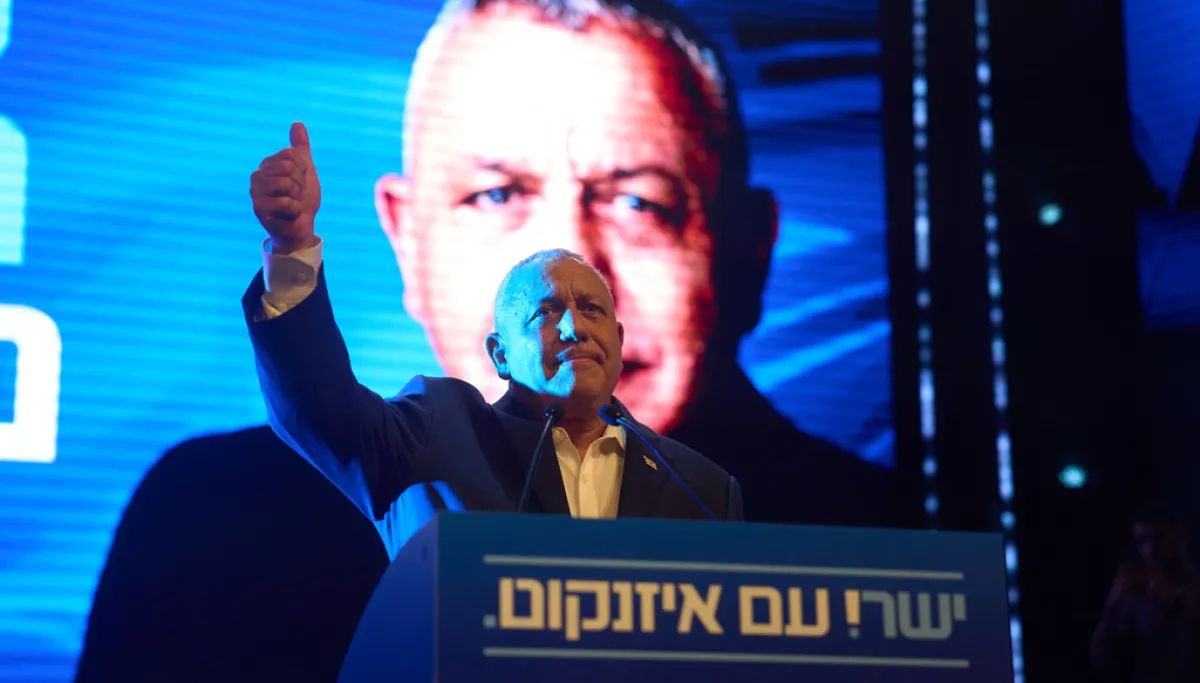
The impact of the elections in Israel on Oct. 27 will extend far beyond its domestic borders. Its geopolitical ramifications will be felt most acutely in Tehran and across the broader Middle East.At the center of this electoral battle lies a stark strategic choice. The possible election of Gadi Eisenkot as prime minister represents a strategic “dream scenario” for Iran. By exploiting a perceived lack of military resolve in Eisenkot alongside a transition period in U.S. leadership, Iran could secure a nuclear breakout by 2028. Israeli Prime Minister Benjamin Netanyahu, by contrast, is positioned as the necessary counterforce to maintain active deterrence and the credible threat of a preemptive strike.Looking toward the 2028 presidential landscape, plausible scenarios include figures such as Vice President JD Vance or former Vice President Kamala Harris. Current projections point toward a fierce presidential battle between Vance and Harris. Since the onset of the conflict with Iran, Vance has projected noticeable vulnerability. Public memory remains marked by his humiliation at the hands of Iranian delegates during the Geneva talks, where they notoriously refused to shake his hand or share a photo opportunity. Furthermore, Vance’s approach toward Tehran favored a defeatist compromise to end hostilities — standing in stark contrast to President Donald Trump, whose posture on Iran remains unyielding and focused on decisive defeat without concessions. As for the prospect of Harris, little expansion is needed on what a Harris presidency, or any similar Democratic successor in 2028, would mean. The result would spark scenes of unrestrained jubilation across the Islamic Revolutionary Guard Corps. For Tehran’s hardliners, such an outcome would be celebrated as an unmitigated victory. In truth, virtually any Democratic administration would likely grant Iran unprecedented room to maneuver.Iran’s strategic deception: The 2026–2028 window Should Eisenkot assume power, Tehran is anticipated to execute a calculated strategic pivot. The regime would likely play a game of tactical compliance, acceding to Trump’s immediate demands to secure a critical two-year window of breathing room. They would give Trump whatever he asks for, fully aware that within two years, changes in Washington could leave them completely uninhibited.During this period of superficial deal-making, Iran would:Restore and Fortify: Rebuild its economy, repair damaged weapons systems, and harden air defenses.Clandestine Advancement: Rapidly and secretly advance missile capabilities and nuclear infrastructure.Rebuild the Ring of Fire: Replenish proxy networks across the Middle East, with a primary focus on Hezbollah, restoring the hostile encirclement around Israel’s borders.The Eisenkot doctrine: Accommodating a nuclear Iran? This concern is rooted in fundamental strategic philosophy. As journalist Amir Oren highlighted in 2018 regarding the Israeli military’s multidecade vision, or IDF Strategy 2048, Eisenkot’s framework differs fundamentally from traditional Israeli doctrine. Oren noted:“IDF Chief of Staff Gadi Eisenkot assesses that in the coming decades, Israel will not be able to completely thwart the nuclear ambitions of regional states, proposing that the IDF adapt to a new reality of living alongside weapons of mass destruction in its immediate environment.”This perspective marks a radical departure from the Begin Doctrine, which led to preemptive strikes in Iraq (1981) and Syria (2007). Beyond this strategic passive acceptance, Eisenkot historically opposed active strikes on Iranian nuclear facilities and ultimately resigned from the government in the middle of a war.This appeasement mindset is further mirrored by Yair Golan — Eisenkot’s political ally and prospective defense minister — who recently stunned observers by declaring at an election event that eliminating Iran’s supreme leader, Ali Khamenei, was “unequivocally a mistake”. Such statements lay bare the coalition’s fundamental aversion to decisive, offensive deterrence.Under an Eisenkot-Golan leadership, Tehran would likely perceive that Israel views a nuclear Iran as a manageable risk rather than an existential threat, signaling that Israel under his command would not launch a unilateral strike. This dynamic opens the door for a dangerous sequence:Diplomatic Deception: Iran signs a restrictive agreement to buy temporary stability.Regional Retreat: Israel faces pressure for strategic withdrawals from high ground — such as Keter Hermon and parts of the Golan Heights — alongside forced momentum toward Palestinian statehood.The 2028-2030 Crisis: Exploiting a passive U.S. transition under Vance or Harris, Iran completes its nuclear breakout unhindered. By 2030, a future Israeli leader would face a nuclear-armed, militarily dominant Iran surrounded by restored proxy forces.The Netanyahu alternative: Active deterrence WHY IS IRAN SUDDENLY DESPERATE TO KILL TRUMP?Conversely, a victory for Netanyahu alters Tehran’s strategic calculus immediately. A Netanyahu mandate signals to Iran that aggressive containment will persist.Netanyahu’s doctrine centers on the continuous prevention of a nuclear Iran. Knowing that Netanyahu would serve another four years, working hand-in-glove with the U.S. administration and demonstrating no hesitation to strike military targets — as evidenced in recent years — could demoralize Tehran and potentially trigger internal regime collapse.Even if a hostile Democratic administration were elected in Washington in 2028, a Netanyahu-led Israel would move decisively to neutralize the nuclear threat well before 2030, effectively removing the Iranian nuclear threat once and for all.
Iran’s nuclear dream scenario has a name — and he’s on the Israeli ballot
Full Article
Original Source
Read the full article at Washingtonexaminer →KhanList aggregates and links to publicly available news content. We do not host full articles from third-party sources. Always verify important information with original sources.