
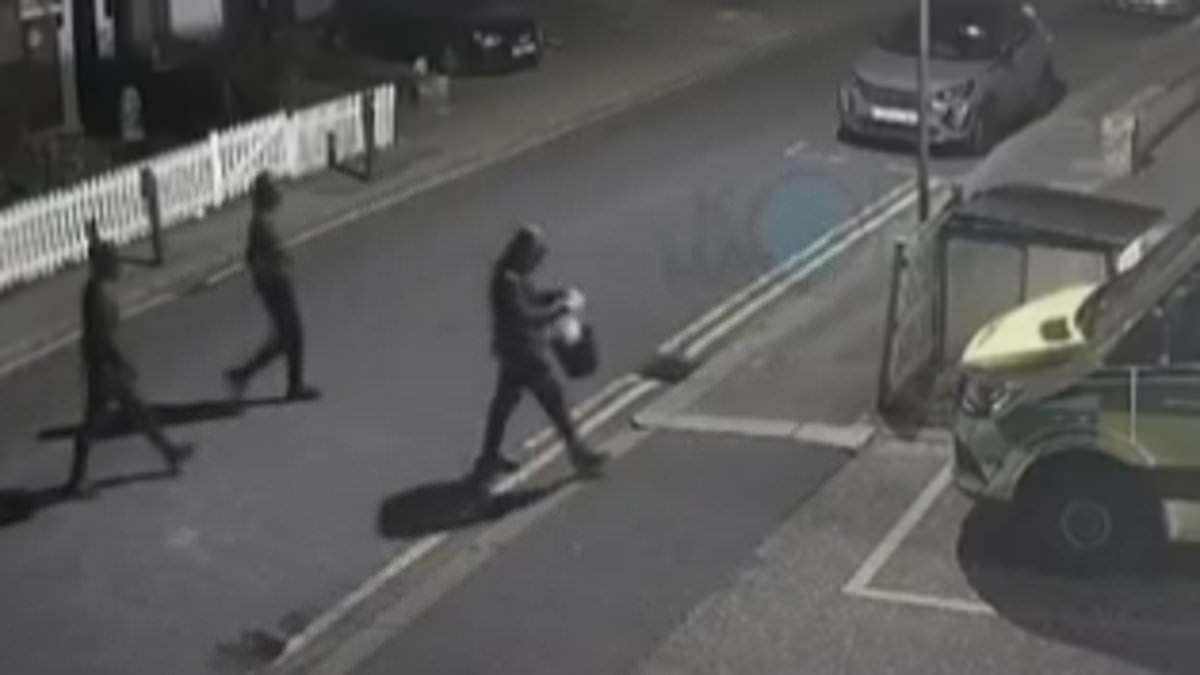
If Iran is found to be behind the attempted terror attack on RAF Fairford, it would mark a major escalation in the regime's 'shadow war' against Britain.Five men travelling in three vans allegedly packed with explosives were stopped early yesterday just 350 yards from the Gloucestershire base, which is used by American forces to launch air strikes against targets in Iran.Iran's Revolutionary Guard warned in July that any base used in attacks on the Islamic Republic would be considered a legitimate target.Fairford serves as the US Air Force's command outpost for Europe, and President Trump said the alleged plot was intended to do 'big damage to our fort'.Should Tehran ultimately be linked to the operation, it will show the regime is expanding the scope of its retaliatory campaign against the US and countries supporting its military operations, including Britain.The Islamic Republic has already been linked to a string of hostile actions targeting Britain, Europe and Western interests in the Middle East.As counter-terror police investigate the events at Fairford, here are some of the ways Iran has already lashed out at the UK and its allies. Counter-terrorism police are now investigating whether the alleged bomb plot is linked to Iran Drone and missile strikes across the Middle EastAfter the first wave of US-Israeli strikes against Iran on February 28, Tehran quickly retaliated by launching missiles and drones against American forces in the Middle East. These attacks quickly widened to target industrial and civilian targets in Gulf countries hosting US military bases, including Bahrain, Kuwait, Oman, Qatar, the United Arab Emirates and Jordan. Some of the most high-profile drone strikes targeted Dubai, with both the luxury Fairmont and Burj Al Arab hotels hit, alongside Dubai International Airport and Jebel Ali port. The city is home to an estimated 240,000 British expats, some of whom fled back to the UK. RAF Akrotiri in Cyprus was hit by an Iranian-made drone in March. Hours before, Prime Minister Sir Keir Starmer had approved a US request to use British military bases for 'defensive' strikes.Further drones aimed at Cyprus were intercepted in the days that followed, and destroyer HMS Dragon was eventually sent to the island three weeks after the first strike. British troops came under fire elsewhere in the Middle East. At Erbil in Iraq – where UK forces are stationed alongside US troops – gunners from the RAF Regiment shot down 14 Iranian drones in a single attack.On March 19, Iran fired two ballistic missiles at Britain's Diego Garcia base in the Chagos Islands. One reportedly failed mid-flight and the other was shot down by a US warship.Iran has continued to attack oil facilities across the Gulf, worsening the energy crisis sparked by its blockade of the Strait of Hormuz, a major artery for oil shipments. The chaos has triggered a spike in oil prices and has led to a surge in petrol and diesel prices in the UK. The average price of a litre of diesel in the UK has hit an all-time high of 199.18p, passing the previous record set in 2022, RAC figures showed today.Recently, Andy Burnham sent British jets to help defend oil infrastructure in Saudi Arabia from missile attacks by Iran-backed Houthi militants in Yemen.The Prime Minister said the RAF will provide air-to-air refuelling support for jets shooting down drones and missiles fired by the Houthis. The decision is the first new military deployment signed off by Mr Burnham since becoming PM in July. Hacking attempts Cyber-attacks are a key part of Iran's arsenal as it seeks to inflict pain on America and its allies.In late March, US security firm DigiCert said it had identified nearly 5,800 cyberattacks by almost 50 Iran-linked groups since the start of the war. While most of the attacks targeted US or Israeli companies, others struck Bahrain, Kuwait, Qatar and other countries in the Middle East.In one particularly embarrassing incident, Iranian-linked operatives successfully hacked FBI director Kash Patel and published his personal emails and photos online. The pictures showed Mr Patel on vacation in Cuba, sniffing a cigar, reclining in a chair, and posing next to a large bottle of Havana Club rum. In one photo he was seen posing next to a vintage car and in another, next to a large bronze statue. The hacked material includes a photo of Patel on vacation in Cuba, posing with a cigar During July and August, Iran was also blamed for cyber-attacks on waste and water facilities in dozens of US states. Around the same time, hackers shut down a UK power plant for four days in the first successful attack of its kind. Officials did not reveal which power plant was targeted, but it was understood to be relatively small – and the attack did not have any significant impact on the nation's energy supplies. However, experts described the incident as a chilling indication of the threat facing Britain's infrastructure. In June, National Cyber Security Centre CEO Dr Richard Horne said it had seen more than 200 cyber incidents affecting the UK's critical national infrastructure in the year to May.He said 75 per cent of these had been linked to hostile foreign powers, including Iran, Russia and China. Iran-backed terror plots in BritainIf the alleged bomb plot at RAF Fairford was linked to supporters of the Iranian regime, it would mark an escalation since a spate of arson attacks on Jewish sites in London earlier this year. A group calling itself Harakat Ashab al-Yamin al-Islamia (Hayi), said to be backed by Iran, claimed responsibility for the fires, as well as an incident where a drone was flown in Kensington Gardens near the Israeli embassy, although officials said the device ultimately crashed into a tree.Iran is one of a number of hostile states, including Russia, that have used proxies to commit crimes on their behalf on UK soil, and support for both Iran's Islamic Revolutionary Guard Corps and Hayi have been banned in Britain. Three hooded men were caught on camera pouring fuel on ambulances run by the Jewish community in Golders Green, north London Four ambulances from Hatzola, a volunteer-led ambulance service operating in the Golders Green area of north London, were set on fireThe London-based Persian broadcaster Iran International has also been repeatedly targeted with surveillance, and one of its journalists Pouria Zeraati was stabbed as he walked to his car in Wimbledon, south-west London in March 2024. Earlier this year, police said the number of national security cases involving activity by hostile states including Iran had increased by 50 per cent in the six months to December 2025.As it has become harder to deploy agents in the UK, hostile states have increasingly turned to paid criminals to carry out attacks on their behalf on British soil. The tactic was used by a Russian-speaking Telegram entity known as El Money, which tasked two men to set fire to a car and two houses connected to Sir Keir Starmer in May last year.In another case in March 2024, Dylan Earl, 21, from Leicestershire, firebombed a warehouse in Leyton, east London, that was storing aid for Ukraine, on the orders of the banned Wagner Group, which acts for the Russian state. Defence Secretary Wes Streeting told BBC Radio 4's Today programme: 'The Iranian regime is one that would do harm to our interests and to our allies, given the chance.'And I'm proud of the work that we do all year, every year to detect and to deter and prevent Iran from carrying out acts of harm.'
Iran's campaign of revenge against countries backing US military action - and the Tehran-linked attacks carried out in Britain
Full Article
Original Source
Read the full article at Dailymail →KhanList aggregates and links to publicly available news content. We do not host full articles from third-party sources. Always verify important information with original sources.